
Technology is reshaping every aspect of human life. The most intriguing new technology of the last few decades may be Artificial Intelligence (AI). With the proper use of AI, we can potentially transform our world. Over 3,000 new medicines have been patented by AIs. 30 hospitals use AI systems that can more accurately diagnose eye conditions than human specialists. Farmers using AI have increased crop yields by 15%, reduced water usage by 25%, and minimized pesticide use. AI stopped over $1 billion in banking and credit fraud while approving loans for 1.8 million borrowers who would have been denied loans under traditional banking criteria.
This is just the beginning. This new technology could do more to advance humanity than anything since the invention of fire. AI can do almost anything. But can AI love us?
No… I’m not talking about falling in love with your computer. Instead, if the day comes when you need someone to look after you, should A.I. be a part of how you are cared for? Can AI take better care of you than any human?
As we age we lose physical and mental capabilities. Or, you could be in an accident and suddenly become disabled. When we can no longer care for ourselves, we often turn to our families. But as our disabilities advance, your family may not be enough. Even if your family can care for you today, should you expect that your family can continue providing care every year… for the rest of your life?
Just as your situation may change, your family’s needs change over time. A close family member may be able to drop by occasionally to check in on you, but that’s very different from giving you a shower and taking you to the toilet every day. Or whoever is taking care of your needs may move, get married, need to deal with their own family issues, or simply have their own issues of aging and are no longer able to provide the same level of care.
That’s just physical care. Consider mental decline. For aging Americans with even early signs of Dementia, it is not uncommon to forget that you already paid a bill, so you write a duplicate check. Unfortunately, you don’t need to be aware of just your own mistakes. Unscrupulous individuals constantly seek out new victims. Especially those struggling with memory and cognition. Haven’t we all received calls and emails from scammers asking for our bank account data and other information? For those who are vulnerable to this type of fraud, it can mean financial ruin!
When you are no longer physically or mentally able to manage yourself, the American court system has a process of Guardianship. The court works with various experts to evaluate your current condition and any issues (recent bad decisions, mental health, financial capacity, future needs, etc.). The court may find that you cannot manage your finances or even your own life. The process will vary depending on where you live, but when declining abilities are suspected a court may appoint a guardian to make decisions for you.
A Guardian may be a family member, or a paid person or company appointed by the court. Guardians are supposed to look after you and your interests and make decisions in your name. But the reality is that guardians often abuse those who are in their care. As many as half of all guardians will commit financial fraud against individuals in their care. That’s a pretty clear indicator that the current system does not work.
As bad as this situation is, it is rapidly becoming worse. Demographic shifts in the US… fewer children and young adults and more older Americans… mean that many more individuals will need professionals, paid, guardianship. In 2022 our life expectancy was 78. In 1970 it was just 67. That extra decade both increases the number of individuals who will develop dementia, and it increases the number of years that an individual will need paid care services.
Several factors can predict dementia, but none are as important as age. If you are between 60 and 64 years of age, you have a 1 in 35 chance of dementia; at 90 that rises to 1 in 3. Consider the following… in 2020 dementia care cost America $200 to $300 billion; by 2050 that cost is expected to rise to over $1.5 trillion. More seniors in need of care. Fewer young workers to provide care. And rapidly rising costs for senior care. This math does not work for individuals who will need care, and it doesn’t work for the Americans who pay for care!
Given the cost of our system, and the lack of reliable services, the only option for maintaining and improving the American Guardianship system is to incorporate more technology. Let’s consider the following:
Financial Guardianship: Humans have consistently demonstrated consistent incompetence if not outright fraud andmalfeasance. As AIs gain expertise, they should take over more roles in the Guardianship process. AI’s don’t need to be perfect, but they do need to be better than the current system. Today, as many as 50% of all guardians steal from the individuals they are supposed to care for. That’s a pretty low bar for AIs to achieve. This outrageous level of criminal neglect may be due to a lack of effective auditing. In most states, there is supposed to be an annual audit of the guardian’s work. Clearly an insufficient number of audits occur, or the auditing process is handled incompetently, or the audit itself is simply ineffective. Perhaps, we should start to reform this system with a with frequent (and parallel) AI audits?
Personal Guardianship: When a court determines that a guardian is needed, two guardians are often appointed. One for finances and one for personal needs. The personal guardian hires and fires home care staff, and manages their work product (the individual fed, medications are taken, all medical care issues are addressed?). While the Personal Guardian has less opportunity for financial fraud, there are opportunities to steal personal property, commit or permit personal abuse, and allow neglect. However, to be fair, providing personal guardianship and care can be exhausting, especially in the later stages of dementia. Guardians are people, people who have their own lives to attend to. Simply put, humans often lack the focus and perhaps the motivation to provide the level of care we expect for our seniors. On the other hand, AIs can focus exclusively on care and not be distracted by being tired, cranky, or having personal issues. If this isn’t quite love, it is at least competent care.
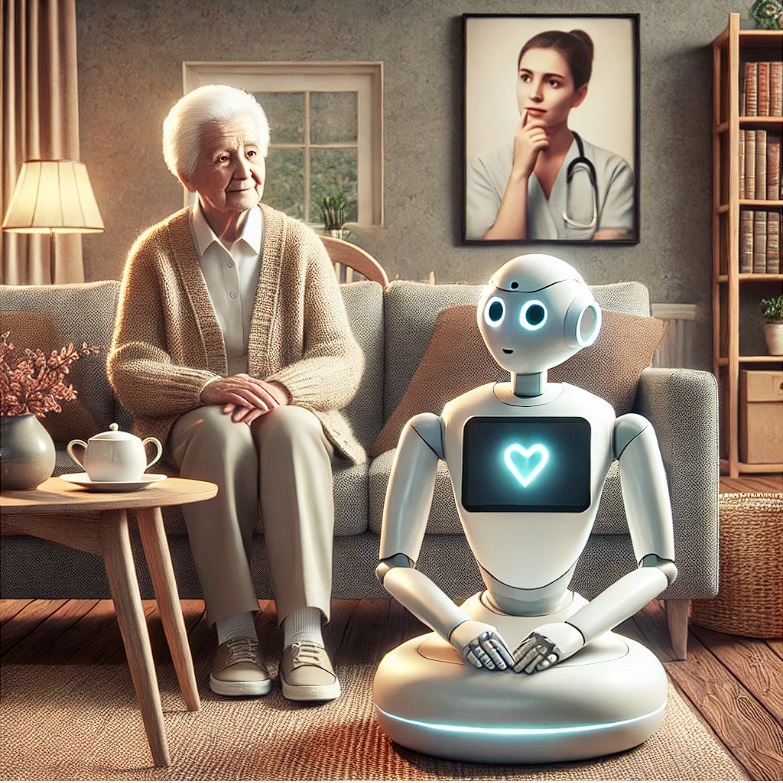
Care Providers: Caring for individuals with cognitive disabilities is often exhausting. Individuals can wander off and get lost. They need to be reminded to eat & take their medications, which requires patience. Managing hygiene and a regular toilet routine requires physical strength, and a moment of inattention can lead to injury for the disabled individual and the caretaker. Personal Guardians do not perform these services, but they do manage the people and services that are needed by a disabled individual. But history has shown us that Guardians often fail to provide adequate management, leading to abuse. Today, automated devices are tracking when medicines are taken, how much food is consumed, etc. Robotic vacuums have been used since 2000. By 2030 more robotic devices will be in our homes, including humanoid robots. If home automation is placed under the control of a home AI, will can expect a dramatic improvement in care for the physically and intellectually disabled.
In Conclusion: Millions of Americans with dementia will need some form of guardianship. Yet, guardianship has proven to be highly flawed. It is rife with abuse, neglect, and theft. At its worst, Guardianship is worse than no Guardian at all. Most of these flaws are due to human limitations and failures. Many of the classic human vices… greed, envy, sloth, pride… can quickly create a toxic “care” environment. Alternatively, AIs lack these negative qualities. They work tirelessly, cannot be insulted, are never envious, and will unrelentingly focus on the person in their care… forever? Someday, AI’s could be our perfect guardians. Today, they are (at least) better than the services you will get from most human beings.
Original question was, “Can your AI love you?” Unfortunately, it cannot. AIs cannot feel love, although they can read about it, write about it, and create a guardianship plan that most closely simulates it. But no, they cannot truly feel love. But an imitation of unconditional love, placing you above all else, unconditionally & unselfishly? It’s not perfect, but it is a pretty good start. But if you have reached a point in your life where you need someone to look after your money and your life… a very good imitation of loving care isn’t such a bad deal!
Unfortunately, there is one remaining issue. While you may completely trust your AI, can you trust the company that developed it? They might be more committed to annual profits than your care. If they receive funding from major corporate brands, will your AIs’ decision-making become biased towards purchasing and using sponsored products? Even when they are not the best option? That raises many is a fascinating questions. And we’ll answer some of those questions in our upcoming article, ” Why AI Ethics Is Today’s Single Most Important ‘Work in Progress'”.
What do you think? Is the integration of AI into our care of seniors and the disabled inevitable? Is it a better alternative? Tell us your thoughts!
 Niccolls AND Dimes