
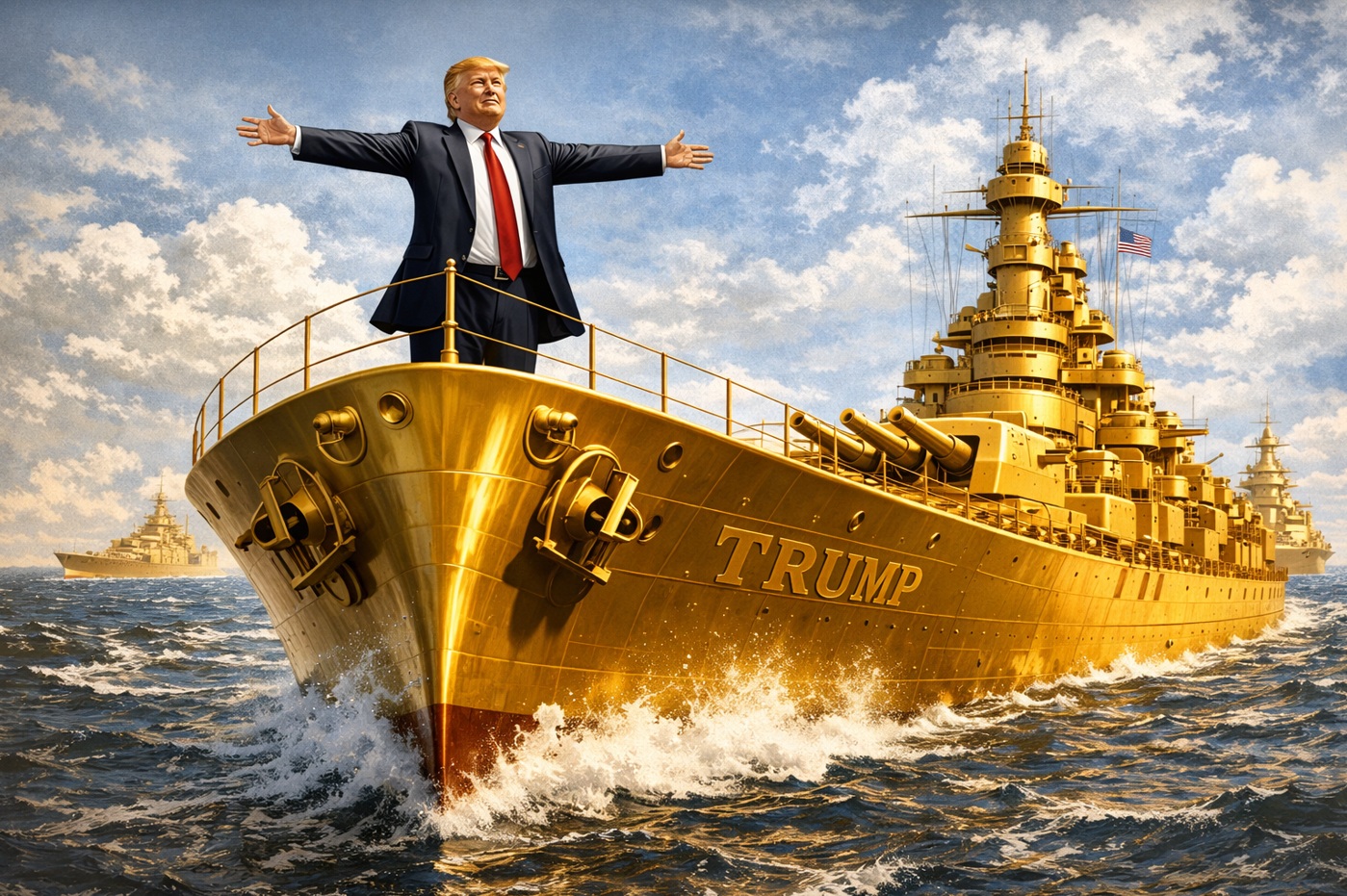
For more than 400 years, the most powerful weapon at sea was the biggest ship with the biggest guns. That era is over. It ended for very good reasons. Despite this, Donald Trump is floating the idea of a new “Trump-class battleship.” It sounds bold. It sounds strong. It also ignores everything we’ve learned about naval warfare over the past century.
How Battleships Ruled the Seas: Once gunpowder reached Europe, naval warfare changed forever. Ships grew larger, cannons grew heavier, and navies competed to mount more firepower on thicker, armored hulls. By the early 20th century, battleships were floating fortresses, armed with guns so large they could hit targets more than 20 miles away.
The WWII Japanese battleship Yamato was the peak of this thinking. Its main guns were so massive that each turret weighed more than an entire warship. And yet… even before World War II began, just about every navy in the world realized that battleships were obsolete.
Why Battleships Died: The problem wasn’t firepower. It was vulnerability. Aircraft and torpedoes changed everything. Planes could strike from hundreds of miles away. Small submarines could sink massive battleships. And a tiny submarine costs just pennies on the dollar compared to a battleship. A single torpedo or bomb could destroy a ship that cost as much as the national budget of a small country. And if a battleship was sunk, you lost the world’s most expensive weapon, thousands of sailors, and a lot of national pride.
Even before WWII, the end of the age of the battleship was painfully obvious. In 1940, Britain crippled Italy’s battleship fleet using aircraft, and not a single “big gun”. In 1941, Japan destroyed 8 of America’s 9 battleships at Pearl Harbor. But Japan’s admiral, Yamamoto, considered the attack a failure because none of America’s aircraft carriers were anchored at Pearl. He knew that carriers, not battleships, would decide the war.
He was right.
The Modern Navy Learned the Lesson: After World War II, navies stopped building battleships. Aircraft carriers, submarines, and smaller escort ships proved far more useful. No single ship, no matter how powerful, could operate alone anymore. Modern naval warfare is about groups of ships, layered defenses, and adaptability. Speed, sensors, drones, and coordination matter far more than armor and guns.
What’s Wrong With the “Trump-Class” Idea: The proposed Trump battleship doesn’t solve the old problems. It just adds new ones.
It’s smaller than WWII battleships, and far smaller than modern aircraft carriers. It relies on unproven weapons, like railguns and lasers, that either don’t work reliably or require enormous amounts of electrical power that Trump’s diesel-powered battleship is incapable of providing. It’s defenseless against cheap drones, which can overwhelm expensive missile defenses and laser systems.
Based on Trump’s own description, his battleship is based on a design he came up with over a decade ago. Starting with a decade-old design, in a world where military technology changes every few years, is a bad idea.
Recent wars make this clear. Ukraine, with almost no navy, sank major Russian warships using drones. In the Red Sea, Houthis forces, with no navy at all, disrupted global shipping using missiles and drones. In all of human history, NO NATION has even maintained a blockade without a navy.
In the decade since Trump came up with his rail-gun battleship, the Navy has spent years testing ship-based rail guns. They concluded that ships cannot generate enough power for sustained firing, the “rail” wears out after just a few shots, and the massive magnetic pulse that shoots shells can easily have problems that could interfere with or ruin all of the electrical systems on board (including radar, missile guidance, communications, etc.).
This is a lesson on how the role of big warships has changed. Naval power is no longer about size. It’s about resilience and numbers. And a LOT of testing of new weapon systems.
The Real Risk: The biggest danger of reviving battleships isn’t military failure. It’s a strategic distraction. Every dollar spent on a vulnerable prestige ship is a dollar not spent on submarines, drone defenses, escort ships, or entirely new naval concepts that reflect modern warfare.
The type of ship that Trump has proposed would normally take 5 years to go from “concept idea” to completed design. Add another 5 years to build, and a few more years to test. With so many untested systems and undefined features, similar naval projects took around 20 years, and most were never completed. Trump, however, remains on-brand, announcing that the first 2 ships will be on patrol in 2.5 years. If not sooner.
Battleships were once symbols of national power. Today, they are symbols of nostalgia… overriding reality. What Should We Build Instead? That’s the real question. If we’re investing in the future of the Navy, should we:
- Build more of the ships we already know work?
- Strengthen defenses against drones and missiles?
- Or rethink naval design entirely for a world where cheap technology can sink billion-dollar ships?
History gives us a clear warning: clinging to outdated ideas doesn’t make a nation stronger. It makes it slower to adapt.
What do you think?
 Niccolls AND Dimes