
Tariffs are typically a blunt instrument with a focused goal. Either reduce the inflow of foreign goods or boost domestic production. They usually target a specific country, industry, or product. But the Trump Tariffs try to do it all. Restrict imports, revive domestic manufacturing, raise government revenue to pay off the national debt, create high-paying jobs, and miraculously avoid inflation or economic backlash.
That’s a wish list, not an economic strategy. These objectives often conflict. Trying to achieve them all at once creates friction, and the goals cancel each other out. Instead of benefits, we may be left with consequences.
Economic Reality: Economists across the globe agree: tariffs can’t perform economic magic. Yes, tariffs raise money — but only if Americans continue to buy imported goods. If foreign goods are replaced by American ones, tariff revenue vanishes.
In the short term, companies may absorb the cost of tariffs. But if tariffs are permanent, neither foreign nor domestic firms can afford to eat those costs indefinitely. Sooner or later, the bill gets passed on to the consumer… in the form of higher prices.
What is Trump’s endgame? He says tariffs will make the U.S. economy “bigger, better, stronger.” But what does that mean? Does “stronger” mean more billionaires, or better lives for average Americans… with livable wages, healthcare, and vacation days?
Big Beautiful Bill: At Trump’s “Independence Day” rally, auto worker Brian Pannebecker joined him on stage. Brian stated his support for tariffs, just as auto workers have for decades. When Pannebecker first voted in 1980 for Reagan, believing that Reagan would save Detroit. Reagan didn’t. Nor did any president after him, including Trump himself.
So what makes Trump 2.0 different from Trump 1.0? What is Trump actually trying to protect? Classic American brands? Any car built on U.S. soil? All parts made in America?
Today, only about half of the cars sold in the U.S. carry a domestic brand. Many of those contain less than 50% American-made parts. Some cars are assembled in the U.S., but only about 25% of the total car parts are domestically sourced. This is largely why a mere 200,000 out of 4.5 million auto industry jobs still remain in Michigan. The rest migrated to lower-wage states or overseas long ago.
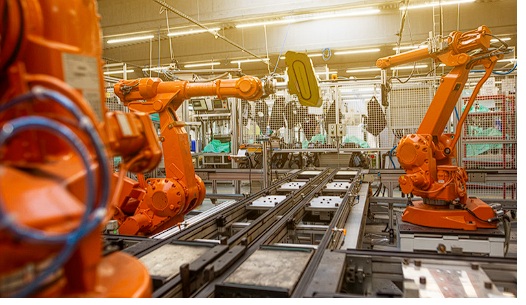
Wages: Union auto workers in Detroit can earn $66/hour with seniority. Meanwhile, factory workers in Alabama start near the minimum wage and top out at half of the old Detroit wages. Automation has taken an even bigger bite. Decades ago, humans painted cars by hand. Now, robots do the job faster and at a much lower price. Even if factories return, don’t expect the jobs to follow. At least not in the same form, or at the same pay.
Unions: Back in 1980, Pannebecker cast his vote during the twilight of the union era. Back then, a union worker could buy a house, raise a family, and fund their retirement… on one salary. But unions have been under attack for 50+ years, with the anti-union charge led by the Republican Party. In 1950, a third of American workers were unionized. Today? Just 10% — and falling.
You can debate unions all day, but one fact is clear: without them, most workers can’t afford the American Dream. And yet, Trump says that America can have it both ways: higher profits and higher wages. However, Elon Musk, who actually runs a modern car company, has a different position. Musk says, “Unions are a sign of a failing company.” Tesla is staunchly anti-union. Rivian, Scout, and other “pre-production” car companies take a similar… if more polite… position. The results? Lower wages and fewer benefits. So much for trickle-down.
Old vs. New Factories: Let’s say Trump succeeds. We bring manufacturing back to the U.S. Great. But the old factories overseas? They’ll become industrial graveyards. A trillion dollars in write-offs. Equipment might be salvaged, but infrastructure — roads, rails, utilities — will rot.
Building new factories in America will cost hundreds of billions… or more. But if we build them the old-fashioned way, we won’t be competitive. American manufacturers can only survive by outpacing foreign rivals in efficiency, and that means automation. That’s the paradox: to make U.S. manufacturing viable again, we must build smart, automated factories… which require fewer workers. The jobs won’t “return”. They will simply be replaced by robots.
The harsh reality? The more efficient the new factory, the fewer workers it needs. The jobs that do return may not be in Detroit, and they won’t pay like they used to. Worse still, the skilled labor pool around those factories? Gone. It took decades to build. It won’t be rebuilt overnight.
Conclusion: Yes, Trump’s tariffs might help American corporations get richer. Maybe even rich enough to help shrink the national debt. There might be more billionaires. But if the gap between the wealthy and everyone else grows wider, is that really “Making America Great Again”?
This isn’t Trump’s first go at economic revival. He promised to save the coal industry in his last presidency. But he also backed fracking. Guess what? Cheap natural gas replaced expensive coal. And 40% of coal jobs vanished on his watch. If Trump’s support for fracking helped kill coal, what unintended consequences might his tariffs have?
When the dust settles, will working-class Americans be better off? Or will we be left with fewer jobs, higher prices, and another round of broken dreams?
What do you think? How would you rate Trump’s second administration? What do you think is and isn’t working? Share your thoughts with us.

