The Robot Revolution… Is Closer Than You Think!


Robots - Baxter and Sawyer

Sawyer, and his big brother Baxter! Photo – All Rights: rethink robotics

The latest Avengers movie, “The Age of Ultron”, has the media thinking about robots. Of course, it’s not just Ultron. Everyone’s favorite Killbot, the T-800, AKA Terminator, AKA Arnold Schwarzenegger, is back from the future to take one last shot at conquering the box office. And then there’s nearly nightly news on real life drone strikes in the Middle East. We can see on the nightly news that our military is trying it’s best to imitate art as it replaces soldiers with… well… robots that… umm… shoot and kill political targets. Suddenly, robots everywhere in the journals of the Corporate 500’s… the New York Times, Harvard Business Review, Forbes, and McKinsey (the world’s largest consulting firm)…  are all writing about the impact of the new generation of robots. I do want to logic behind legally sanctioned Killbots, but not today. Rather than the robot apocalypse, today we will examine the only slightly less frightening topic… will robots steal our jobs?

There are two camps of thought on robots in the workplace. First, we have the palpable fear that when robots combine with Artificial Intelligence (A.I.), human employment will be decimated. Extremists in this school (tech luminaries such as Elon Musk, Bill Gates and Steve Hawking) fear that robots learn and improve so quickly, they will soon surpass human intelligence, take over the world and possibly wipe out humanity. The other school of thought has a calmer message. Yes, there will be changes and displacement, but if robots and super intelligent A.I.’s work together with humans, we can create a golden age of productivity and innovation. The merger of technology and humanity may cure all diseases, allow us to colonize the stars and perhaps conquer death.

It’s too soon to organize resistance cells for the robot revolution, but, “co-operate and everything will be OK”,  doesn’t sound right either. There’s nothing wrong with technology cooperation, but that’s a last-gen scenario. Knowledge workers have been cooperating with ever advancing technology for decades. Industrial workers have been cooperating with technology for much longer, for at least all of the last century. Perhaps, if we examine the last technology revolution we can tell us something about coming changes in the corporate workforce.

A Bit of History: Peter Drucker was one of the most influential management theorists of the 20th Century. Drucker’s concepts heavily influenced U.S. manufacturing, and launched quality management in Japan in the 1980s, when they dominated international manufacturing. A 1991 report from Drucker showed that the effective use of technology and management techniques increased 20th century  worker productivity by 45 times. That is absolutely staggering! However, in professional services corporations (accounting, legal, consulting, finance, etc.), the same increases in productivity were not seen.  Why? Because professional service corporations did not apply “scientific management” to the degree that a factory would.

We easily forget how rapidly our environment changes, the things we buy improve in quality, features, and price. In 1950, a 12” Black and White Philco brand TV cost $499 ($5,000 in 2015 dollars). Today, you can buy a lot of TV for $500 or $5,000: MASSIVE screen size, color, HD, digital recording, streaming media, stereo sound, etc. Most of these options would have been unobtainable in 1950, at any price. Or you could watch free TV via an app on your smartphone. This concept of “A lot more for a lot less”, doesn’t apply to the bills from your lawyer, or any other professional service. Yet, professional service firms have invested heavily in computers, software, and automation… just like factories and agriculture. Computers have their own rules of efficiency. This most important of which is Moore’s law. This states that the cost of a computer drops by half every couple of years. But the efficiency given by decades of technology investment has not driven down prices. Where is the “missing” efficiency?

The biggest cost for professional corporations, is the cost of professional compensation. In an investment bank, compensation is half of all costs, with compensation for the most senior member rising dramatically over the last few decades. So long as these positions exist, they will remain high cost. Strangely, while professional service firms apply all sorts of productivity and cost controls through their procurement department, similar controls are not applied to professionals, especially the most expensive professionals. That’s not the say that there are no costs controls for personnel, staff: reports on time per project or per client fills out an expense form, etc. However, the level of control this provides over their primary cost is about the same as the time cards used in factories at the turn of the 20th Century. A very expensive resource, a multi-million dollar lawyer or banker, can assign themselves to projects and usually doesn’t fill out a timesheet. In a factory, a multi-million dollar piece of equipment requires numerous approvals before it can be used. True, a professional is not a machine, but your bottom line does not care if your underutilized resource is an A.I. or an analyst.

High compensation, poor tracking, and ineffectively defined processes keep expensive professional services, expensive. A law firm and a car factory are not the same, but they share many of the same characteristics. They both have many people with the same titles performing similar or identical work, generating “value” for the work they process. The most important difference may be that in a car factory, the “focus” of the organization is the car, but in the law firm, the focus is the lawyer.

Law firm automation focuses on augmenting lawyer capabilities and developing junior lawyers into higher paid senior lawyers. The “law factory” splits it’s efforts into producing completed cases, and creating senior lawyer, adding both costs to client billing. Publications such as The America Lawyer provide critical statistics on lawyer compensation, new lawyer graduates, lawyers per firm, etc. These are lawyer specific numbers. The auto industry produces statistics on cars: what they cost, features, mileage, expected years on the road, etc. When the focus of the firm is the products, become just one element of the product. That’s when the work can be experimented with and new types of resources substituted. That’s when innovation, including automation and outsourcing, happen and where production costs drop dramatically.

As corporate America transitioned from the 20th to the 21st century, outsourcing and automation migrated from manufacturing to the corporate workplace. Outsourcing mainly impacted support services, but the line between support and professional services moved. Outsourcing was sometimes problematic, and automation often did not go far enough or was not robust enough, but it got better, and the line moved again. Malcolm Gladwell’s book, “The Tipping Point,” tells us that things don’t suddenly happen. Rather, change happens slowly for a long time until a point is reached where change happens very quickly. That’s the tipping point. A period of rapid change. The latest generation of robots and A.I.s are the results of years of slow progress. Now they are approaching that tipping point where new robots will move quickly and deeply into manufacturing, agriculture AND the corporation. Take the capabilities of robots, add the economic pressure of a growing economy and mix in the pressure for higher wages after years of flat compensation, and we have a formula for a revolution in the workplace. But that revolution won’t’ come from HR, it will come from the procurement department. And that’s the game changer.

Outsourcing Drives Robotics: Consider how China has dealt with its labor market issues. Back in the 1970’s, it was clear that the population of China didn’t align with their economic plan. Too many people, too few jobs, not enough industrial development. China instituted a one-child policy in 1981, to align population growth with reasonable economic growth, and preserve political stability. Globalization and open international trade were just taking hold in the U.S. and Europe, allowing China to target manufacturing outsourcing as the driver for the tens of millions of new jobs they needed every year. Economic stability would guarantee political stability. China would give away land, mineral resources, electricity and anything else needed to build the world’s largest portfolio of outsourcing programs. While each outsourcer individually needs profitable contracts, overall China put jobs ahead of profitability. At least in the early years.

China did become the premier outsourced manufacturing location in the world, progressing from low-end manufacturing to eventually building the most sophisticated products in the world. Along the way, China began shifting its focus from Chinese workers to the Chinese Brand, and national prestige. Foxconn, LG, China Construction Bank, Alibaba are some of the biggest, best known and highly rated companies in the world. China’s perception of itself has changed. In an underdeveloped China, everyone did whatever was necessary to survive. But as the world’s biggest economy, the workers of China want their share of the prosperity.

For years there have been massive strikes and protests (up to 500 a day in 2012) that received little coverage in the US and Europe.  More recent protests that endangered the production of the iPhone, went viral and focused attention on the working conditions and pay in China. A shocked world watched as workers receive huge pay increases, instead of lifetime prison sentences. The next transition of the Chinese economy, a working class that can buy its own products, had finally arrived! Unfortunately, this is not quite a happy ending.

Remember the one child policy? Three decades later, China has a labor shortage. A tight labor market plus pay increases has made China the “higher cost” outsourcing location. Chinese factory workers are paid 3,500 Yuan (the currency of China) a month, compared to 900 yuan in Vietnam, and 600 yuan in Cambodia. China has started outsourcing to nearby countries to take advantage of the lower cost, but China’s labor needs could easily flood the market and drive up costs. China’s solution is to massively invest in robots, displacing millions of works in the next few years. Obviously, the focus for China has moved from the workers. We can expect robots to initially be used strategically to catch up with the backlog of work, but they also need to bring down their costs to match other outsourcers. Once they do that, they will have redefined the market and make many other jobs suitable for robotic replacement.

Robot Plan, In China and Beyond: In order for their economic plans to work, China has to put more robots on-line than all of the other countries in the world combined. Today, the total world production of industrial robots is about 200,000 annually. China buys 25% of that production and expects to buy over 50% in the next couple of years. In addition to these numbers, China will build its own robots, many exclusively for internal production. China has set out some notable milestones.

  • China is a preferred low-cost outsourcing site, mostly due to cheap labor. A high-tech Chinese factory has far less mechanization or automation than a US or European factory. New outsourcing clients are very aware that more mechanized factories can reduce their cost of production more quickly than a similar program in China.
  • China has 30 robots for every 10,000 manufacturing workers. South Korea is the leader in robotics, with 437 per 10,000 industrial workers. China claims it will meet South Korea’s robot density, which would require adding 4.4 million robots.
  • China predicts that their first fully automated factory will be on-line by 2020. That seems reasonable. Japan’s first automated factory went on-line in 2001, and can operate for up to a month without human intervention. Likewise, Siemens AG in Germany has a fully robotic electronics factory. Even Mexico has a full robotic brewery.
  • Foxconn, with 1.3 million workers, pledged in 2011 to have a million robots on its assembly line by the end of 2015. While they missed this goal, this plan would have replaced 75% of their staff in just 4 years.
  • Instead, by early 2015 Foxconn had just 50,000 robots in production. Clearly, Foxconn assumed that more robots would be available (only 200,000 industrial robots annually), and they would be more capable. More realistic estimates say that by 2017 all of China (not just Foxconn) will have a robot population of 500,000. Remember, one robot usually replaces MANY workers, meaning that millions of Chinese workers will be replaced in the next two years.
  • To speed up China’s robot revolution, Foxconn started to manufacture robots for its own use. Foxconn’s new “Foxbots” started to arrive at the start of 2015, and will start with at least 10s of thousands of robots a year.
  • Other nations have been listening to China’s plans. The European Commission launched what is so far the world’s largest robotic research and innovation program, SPARC.

Whatever the specific number, it is clear that China robotic ambitions will vastly increase the number of robots in the world, which will drive down their cost and expand their capabilities. Even if the rest of the world stopped buying robots, China alone could drive the next stage in automation. China’s investments alone will evolve robotic capabilities. In just a few years, virtually every factory in the world COULD be automated. That includes management functions and decision making. Factory managers have worked in corporate environments. Therefore, the A.I. that manages the factory can take over some positions in the corporate world, with minimal re-training. Once the software is re-trained, it can be rolled out into corporations as quickly as installing a new browser on your computer. The speed of transition to fully robotic factories (and initial corporate work) will be faster than the last transition, to global outsourcing.

Robot with Benefits, or Robot Apocalypse?: Robots may herald in  a new golden age, where difficult, dangerous and even boring work is no longer handled by human beings, freeing everyone to pursue the jobs that provide the greatest satisfaction. That golden age may eventually happen, but the next few years are going to introduce very disruptive events into the workplace. These changes are not just driven by robotics. Outsourcing will magnify the impact of robots in the workplace. Changes in population, both in the number of people and in the locations where they will live, adds more complexity to the robot revolution. Even the 21st Century’s other major issue, Global Climate Change, is sure to have a hand in the coming labor market changes, as both flooded cities and regions without water force workers to move, and disrupt manufacturing.

China’s robot revolution has focused on manufacturing, so far. This may be the final stage of the industrial revolution, as mainstream manufacturing ceases to employ human beings. By 2020, working prototypes of all types of automated factories will be rolled out around the world. Global manufacturing outsourcing piloted in the 1970s when Ford built car radios in Brazil. By 2010, outsourcing was fully integrated with manufacturing and corporate support services. Based on that speed of implementation, it is reasonable to assume that 20-30 after these new pilots (2040-2050), robots will be the new global norm in factories and all but the top corporate positions.

Will professional jobs be safe from takeover until the end of the century? Will more education protect our jobs? Which types of employment will be safe from robots? There are answers to these questions, but it’s going to take a lot more space than we have here. In fact, it’s going to take a new series, a Robotic Review, to answer these questions.  The robot revolution is on, and we can expect robots to completely take over some areas of employment. But there are still some very surprising things events that will happen, and major changes that no one has predicted. So, stay on the front lines of the robot revolution and keep reading this blog!  And that’s my Niccolls worth for today!

Posted in Employment, Robots, Unique Ideas | Leave a comment

Revisiting the MATURE Outsourcing Program


In the past, we’ve talked about where outsourcing programs are headed when they finally reach their “mature” stage. That is to say, if you operate one or more lower cost locations, which have all passed their “training” phase, and are working efficiently. Within

All Rights: Wikimedia Commons

All Rights: Wikimedia Commons

this program,  you logically assign work to each location based on cost and efficiency, there are no obvious location for a pilot program that can operate for a significantly lower cost or produce a significantly better product, three is no new software or management methodology that is expected to deliver double digit cost reductions, then your  operation is mature.

After years of experience, you now intimately know the capabilities and limits of your program. Assuming that you have already renewed or rewritten your contract since your initial pilot (within the last two-three years), both your outsourced and total blended hourly cost (for all locations) has pretty much reached its lower limit. If your program has been operating for three or more years, your onshore/in-house staff costs will probably be headed upwards.

Since many outsourcing programs hit their height during periods of economic stress (mergers, recessions, etc.) the corporate expectation (not necessarily your expectation) at the start of your outsourcing program was that outsourcing will continue to cost less every year, and in-house staff will have a stable cost. Now, you’re hearing from all sides that it’s time for raises, promotion, higher salaries and “catch-up” for the missing years of cost of living adjustments.

Consider the rate of inflation for outsourced locations. When you first started your program, no one brought up the issue of offshore inflation. Now, you are learning that most offshore locations have 2 or more times the rate of inflation of on-shore. The next three to five year contract may have a startlingly high increase.

In a mature outsourcing program, you have undoubtedly focused on the reduction of staff in the most expensive locations, usually the big city. This gave you significant cost reduction in the early part of your program, but now you see that many of the best locations in smaller cities can have lower unemployment rates and higher wage increases.

Take Fargo North Dakota as a prime example. Fargo has been a preferred location for on-shore programs. It has also been a boom town for the oil industry. Over the last few years, Fargo’s unemployment rate has been a half to a third of that in New York City. Now that the price of oil is falling and the market is cooling, unemployment may rise in Fargo, butUnemployment Rate NYC vs Fargo as of June 2015, Fargo’s unemployment is 3% compared to 6.5% in NYC.

If you haven’t had it yet, expect that call from your near shore operation about the need to raise salaries to retain staff. To offset costs, or to drive to a new level of savings, you need to do three things:

  1. Develop an “ultimate” in-house or on shore model.
  2. Identify location neutral production targets for every work function.
  3. Test each location for real production levels.

Not too difficult, right? Let’s look at each element. Separately and see what we can learn. For this example, we’re going to look at a mature Document Center. Document centers typically, have very structured functions that are well documented. Also, each individual tends to perform only a limited number of functions; the larger the program, the more restricted each individuals function.

The Ultimate Model: Well run off shoring programs continually test how well a function works offshore, iteratively reducing the size of the main center (in-house and/or onshore), sending functions to your outsourced centers. Eventually, the in-house center will be a similar but smaller version of the original model, with all or most of the management, quality control, and administrative functions.It’s a decent early model, but a mature operation still has room for improvement.

It makes sense to retain a limited production capacity onshore. There are individuals who need to work with someone in person, or at least in the same time zone. If someone shows up waving a cocktail napkin with a scribble on it and says, “I need to make this into a document”. This could be handled remotely, if you have invested in high quality scanners, allow customers to have video conferences with the offshore staff, etc. If not, some capacity to deal face to face with customers is reasonable. And, the ability to work with efficiently with exceptions will earn considerable good will.

Eventually, though, you do need to consider if most administration and management should move to where most of the production staff work. Likewise, IF each location is supposed to be truly functional, quality control should be there and not back in the main office. One of the reasons that “mature” offshore operations fail is that these centers never has the full set of functions that the original model had. The lack of these skills holds back the ability of the center to take on new skills, and maintain the old ones. It then becomes a self-fulfilling prophecy that, “The offshore facility is never able to do everything that the onshore operation did.”

With proper knowledge transfer and training, just about any function can be run from any location. You need to determine which location is the most efficient. Some may say that QC must remain onshore, but for highly documented and procedure based functions (a good description for document services), it’s just a question as to when the offshore staff has enough experience to take on a function.

Production Targets: The staff hired on shore, near shore and off shore should all be intelligent and capable. If a center does not eventually develop all of the skills needed to produce the products of your firm, then you should inform your outsourcing firm that they are not meeting your expectations. They need to identify what is holding back your center… the wrong recruiting strategy, the wrong salary ranges, or just a lack of promotional opportunities?

Back onshore, you need to consider one more step for your “final stage” model, the transformation of your in-house center into a customer service gateway. That gateway will include a small but vital emergency production capacity and customer service staff. The CS staff may be the former supervisors or it may require different staff with different skills. This small number of highly skilled managers will focus on the satisfaction of your customers. Because seats in the headquarters (where primary document center is usually located) are expensive, the functions performed here must provide the highest value or require proximity to customers.

Test Your Assumptions: What services have you outsourced? How have you planned for the final stage model for your services? Take another look at your model and carefully review where each service is performed: what does it cost, what is the level of quality and how does it differ by location? Has this discussion made you rethink where you place the resources for your services? Are there missing elements to your offshore program that need to be in place before it can truly be called “mature”? Examine each function and set the productivity bar based on whichever location is the most productive. There just might be room for greater productivity in your model.

If some of your locations are not at their highest levels of productivity, your outsourcing vendors need to start committing to a date (and milestones along the way) as to when they can deliver. Once you set these targets, you need to follow through with effective testing and reporting to ensure that all locations achieve and maintain their expected level of productivity. Not too difficult! Just, rethink your expectations and hold each site/vendor responsible for attaining productivity targets. I hope that this provides you with some new ideas for your operations, because that’s my Niccolls worth for today!

Posted in Best Practices, Common Sense Contracting, Uncategorized | Tagged , , , , , | Leave a comment

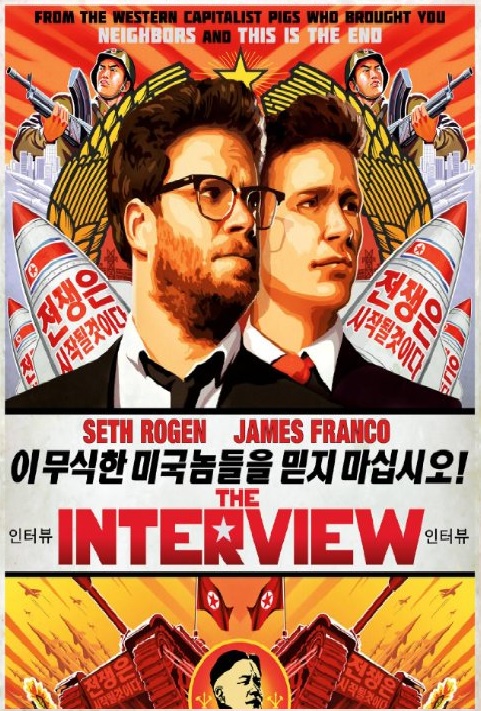
6 Lessons From Sony’s, “The Interview”


Sony The Interview - 2

Photo: All Rights – Sony Media

For years we’ve been told how the Internet is a very dangerous place. The stories keep trickling in, especially the ones about stolen identities, or a big box store being hacked for credit card numbers. The stories have been more frequent, and the thefts more blatant, but in the end it’s just been more of the same. These threats are usually more unsettling than frightening. It’s been a long time since the internet has served up a truly new threat. But now we have something special for the holiday season, a story about Sony Entertainment, a strange movie and international terrorism.

This is a story of blackmail, theft and extortion… and a timely reminder that the biggest threats to a corporation may be its top executives.  The dust still hasn’t settled down yet, but there are already many lessons to learn. Today, we’re going to look at six lessons from Sony’, “The Interview”…

Cyber Crime Is Real: We don’t yet know when this started, but sometime in the past few weeks a group of hackers informed Sony that they had breached their firewall, stolen emails from their top executives and were about to release the most embarrassing emails… unless Sony cancelled the release of their new movie, “The Interview”.

Since this is a comedy about the assassination of Kim Jong-un, the dictator of The Democratic People’s Republic of Korea (DPRK), the smart money is on the DPRK  being the ultimate mover behind the plot. After all, during the summer they threatened the US, and said they would retaliate if the movie was release. Whoever did it, the threats at Sony kept coming, and when they were not acknowledged, the threats went public. First threatening to release stolen emails, and then physically threatening any viewers.

Roles Are… Confusing: in the pre-cyber days, in order to attack an American company, you needed to get on US soil, or you needed to get into a US owned facility overseas. On the Internet, physical borders go away. Anyone can be attacked by anyone, regardless  of geography. Some nameless offshore entity could have attacked Sony. It could be the DPRK, or some proxy in another country. Their target could be the US, which they consider an enemy. Or they could have targeted Japan, which they have had a very bad history with due to their kidnapping of Japanese citizens throughout the 70’s and 80’s. The US could retaliate (and probably will), but so too could the Cyber Force, Japan’s cyber-attack quick response group (is it just me, or could Cyber Force be the name for a new Anime?)

Then again, Sony could hire its own hackers, or an independent hacker group could intervene… whether Sony wants their help  or not. Those in the know fear the damage that caused by two big government groups could cause if they slug it out on the Internet. What about the potential damage if private hacker groups choose sides and start a small war?

In 2013 a similar “small war” broke out between hackers who were for and against Spamhaus, a Dutch ISP that either A) fanatically defended the right to free speech on the Internet or B) provided a refuge for hate speech, neo Nazi’s and kiddie porn (depending on your point of view). When the object of a small war is better publicized, you can expect MANY more participants and probably more than just two sides.

Email Still Matters: The Sony story began with an electronic break-in, and stolen emails from the studio executives. Didn’t the Sony exec’s hear that you just don’t put certain things in email? Don’t write about how bad your clients are, don’t joke about the stupid things they do, and don’t send around notes to your friends on how much you hate your clients.

The perpetrators thought that the threat of exposing the most insensitive and egotistical emails from Sony’s executives would be enough to kill the release of “The Interview”. The strategy made sense. Look at the most boneheaded emails from Wall  Street. These emails insulted clients, pointed to potentially criminal activity and managed to alienate the American public. Sony… not so much. I’ve seen a few poorly written emails, and some badly turned phrases, but not the biggest mistakes I’ve ever seen. Even the email from Son’s Co-Chair, Amy Pascal, are surprisingly mild. So far.

We’ll see if there is more to come. The next executive email that’s splattered across the Wall Street Journal’s front page might come from Sony, or from some other corporation. Just be sure that it doesn’t come from YOUR corporation. See that your training department reminds everyone, especially your executives, that email is still the most frequent “smoking gun” on the Internet.

Demands Never End: The first demand was simple, don’t show the movie. After a few theater chains pulled out of the release, Sony gave in and cancelled “The Interview”.  Instead of an end to the threats, they got new demands. Sony was told, “That doesn’t just mean theatrical release, it means DVD’s, cable, streaming media, related products… anything! Independent theaters wanted to show the movie, and Sony was in a very embarrassing position, so the release was back on for Christmas day.

If Sony hadn’t rescheduled the release, what would the next demand have been? Would Sony be able to distinguish between the “real” terrorists” and the copy cats and pranksters that would inevitably follow? Would all screenplays need to be released onto the Internet for “pre-approval” before they could be released?

Don’t Threaten the Internet: Ironically, the history of this attack reads like a bad Hollywood script. The powerful Western (or is it Japanese?) Corporation is brought to its knees by an anonymous group of techno-geeks. But the geeks, might not be just some anonymous characters. Instead, they may be the secret agents of the last great dictatorships on earth. The attackers (at least briefly) won an extraordinary victory, over one of the most sophisticated corporations in the world. But then they decided to go a bit further.

They not only threatened Sony, they threatened everyone who wanted to see “The Interview”, or download it off of the Internet. And thus the plot turns once again, and the overconfident villain… in the last chapter, loses. Sony did stand up to the hackers until a few major theater chains opted out of the release. But “The Interview” was rescheduled for a Christmas release, using a coalition of independent theaters and streaming services like YouTube, Netflix and Amazon. In the end, the backlash from the Internet may make the Interview a bigger success than it would have been without the hackers.  The Sony incident also accelerated the next big thing in Hollywood…

Day & Date Streaming: The greatest impact of the hacking at Sony may result from the actions of the big theater chains. By caving into terrorism, they brought about the one thing the chains were all against… day and date streaming. Movie ticket sales have been in decline for over 20 years. The high cost of tickets, plus the quality (and comfort) of home theaters has diminished the theater experience. A big release movie… 3D, Imax movie, with popcorn, soda and snacks (not to mention gas and parking) … can cost a family of 4 plus $100 to $200.

Watching a streaming movie at home provides a big screen, great sound system, and comfortable seating for just a few dollars. Theaters are fighting back with better seating and better food, but that means higher prices. The only thing that theaters have that you don’t have at home is the a monopoly on first day releases. Studios want to release to theaters and streaming services at the same time (the strategy for scheduling movie releases through different channels is called “day and date”), but the big chains unanimously resisted simultaneous releases, knowing that it will diminish ticket sales. But Studios need more simultaneous releases to limit piracy between the release in the theaters and on-line. Once the theater chains pulled out, Sony had an irresistible opportunity to stream “The Interview” on the release date. By the end of 2015 we can expect to see many more simultaneous releases.

This story is far from over. In the final days of 2014, we saw what appears to have been a cyber-attack on North Korea, as well as attacks on the Sony on-line gaming platform. Both of these attacks may have nothing to do with “The Interview”, but you can bet that the next attack, or the one after that, may be the next small war on the Internet. At least, that’s my Niccolls worth for the New Year!

Posted in Best Practices, Decision Making, Unique Ideas | Tagged , , , | Leave a comment

Katy Perry: The Real Magic Act In “Dark Horse”


Dark Horse

Photo: All Rights Katy Perry/Capital Records


Katy Perry is a music mega-hit machine. Her latest hit is Dark Horse, is set, as the video says, “A crazy long time ago” in Memphis Egypt. This tightly crafted video is typical of the best new entertainment. Very high production values, very skilled artists… and absolutely no production credits for anyone other than the stars!

These videos are mini movies, but unlike theatrical movies, there are no credits at the end, to show who contributed to the production. In this video, men are in elaborate blue and red body paint, and the women are in identical gold outfits wearing cat-head masks that completely cover their heads and hair. It’s impossible to see who in acting in the video. The real magic in Katy Perry’s video is that the production credits have disappeared!

You may think, “Well, who cares who did what?” Keep in mind that the coin of the media world is exposure and recognition for your work. If you don’t know who did what, how do you know who to hire for the next video or album, or whatever?

At the end of every commercial movie, you have that endless procession of people and positions you’ve never heard of. It’s what’s called, “The Ending Credits.” Yes, it does go on (and on) for what seems like forever. However, this is where all the people who contributed to the movie get credit for their work. People that you don’t know, who perform jobs that you never knew existed, get their few seconds of fame.

Instead of just leaving at the end of the movie, take a few seconds and read the credits. Just what is a key grip, or a best boy? What do they do? Well, whatever it is, if they didn’t do it, you probably wouldn’t have a movie to watch. The actors on the screen are usually just a tiny fraction of the talent needed to produce a move, TV show or a piece of music. We recognize the stars, but without credits no one else gets much recognition. Especially if their costumes hide their faces.

In the strange workings of the media world, a commercial movie has very strict rules, and these rules are enforced by union contracts, including how credits work. If it is not a movie, and it was not produced by a unionized studio, the rules can be very different. Including giving no mention or no credits at all, to everyone else in the production other than the very recognizable stars. Just like  Dark Horse.

Of course, you might think that the industry should give up its antiquated ideas of credited work, and instead focus on how talent is paid. Maybe, but the industry is changing even more quickly there, and not in the right direction if you happen to be an artist. A hundred years ago, most artists were just learning that they could get paid for recording their work. Today, artists are learning that most forms of new media barely pay them for their work. Tiny details of how your work is played, make a very big difference in what you will be paid.

Residuals, the money artists are paid for replaying their work, differ based on minutia about how the music is used.  Did you know that residuals are much higher for talent when you play a song from a CD or a downloaded MPG, than when you listen to a streaming service, like Pandora? We’re not talking about a little difference here, it’s a staggering amount! One artist said that in the past for one song he did with a well-known star he made enough to by a house. Today, he did a digital release that got a huge number of hits, and had enough to buy a discount breakfast.

In the past, the idea was that radio helps to promote your “real” sales, and so they receive a steep discount per play. When media went digital, and then went streaming, strange new rules took over that dramatically reduced payment per play. For example, one artist showed that for 18,797 plays on commercial radio, already far less than if you bought a CD or MP3, he was paid just $1,374. You’re probably thinking, “That’s all?” Well, on Pandora, one of the most popular streaming services, the artist got over a million plays of the same song but only received $16.89.

This is the real magic in Dark Horse. As most media becomes digital media, the niceties about how credit and money from projects is split between the talent… niceties that took decades to put in place…  is quickly being lost.  Young artists need recognition in order to become tomorrow’s stars. Pay attention to the credits and to how you choose to use digital media, or the disappearing act in Dark Horse is going to deprive us all of the next generation of entertainment! And that’s my Niccolls worth for today.


Posted in Uncategorized | Leave a comment

High Cost for Cheap Phones


Star N9500

Photo: All Rights, … Mysterious Persons in China

No term in the English language better describes today’s story than,  “I told you so!” In the past, I’ve written about the problem with fake goods from China, spying from China and the world’s biggest market for counterfeit goods, EBAY! Each of these issues is a story, a very long story, in itself. Today we’re going to pull all of these issues together into one jumbo tale of exceptionally bad judgment.

Having the best smart phone is a matter of status, for all of us. It might be the highest res screen, or the fastest processor, or a new 3D technology… but we all crave new “bling” on our phones. Plus, most smart phone plans have a loan built into the plan that only requires an up-front payment of between $0 and $200, instead of the $600 or more cost of the phone. When you make your last loan payment, you’re usually told, “You’re eligible for a free new phone!” That process has created a culture where we upgrade our phone every two years, making even slightly old phones look outdated.

Why are our tiny phones so expensive, when entry level laptops can cost as little as $300? Well, for the most part, our phones are computers. They have similar amounts of memory, not quite as good storage and processor speed, higher resolutions monitors and better battery time. Not identical,  but smart phones are equivalent to laptops, if you think of them as specialty laptops… or tablets. And, it has always cost a lot more when you want to package the same features in a smaller space. There are definitely consumers who want to upgrade their phones much more quickly than they would upgrade their home computers.

Given our appetite for new phones, we shouldn’t be surprised to see counterfeit phones. Earlier this year we saw a credible looking Samsung Galaxy knockoff, the Goophone i5S. Clearly designed to look and act like the Galaxy phone of a similar name, but at half the price. Now we have the Star N9500, yet another Galaxy knockoff (this time the S4). You can buy this Chinese manufactured fake on EBay. For those of you who don’t know about Ebay, aside from being the world’s largest auction house, it may also be the world’s largest seller of counterfeit goods (although that dubious title may soon be taken by Alibaba, China’s big trading site).

Ebay has been repeatedly sued and  petitioned by well-known brands, such as Tiffany’s, to stop the sales of counterfeits. However, because Ebay is an auction house, and not a department store, the law does not provide the same protection against counterfeiting. You can sue thousands of individual sellers, but not eBay itself, which is technically not selling… just facilitating a sale between two other parties. In an environment where buyers actively seek “knockoffs”, fully knowing that they are not the real product, it becomes even more difficult for major brands to protect their brands and reputations.  Which brings us back to the Star N9500. Most buyers know that it is not a Galaxy, and that it a different phone with different specs. But, what no one knew was that the phone has malware built into the operating system!

Yep! This phone was designed as a spying device. It doesn’t just have spyware, IT IS SPYWARE! The software that allows it to remotely control your camera and capture all of your activity, and then hide this so deeply that you cannot find it, is built into the core of the phone’s hardware and cannot be removed!  How’s that for a bargain phone? It’s like someone put together every urban legend about the Internet into one story. Chinese espionage, the dangers of buying on-line, corporations ripping off the average citizen, my phone is spying on me!

It looks like your Grandma was right. You get what you pay for. Big brands have been screaming about counterfeits for years, but the average buyer thinks, “What’s the harm? Besides I know it’s fake!” You may know that it’s not a real Galaxy, but do you know that it is a “real” spyware device? It’s hard to resist that once in a lifetime deal, and the bad guys know that. But for a deal like this, once in a lifetime is once too much… and that’s my Niccolls worth for today!


Posted in Uncategorized | 1 Comment

The Disappearing Feast: An Empty ocean


School of Bigeye Jack

Photo: All rights copyright, Microsoft Corp.

The good news is that Americans are rich, and can pretty much afford to each whatever we want. Those dire warnings about the death of fish species and the emptying of the oceans… doesn’t really apply to us. True, between America and China we’re managing to eat some of the tastier species of finned fish faster than they can reproduce, but if you can afford a $50 steak, you can afford a $50 can of tuna. A bigger problem is that our choice of fishing methods plus other human activities are killing off other species that we don’t eat, but which are very important for the health of the oceans.  And, of course, if you don’t happen to live in a rich country, you’ve got a big, BIG, problem.

As the oceans of the world are depleted, the cost of fish will rise and countries that rely on a seafood diet will have massive problems keeping their populations fed. These fish based countries, pretty much any country with a coastline, may also rely on fishing for income. No fish means no food AND no job! That’s not the formula for global political stability. The US consumes a lot of fish, just because we are a rich and large nation. However, we’re not very fish dependent. China catches more fish than any nation on earth, and Chile consumes more fish than any other country (nearly 180 lbs. annually, compared to about 30 in the US). If fish go away America would miss them, but we would survive.

We are not a fish dependent nation, we know that something has been going on, but not what. We’ve seen notes on menus at progressive restaurants telling us that some fish are endangered, and some can be sustainably farmed. The problem is that when we look at our ocean, rivers, and lakes, we can only see what’s on the surface. All the interesting things happen deep underwater. We know see that elephants and rhinos are disappearing because we can see and count the remaining herds. We can’t see most of the life in the oceans. Even well-known species… like whales… live lives that are largely unknown to us.

Arguments over how species depletion needs to rely on statistics, rather than pictures of missing “herds” of fish. The vast majority of scientists know that species are in trouble, but complex scientific data is hard to understand, and too… academic. As long as the damage is hidden from our view, we substitute opinions for data. What do we really KNOW about the fish in our oceans?

It’s Nothing New:  Before we ran out of fish, we were told that our fish had been poisoned. And they were. For decades, we’ve known that many ocean fish contain unacceptable levels of mercury and other toxins. Which ones? The fish that eat other fish. The most poisoned are the biggest carnivorous fish. Top predators, like the tuna, have the toxins they are exposed to, and also all the toxins that everything they’ve eaten (i.e. little fish).

Strangely, except for fish, American’s don’t eat predators. We eat beef, chicken, pork,  lamb, turkey, even rabbit and deer. None of which are predators. We don’t eat vultures, lions, wolves, etc. We instinctively avoid eating predators. Jews, Christians and Muslims are all prohibited from eating predators. Unfortunately, ancient religious leaders living in a desert didn’t know much about the hunting habits of deep sea fish.

Tuna, cod, perch, salmon, pike,  and many other fish we consume are predators. Worse yet, top predators often eat fish, who eat other fish (who might eat other fish). This is why top predators are sponges for heavy metals and toxic chemicals. We knew all of this, decades ago. That’s when we realized “the ocean is NOT endless.” We started to pay a bit more attention to pollution in the ocean. We had to! Some fish breeding grounds were so polluted, that they had essentially died, and took the fishing communities with them. Other still had fish, but they were too toxic to eat. We learned our lesson, did some basic science, put some laws in place and old fishing grounds started to come back. For a while. Then we started to ask a slightly different question. “If the oceans are not endless, could it be that the number of fish are also not endless?”

Fishermen Cheat: At the end of the day, individual fishermen talk about the “fish that got away,” who are inevitably larger than the best fish in their catch. In industrial fishing, factory ships with bulging nets that haul in hundreds of tons of fish a day somehow report very meager catches. Why? Because international fishing limits are very far below the capacity of international fishing fleets. Especially the Chinese fleet.

Virtually every country in the world with a significant fishing fleet has complained about over fishing by the Chinese. Even when scientists agree that fishing quotas are reasonable, no one believes that everyone is strictly following these quotas, or that we have enough monitors to know who is cheating. Many studies pointed to China. The latest of these studies shows that China is catching 12 times their quota. Chinese over fishing may be more than all of the legitimate fish harvesting in the world. And… other countries are cheating too!

Size Matters: American’s like big fish. Fish like tuna and cod. As we’ve discussed, many of the biggest fish are predators. In order for a predator fish to gain a single pound of weight, it must consume several pounds of smaller fish. The exact ratio depends on the species of predator, the species of forage fish (the little fish the bigger fish eats), time of year and other factors. For a farmed fish like salmon, it takes a 5 to one ratio. If we use that ratio, and there is another link on the food chain (the little fish eats  smaller fish), it takes 25 pounds of forage fish for your 1 pound of fish fillet. A third link in that chain, and it could take 125 pounds of forage fish for your 1 lb. fillet.

Many countries consider small fish (anchovies, sardines, etc.) to be a delicacy. If America  changed its preferences, and relied more on smaller fish, we could dramatically turn around the depletion of the oceans. It would be a major change in how we look at fish, but carefully choosing fish that are one or two links further down the food chain could dramatically change human impact on fish populations. And, there are other preferences that could dramatically change the depletion of our oceans.

Bycatch: Bycatch is the industry name for the fish that are accidentally caught, usually in trawling nets. Bycatch, about 20% of the fish harvest, die during the fishing process and are then just thrown away. Shrimp fishing is the most bycatch intensive catch of all. Shrimp is just 2% of the tonnage that the fishing industry catches, but it generates a third of the world’s bycatch. That’s a lot of wasted fish, And most of it is completely edible, it’s just not profitable enough to bother bringing home. Shrimp nets not only kill other species, they also drag across the bottom of the ocean and destroy the fish breeding areas and coral reefs.

Confusing Data: in previous decades, the Lobster industry of New England was going out of business due to over fishing. Agreements were made, and for many years the fishermen limited their catch, and strict monitoring was put in place. A few years ago, there was a miraculous recover. Then, against all odds, there was a record harvest of lobsters. It was a miracle, and another reason to ignore the scientific evidence. However, the reason why there has been a turnaround is that there are holes in the environment, where there were once other species. Without predators, the population of lobsters has exploded. And, the price of lobsters has hit a new low. Too many lobsters have been worse for lobstermen than too few lobsters.

If you are not a scientist, you probably think, “If lobsters made a come-back, the conditions of the ocean can’t be THAT bad. After all, the lobsters must be eating… SOMETHING?”  When you answer that question you, learn a bit more about how much the oceans have changed. Today, for the first time, big lobsters eat… little lobsters! Under extreme conditions, such as being confined in a small area with no other food, many species in and out of the ocean will eat each other. But only when other food isn’t available. A very hungry lobster might eat a baby lobster, if nothing else is available. But lobster cannibalism has become a primary source of prey for adult lobsters. THAT is something new, and disturbing.

We humans have changed the oceans. At first, we dumped our garbage in the ocean, and we learned how poisoning the oceans could poison our food. Now we’ve learned about another limit. There are only so many fish in the ocean. The good news is that we can do a lot to reverse the damage. Something as simple as eating sardines (or some other small fish) instead of big tunas, and we could give a lot of species room to recover. Find a less destructive way to fish than slicing up the ocean floor with nets and throwing “undesirable fish” overboard, and we can do a lot more.

We can eat our fill of fish for generations to come, if we make a few changes in what we eat and how we catch it. But we don’t have forever to fix the damage we’ve done. The very latest research tells us that there may be a point of no return for some ocean environments. Once they’re gone, Coral and other complex structures, could take centuries or even longer to recover. If we want to continue to harvest the oceans, we’d better help to protect them! And that’s my Niccolls worth for today!
Posted in Uncategorized | Leave a comment

YO! Space Taxi!


Taxi

Photo, All rights copyright Microsoft


The world has a love-hate relationship with Taxi’s. Here in New  York, where we have more taxi’s than anywhere in the world. We often make fun of taxi’s. We complain about the quality of the service, we complain about their cleanliness, we complain about the accents of the drivers… but we use them more often than any other city dwellers on earth.

In fact, in New York and elsewhere, when we create another form of reliable and inexpensive transportation we often slap the “taxi” name on it. We have water taxis in NYC, which usually seats 20 or more people. We even paint them NYC taxi-yellow. Occasionally, I hear of some kind of sky taxi (a helicopter or small plane). Now, the space transportation firm “Space X,” has a sky taxi!  I wonder whether they will consider painting it yellow?

America has largely forgotten that the US space program, doesn’t have any space ships. Sure, we have some rockets to put satellites into orbit, but even these flights are largely outsourced to other countries. The last craft that the US had that was capable of launching a human into space was the space shuttle, which retired in July of 2011. Even before the shuttle was grounded, we began relying on the Russians for space transportation. The Russian space program charges us a hefty price to put a man in space. Our previous contract from 2016 charged $22 million per astronaut, which went up to $71 million in 2013. Still, this costs less than the shuttle did.

And then came the Crimea. Since we’ve been less than supportive of their policy in Crimea, Russian has warned America that when the contract is over in 2016, the price is going way up… or they may simply not renew. America’s reaction was to consider eliminating some Russian contracts. However, all of this  enmity over space has been (so far) restricted to US/Russian government contracts, not all the private industry contracts. What will NASA use once the Russians shut off our space service?

China is the third country that has launched a human into space, and even landed robots on the moon, but NASA hasn’t even started to negotiate a contact. Another big player is Space Agency. While they have put some satellites into orbit, they’ve never been able to launch people. At the moment, the Russians are the only game in town for the US, and we only have until 2016 until our contract expires. And the Russians may not renew. Remember all that nastiness over the Crimea? Well, the Russians certainly do! The US has hit them with penalties, and Russia in-turn has found a way to penalize us.

Just in time, the new space taxi from Space X, is due to arrive. It’s going to be down to the wire, but the space taxi may prove that commercial space transportation can be a LOT cheaper than the government provided alternative. If that turns out to be the case, the space taxi may be the single most important vehicle in human history. Alternatively, the winner in the commercial race for space will be Virgin airline, with their new Virgin Galactic space port in Arizona. Yes, Virgin airlines have a space transportation system that is already pre-booked its first  600 passengers. With Virgin, you can even go on-line today and book a flight.

NASA will have even more options coming up as the space transportation industry continues to mature, and even as its own Orion craft becomes available at the beginning of the next decade. But until then, why not call a taxi? And that’s my Niccolls worth for today!


Posted in Uncategorized | Leave a comment

Edward Snowden And The Second Amendment Defense!


Patriot

Photo: Public Domain, US National Archives.

Many Americans believe that the 2nd amendment provides a right to gun ownership. It doesn’t, and the supreme court has said so repeatedly, but politics and the law rarely mix well. If you do take a look at the scant 27 words that are the 2nd Amendment, you will see two troubling words… Militia and Regulated (in fact, “well regulated”). The purpose of the 2nd amendment was to provide a young and weak America with a military force, when it couldn’t afford to pay for a standing army.

Any doubt about the meaning of the 2nd amendment should have been swept away a few months after the Bill of Rights was introduced. The Congress, under President George Washington, followed the Bill of rights with the Militia Acts. clearly stating that all militias are at the direct command of the President, and exist to put down slave rebellions, Indian insurrections, and foreign invasions.

If you’ve ever listened to the rants of extreme 2nd amendment supporters, they clearly are not aware of the history of the 2nd amendment, or of the history of its enforcement. That history includes the Whiskey Insurrection, when an armed militia of 14,000 soldiers marched under President George Washington into Pennsylvania, with orders to shoot on sight any member of the Tea Party (a group of extremists who considered a tax on whisky the justification for armed rebellion against the US government).

And what happened to the 150 men who were caught by the militia? Why, they were tried for treason, of course. To me, this is pretty strong evidence that gun supporters misinterpreted the intentions of the founding fathers. Nonetheless, half of American families are gun owners, and many of them believe in the 2nd amendment story.

As I watched Snowden’s interview, I wondered if the gun rights movement, a group that supports the armed overthrow of our government, would also support the rights of American’s to use information-based weapons?  Is resistance against the government (or corporations, or anything else) the 21st century version of the riots of occurred in earlier eras in US history? Rather than asking if Snowden is a patriot or a traitor, we should ask if he wants to be  Che Guevara or Cesar Chavez. Is he trying to change the system or overthrow it?

America has always been a rebellious country. We like to think that we’re each individualists, who are in command of our own destiny, even to the point of taking our guns and going to the streets… although we talk about it a lot more than doing it. Now, we’re in an age where world-shaking  rebellion can happen without a single shot being fired. Snowden clearly thinks he is in the right, and he believes that he tried the official channels before he began his rebellion. Instead of patriotic rallies with gun brandishing patriots, what will these new rebels choose as their symbol?  Let me know what you think… and that’s my Niccolls worth for today!

Posted in Uncategorized | Leave a comment

Is the (Tea) Party Over?


Hand Pouring Tea

Photo: All rights Microsoft Corp.


As the preliminaries for the 2014 elections get started, there is uncertainty in the air. Will the Republicans defeat the Democrats? If the Republicans do win, will it turn around their losing streak for the Presidency in 2016? The Republican party has been undergoing change for decades, and that long chain of changes is redefining the Republican party, possibly splitting the party in half. The 2014 elections will show us if the rise of the Tea Party is the defining moment in the growth the Republicans, or if it is the beginning of the end of the Republican’s as we know them.

Let’s go way back, to the 1960 election. The Republicans were largely the party of the North, and the Democrats were largely the South. Republicans supported the rich, but favored progress and science, and the Democrats were for tradition (especially southern tradition) and church values. John Kennedy won the 1960 election on a platform or reform and progress, a platform that was expanded upon by President Johnson, to become the “Great Society.” The desire of the Democrats for a fair society backed by a large government, vs. the Republican’s desire for a market-driven  society with a small government defined the battle between the parties. There were other differences… the size of the military, involvement in international affairs, etc. But it was pretty easy to know which party a politician belonged to, based on the policies they backed.

Then, the economy softened, the US lost the Vietnam war, and Japan became the rising start of industrial countries. On the heels of the humiliating capture of the US Embassy in Tehran, the Republican’s re-dedicated themselves to their core beliefs in 1980 when Ronald Reagan became president. The Republican party was re-energized by the thought of overturning failed Democratic programs with smaller government, and a market led economy.

However, the Republicans also wanted a bigger military and very big international changes, such as the defeat of the Soviet Union. Small government and international ambitions don’t live together happily. While some parts of government shrank, overall government spending exploded as the military became larger and space defense systems, and high-tech weaponry became a regular part of the military budget.

By the 2000 elections, anti-spend Republican’s became pro-spend. There were still differences between the parties, but the differences became ever smaller. The Republican’s gained voters, but these were the most disaffected and disillusioned Democrats. The 2000 election also completed the move of the religious right into the Republican tent. Now the Republicans had a problem.

They had enough voters to win elections, but their new recruits turned the party into an uneasy mix of traditional wealthy and educated business leaders, and anti-evolution theorists. Under the Tea Party banner, the Republican party has become the anti-science party, denying not just evolution, but climate change, species depletion, stem cell research and just for good measure… statistical evidence that marijuana is not dangerous, and that guns, cigarettes and alcohol are.

Republicans had ignored  the environment in the past. Nothing new there. But Republicans running businesses based on agriculture, or travel, or tourism, or manufacturing, recognized that the weather matters. The Republican agenda used to be very pro-science. You have to be pro-science if you want to be pro-progress, and if you believe in an expanding economy. Science minded Republican’s have been holding their tongues, while their less science inclined brethren looked for a political agenda in environmental science and other academic research.  The splinter group that became the Tea Party brought with it politics that would not easily blend with mainstream Republican thinking.

Then we had the 2008 election. The Tea Party raged at the newly elected President Obama, feeling that he represented all that was wrong with America. When they weren’t challenging Obama status AS an American. Republicans wanted to get back into the White House, but the Tea Party wanted to stop impure politics at any cost.

Believing that most of America believed in what they believe in. That’s why the Tea Party thought that the shutdown of the US government, would propel them into seats of leadership, rather than just undermining the credibility of their party. Previous generation of politicians ranked their success by the deals they made. Tea Party politicians measured their success by the deals they stopped. Disruption, rather than effective deal making, was their goal. Which is why the number of bills that turn into laws has dropped so dramatically in recent years.

The Republicans are an aging party. Not only are their members older than the Democrats, but the leadership is largely Regan Era politicians, who are marginal to the Tea Party’s politics. Old Republican leaders don’t represent today’s key demographics. The Tea Party brings energy into the party, but they don’t bring loyalty to the old leadership or the patience to wait until they hare handed power within the party. Their energy could as easily be turned against the current leadership as it can against their traditional democratic foes.

Republicans need their next big thing, and so far the Tea Party it is. But does the Tea Party need the Republicans? That’s the really big question for the next election. Will the Tea Party prefer to be a smaller party with a tight message, or will these rebel Republicans learn to keep to the Republican party line? Whatever they choose, the Tea Part is over.  They can’t continue to just be a rebellious segment of a larger party. They either need to strike out on their own or truly join the Republican party. And that’s my Niccoll’s worth for today!

Posted in Uncategorized | 3 Comments

Join The Resolution!


High Resolution

Photo, public domain.

In the second decade of the 21st Century, the single most important change in how we live our lives may be… resolution! That’s right, resolution. It’s HD on your big-screen TV, or pixels per inch on your tablet or smart phone. If you’re inclined towards the outdoors, you may already have a 4K camera mounted on a helmet to show your adventures to the rest of the world. In business, a monthly update is no longer good enough you want daily or  live info on what’s happening. Everything that can be measured, and that’s just about anything in the physical world, is being remapped for higher resolution and greater visibility.

Is it all good? It depends on who you are.  For visual resolution, there’s a big advantage to being young, and beautiful. When news became TV, instead of radio and newspapers, there was much talk about how reporters got prettier and the news stupider. If you haven’t noticed, now that every broadcast that matters is HD, there has been a big turnover in the news, and the average news team seems to have shaved 5 or 10 years off their average age. Physical beauty is a difficult thing to quantify, but wrinkles are not. If you’re in media, you already know that you have a short shelf life, especially if you are a woman. But we also live in a time of extensive and relatively inexpensive plastic surgery.

Media stars are very aware that they live in an increasingly hi-rez word. Every nip and tuck of the surgeon’s knife, and every drop of Botox underlines that awareness. HD shows every wrinkle,  and as 4K resolution screens enter the market, wrinkles will look more like a crater on the moon than an imperfection on a human face. Of course, if mainstream media stars have a problem with hi-rez, consider the future of pornography. It can be argued that every major innovation in media for the last few decades has been heralded by pornography. Videotape  took off when X-rated movies became available for home use. Cable TV didn’t really take off until the Playboy channel, and other “late night” content became available. DVD, on-line porno sites and all the rest each kickstarted streaming media and much of the technology we interact with every day.

As part of the evolution, the US pornography industry has grown to an industry with revenues between $4 and $10 billion a year. Despite the vast amount of wealth that this industry produces, its biggest stars are treated poorly. And the fans? Their unrealistic expectations have driven plastic surgery to new heights, or lows. However, even the best surgery today cannot stand up to close inspection under HD and the coming 4K standards. Will plastic surgery go hi-rez? Will new techniques be developed to better hide the scars, imperfections and tell-tale signs of the surgeon’s touch? Probably.

Think about it. Years ago, when corrective eye surgery was introduced, it was done with a knife. Now the most popular of these techniques, Lasik, is performed with a computer-controlled  laser. It is faster, safer and more accurate. Cosmetic surgery today is much more advanced that it used to be, and  incorporates many non-surgical techniques. Injections of Botox and even more advanced chemicals can erase years from your face. Of course, it does require a very steady hand and considerable experience, or you might erase all expression from your face. And you do need to get used to the idea that you are being injected with toxin from the deadly anthrax bacillus.

Which  brings us back to corporate America. At this time in the last century, most corporations were privately owned. Today, most of the biggest are public, and we have their stocks and bonds in our personal retirement and investment portfolios. Part of the deal about being a public company is that you have to provide a variety of public information. Public corporations must provide transparency into their operations.  And now that transparency is moving towards hi-rez. Business and government always pay a bit of a game over revealing profits and being taxed. But when it’s a public company, in their efforts to “spin” the profitability issue for the government, how much visibility is lost to the investor? Or is it the little investor that the big investors (or the inside management team) are trying to mislead?

This is the crux of the new regulations hitting Wall Street. For the past few years there have been monumental fines for questionable (and undisclosed) Wall Street activities. That doesn’t help the small investor or customers who complain about undisclosed and unethical activities. However, as these fines reach into the Billions of dollars, Wall Street is not reforming their activities. Instead, financial firms are merely moving money out of dividends and other areas that are important to small investors, and using it to build huge reserves to pay off fines.

We closely scrutinize our media stars, and when they show the first signs of imperfection, we are ready to move’em out and replace them with fresher and less blemished replacements. Yet, the firms that manage our money have far more blemishes, and we have been far slower in replacing their big stars. Perhaps, as all of the “too big to fail” legislation adds hi-rez  financial reporting, those blemishes will become just too visible to ignore. When the hi-rez revolution hits financial reporting in America’s biggest corporations, perhaps they too will turn to a corporate version of plastic surgery. What do you think corporate America needs… something they find a bit toxic or a scalpel? And that’s my Niccolls’ worth for today!


Posted in Uncategorized | Leave a comment