The Trump Tax: Is The Future of Farming at Risk with Trump’s New Policies?


The US still grows crops for export, but after Trump’s Trade War, China stopped buying from American farms.

Donald Trump has always thrived on transactional, single-issue deals. That style worked for him in real estate, where every project is neatly defined and someone walks away with a profit. But American economics, diplomacy, and politics are a bit more complex than selling condos. America’s simplest trade policies require more planning than any Trump business deal. Yet Trump insists that his tariffs will “Make America Great Again.”

But what does that actually mean? Will tariffs make corporations richer? Create better-paying jobs for American workers? Pay off the national debt? Or is “greatness” just another Trump branding exercise?

When we unpack Trump’s version of MAGA, it promises everything at once: more U.S. manufacturing, foreign factories repatriated, agricultural dominance, a balanced trade ledger, and a treasury bursting with tariff revenue. But the reality is more complicated.

Contradictions: For tariffs to generate revenue, imports must continue to flow. But if foreign companies fear punishment for selling too much to the U.S., they might move operations to America, which will kill off tariff revenues. OK, maybe you can’t have tariff revenue and new business revenue, but onshoring work will at least create well-paying jobs, right? Maybe not.

When factories relocate from low-wage nations to the US, they cannot afford a significant increase in wages and still maintain a profit. There is, however, a solution. Build hyper-efficient, automated factories in the US. With few or no workers, they may be able to compete.

Trump’s “job-creating” policies may build new factories and even create new billionaires, but high-paying jobs are not going to follow. When Trump tells us that he wants to turn back the clock to when America was great, he forgets that this was also when one out of every three jobs was unionized, paying higher wages and benefits.

Due to actions over the past few decades by both political parties, labor unions are a mere shadow of their former selves. Outside of government employment, only a very few Americans recieve the wages and benefits that were a part of manufacturing work. New car companies like Tesla are strongly opposed to sharing corporate profits with unions; Elon Musk once said that a unionized company is soon a dead company due to union demands. That’s coming from someone who is demanding a $1,000,000,000,000 bonus.

Without the history of high wages and substantial benefits that were once normal for American workers, how will automakers from low-wage markets view new American workers? We already know the answers. Toyota began building cars in the US years ago. While manufacturing wages in Japan tend to be lower than unionized wages in the US, it’s not exactly a low-wage market. Yet, Toyota and other foreign car manufacturers working in the US pay less, offer fewer (if any) benefits, and have troubling safety records. Are these the jobs that will “Make America Great Again”? Or does anyone believe that Trump will demand union representation in every new factory?

Reap What You Sow: Manufacturing can afford to wait years for results; agriculture cannot. Crops don’t care about campaign cycles. As of October 2025, the so-called “Trump Tax” has left many farmers teetering on the verge of bankruptcy.

Trump’s logic was simple and outdated. Trump hit China with massive tariffs on soy, corn, and wheat, betting that China had no choice but to buy American. But after his first trade war in 2018, Beijing started shopping elsewhere. When the tariffs (and political insults) returned in 2025, China turned to Argentina for soy and Brazil for corn. Tens of millions of tons of U.S. grain contracts vanished overnight, along with tens of billions of dollars for American farmers.

And then came the kicker: Trump announced a $20 billion farm-aid deal… not for America, but for Argentina. With Trump’s financial lifeline, Argentina’s president was able to eliminate trade taxes and clear the path for Chinese exports. It was a masterstroke… for China. Trump’s largess made America pay for China’s switch to Argentinian grain! And now, Trump says that America needs to double the amount to $40 billion to save Argentina. You can’t get much more tone deaf than that! Or can you?

Despite arguments from every economist in the world, Trump insisted that his Tax would not cause inflation. China rejected Trump’s one-sided tariffs. With most tariffs still not in place, the coming wave of inflation is slowed but still heading towards the US. Trump’s “absolute deadline” of November 1st has passed, just like the last 5 or 6 “absolute deadlines”. Even so, the fear of inflation has been growing. Trump’s solution? Americans should buy more cheap imported beef (from Argentina). Argentina’s cattle ranchers may love this idea, but it’s a lot less popular in Texas. Does MAGA stand for Make Argentina Great Again? Mission accomplished, Mr. President!

US Agriculture’s Future: China has not bought any US corn, wheat, or soy since Trump started a tariff war. Tens of billions of dollars in sales are gone. Crops have been harvested. Instead of being sold, farmers must now pay for long-term storage. If buyers are not found, crops will soon lose value. Eventually, they will rot and be worthless. And that’s not the worst of it.

In 2025, China was able to secure enough grain in South America to meet its needs. Unless Trump backs down on his tariffs and perhaps apologizes to China for starting a trade war, why would China ever buy from the US again?

After President Trump started his first trade war in 2018, China began financing new ports in South America. In 2025, China proved that it could replace grains from the US with grains from other markets. What is China’s incentive to return to U.S. suppliers, especially since Trump keeps making unilateral changes to tariffs?

Did you know that after China, Mexico is the second-largest market for soybeans? By 2026, Mexico… humiliated by Trump’s tariff posturing… could easily join a China-Argentina-Brazil agricultural bloc. If Europe or Canada follows, America’s export market will virtually disappear.

A trade policy built on confrontation, contradictions, and the assumption that the world must play by Washington’s rules may end up doing Beijing’s work for it. We’ll still have an agricultural sector, but it will be smaller, poorer, and far more expensive for consumers.

Paying the Price: Rising prices are already squeezing American households, while farmers face ruin. Trump once promised that “China will pay for the tariffs,” but he is now saying that we need a $10 billion bailout for farmers. A bailout that already needed to happen, but may never arrive, since many USDA workers who process farm loans have either already been fired or are scheduled for termination. And then there’s the government shutdown. It would be difficult to imagine a scenario that could do more damage to US agriculture than how the Trump Tax has played out.

Meanwhile, American manufacturers are voting with their feet. John Deere, the iconic U.S. farm-equipment maker, will shift production to Mexico. Why? US labor shortages (worsened by anti-immigrant policies), soaring costs, and a booming South American market. Deere will not close all US production, just the 50% that is sold in foreign markets. The reciprocal nature of the Trump Tax has changed the economics for John Deere; Mexican-made equipment can now be sold to foreign markets at half price. Yet another economic contradiction of the Trump Tax.

It would be difficult to imagine a scenario that could do more damage to US agriculture than how the Trump Tax has played out. Trump’s trade strategy has managed the remarkable feat of being both protectionist and self-defeating. The “Trump Tax” may be making something great — just not for America.

What do you think? Has Trump improved the US economy with his trade policies, or has he harmed the future of US agriculture and manufacturing? We want to hear your opinions!

Posted in Uncategorized | Tagged , , , , , , , , , | Leave a comment

The Fall of Late Night TV: Are Streaming Services to Blame?


President Donald Trump may have fanned the fire that is burning down Late Night television, but the fire that is burning down Late Night TV started decades ago. Late Night isn’t what it once was. Recent stories about Washington’s political revenge may even give Late Night a temporary viewership boost. But long-term, it is still on a march to the grave. Ratings are down. Way down since the height of viewership back in 1975. And they’re not coming back any time soon.

Mainstream TV is technology as much as it is entertainment. Broadcast TV, the free over-the-air content, took over from radio, which dominated home entertainment in earlier decades. By the 1950s, TV in America meant the Big Three networks… CBS, NBC, and ABC. Talk shows dominated Nighttime TV, and Soap Operas and Game shows dominated Daytime. Sandwiched in between were comedies, made-for-TV movies, detective shows, Westerns, and even the occasional Science Fiction show.

Broadcast TV was… restricted. The FCC had morality-based regulations, advertisers were concerned about consumer backlash, and viewers could form coalitions to boycott shows they found to be inappropriate (such as “All in the Family” and “Three’s Company”). When Cable TV arrived, the FCC did not have jurisdiction over this non-broadcast, private form of entertainment. Cable shows often started with a warning, “may contain adult language, adult situations, and partial nudity”.

In the 1980s, there was an explosion of this “adult” programming, which often won awards. TV programming was now looking more like the movies you would see in a movie theater. Homes went from 3 networks to … many. And Broadcast TV looked a lot less interesting. But before viewers could catch their breath, videotapes (and DVDs) appeared. Blockbuster outlets were in every city in America. Home consumers could watch every movie ever made. And porn. A LOT of porn.

In the early 2000s, cable cutters just went online for almost anything. Napster and then YouTube have both mainstream and very, very niche content—often for free. Streaming services, like Netflix, are today’s top dogs, with just about every content creator and studio opening up their vaults to the world (Paramount, Disney, CBS, Hulu, Apple TV, etc.). For a small monthly fee. Networks must provide their content for free, hobbling revenue streams for broadcast shows.

Daytime broadcast shows, especially Soaps and Game shows, are going through their own decline. Daytime programming was once aimed at stay-at-home moms. Most women now go to college and get jobs, devastating the viewership.

However, the concept that was created by soap operas… serialized story arcs with multiple sub-plots… lives on. Most Netflix shows follow this pattern. “Game of Thrones” may be the best example of this style. However, “back in the day,” there is NO WAY that the FCC would allow GOT to get on the air. Yet, if the FCC were not so puritanical, neither Cable nor Streaming would ever have been created. And, the new technology of streaming, plus elements from old soaps, gave us the Juggernaut of GOT. Entertainment continues to evolve. Just not on Network TV.

And consider 1970s game shows, like “The Dating Game”. While it is long gone, the general idea lives on. Could “The Bachelor” exist without the Dating Game? Probably not. And once the last rose on the Bachelor has long since withered, it will probably return with a new name and an updated format (maybe as augmented reality?), but it will return. Are you listening, Late-Night? The audience changes. The technology changes. And Late Night programming MUST change to survive.

When Johnny Carson hosted The Tonight Show, Late Night was in its golden age. Carson’s show wasn’t just another talk show—it was the talk show. Future stars like David Letterman, Jay Leno, and Joan Rivers first cut their teeth as Carson’s guest hosts. While Late Night programming only covered an hour or so, Carson’s reach went far beyond his own time slot.

NBC executives recognized the power Carson had over his audience and worked to capitalize on it. After Carson signed off, plenty of viewers were still wide awake and looking for something to do. So, in 1973, when other stations signed off for the night, the first truly successful Later Night show was just warming up… “Tomorrow with Tom Snyder”. NBC’s gamble worked out, and a new type of programming was born.

But there’s more! The Tomorrow Show gained its audience by merely being after Carson. But the next morning, your dial was still set to NBC. NBC’s “Today” show dominated the morning ratings for decades. NBC (and other networks) assumed that the “dial Lock” from The Tonight Show lasted until the following day. If true, that made the Late Night slot the most powerful of all, dominating a third of all weekday programming hours.

Carson is long gone. Since then, ratings have been in decline for decades. Has the audience changed? Yes, it has. But more than the viewers have changed. In the early days of Carson, there were three national networks with a broadcast day that ended at Midnight or earlier. Now the day is 24 x 7, with an infinite number of cable and internet “channels” competing for viewer attention. And, of course, there are new forms of entertainment. Console games, video chatting, online gambling, social media influencers, YouTube videos… and more. It’s very, very hard for Late Night programming to attract and hold onto users.

Where does this leave the big three Late Night talk shows? Pretty much in the dumpster. Late Night has virtually collapsed over the last few years. The best-performing Late Night show is “The Late Show with Stephen Colbert”. Ten years ago, they had 4 million nightly viewers; now they have just 2.4 million viewers. That means they are down 50% in ten years, and down as much as 90% since Carson. Jimmy Kimmel and Jimmy Fallon are in even worse shape, with just 1.8 million and 1.2 million viewers.

Can these three Late Night shows survive? Probably not. The main reason they are still on the air is that everything else the networks have tried in late or later night programming has been even more unpopular…. late night news, comedies, and other traditional entertainment. They all failed. I suspect that all three networks know that they have to do something, but none of them wants to give up a time slot to the competition.

Well, there are always infomercials!

What do you think? Do you watch Late Night shows? If not, if you were in charge, what would you want to see in this time slot? Or, would you spend your Late Night hours doing something other than watching Network TV? Tell us what you think!

Posted in Uncategorized | Tagged , , , , , , , , , , | Leave a comment

“Our Thoughts And Prayers” Won’t Stop Mass Shootings, But We Can Reduce the Carnage T-O-D-A-Y!


Credit: Nick Anderson, Houston Chronicle, Jan. 12, 2011

America has a problem. A deadly one. Mass killings—especially in schools and churches—have become an epidemic. More recently, assassinations have joined the list. This overlooked crisis claims hundreds of innocent lives every year. Unlike bank robbers demanding “a million dollars and a fueled-up plane,” these perpetrators have no demands, no escape plan. They usually expect to die. Mass killings are often a theatrical form of suicide—designed to seize attention in their final moments.

Over 500 Americans have died in these tragedies. Yet for decades, politicians have refused to act, paralyzed by the political fallout of addressing America’s obsession with guns, the Second Amendment, the NRA, and increasingly deadly weapons. “Thoughts and prayers” have become an empty ritual. Meanwhile, the killing continues.

It’s time to move forward. Sorry, gun control advocates—I’m with you. Truly. But the most Washington will give you is silence or sympathy cards. That road is blocked.

Instead, let’s build on what both sides finally agree on: mental health. Conservatives have started to say, “This isn’t a gun problem, it’s a mental health problem.” Democrats have been calling attention to the mental health crisis for decades. At last, there’s common ground: when someone kills strangers in large numbers, mental illness is involved.

Trump calls them “sick, sick people.” Robert F. Kennedy Jr. warns of rising illness and death among the young. Measured by lives lost to mass shootings, suicides, “accidents,” and deadly family grudges, this is one of America’s most urgent health crises. For every person consumed by suicidal or violent thinking, many others may die with them. Few diseases are this infectious—or this deadly.

How did we get here? Before 1966, mass killings looked different—mob lynchings, strike-breaker massacres, Mafia shootouts. But that year, Charles Whitman climbed the University of Texas tower and shot 17 strangers. A Marine veteran and student unraveling mentally, he left a suicide note, killed his parents, and carried out a public shooting. An autopsy later revealed a brain tumor. Stress, warning signs, suicidal intent, and public violence—patterns we’d see again and again.

In the 1980s, we learned the phrase “going postal.” Under crushing productivity demands and mass layoffs, postal workers snapped. One killed 14 colleagues before turning the gun on himself. Again: stress, warning signs, violence, suicide.

Compare that to recent mass layoffs at the Department of Government Efficiency (DOGE): 300,000 jobs terminated in weeks. If history is a guide, shouldn’t we expect another wave of workplace violence? Is anyone preparing for it?

In the 1990s came Columbine—and an era of school shootings. Since then, there have been over 400 school-based mass killings. More recently, churches have become targets. And the same familiar pattern repeats.

Profile of a Perpetrator: Nearly 100% are male, and most are ages 16–30. They post disturbing content online, and 65% have criminal records. They are often obsessed with trauma, suicide, isolation, and violent fantasies. Not just in what they post on social media, but also in what they choose to read on social media. And finally, they either have guns or they have access to guns… often because their families own guns (which they may steal).

In an age of AI and hyper-targeted advertising, all of our internet usage and activities are harvested, packaged, and sold to advertisers. Surely, we can use the same technology to identify potential mass killers BEFORE they kill. This wouldn’t even be an invasion of privacy, since it’s all publicly posted on social media sites. Each social media site would report anonymous data to a central database, which would only then identify the ID owners of individuals with high perpetrator potential, and intervene before the next tragedy.

Profile of a Perpetrator: Nearly 100% are male, and most are ages 16–30. They post disturbing content online, and 65% have criminal records. They are often obsessed with trauma, suicide, isolation, and violent fantasies. Not just in what they post on social media, but also in what they choose to read on social media.

Yes, there will be false positives. Some young men will be flagged who never would have killed. But if some young man is not a killer, but exhibits all of these red flags, intervention may still prevent self-harm or other violence. We’ve seen from other examples that the signs are often there, but families and schools often lack the tools and training to address mental illness.

The tools exist. The data is public. Privacy isn’t the issue. Political will is.

What’s your opinion? Is there a better way to address the mass killings? Let us know what you think!

Posted in Uncategorized | Tagged , , , , , , , , , | Leave a comment

TRUMP TAX: Can Tariffs Rebuild America’s Industry?


Tariffs are typically a blunt instrument with a focused goal. Either reduce the inflow of foreign goods or boost domestic production. They usually target a specific country, industry, or product. But the Trump Tariffs try to do it all. Restrict imports, revive domestic manufacturing, raise government revenue to pay off the national debt, create high-paying jobs, and miraculously avoid inflation or economic backlash.

That’s a wish list, not an economic strategy. These objectives often conflict. Trying to achieve them all at once creates friction, and the goals cancel each other out. Instead of benefits, we may be left with consequences.

Economic Reality: Economists across the globe agree: tariffs can’t perform economic magic. Yes, tariffs raise money — but only if Americans continue to buy imported goods. If foreign goods are replaced by American ones, tariff revenue vanishes.

In the short term, companies may absorb the cost of tariffs. But if tariffs are permanent, neither foreign nor domestic firms can afford to eat those costs indefinitely. Sooner or later, the bill gets passed on to the consumer… in the form of higher prices.

What is Trump’s endgame? He says tariffs will make the U.S. economy “bigger, better, stronger.” But what does that mean? Does “stronger” mean more billionaires, or better lives for average Americans… with livable wages, healthcare, and vacation days?

Big Beautiful Bill: At Trump’s “Independence Day” rally, auto worker Brian Pannebecker joined him on stage. Brian stated his support for tariffs, just as auto workers have for decades. When Pannebecker first voted in 1980 for Reagan, believing that Reagan would save Detroit. Reagan didn’t. Nor did any president after him, including Trump himself.

So what makes Trump 2.0 different from Trump 1.0? What is Trump actually trying to protect? Classic American brands? Any car built on U.S. soil? All parts made in America?

Today, only about half of the cars sold in the U.S. carry a domestic brand. Many of those contain less than 50% American-made parts. Some cars are assembled in the U.S., but only about 25% of the total car parts are domestically sourced. This is largely why a mere 200,000 out of 4.5 million auto industry jobs still remain in Michigan. The rest migrated to lower-wage states or overseas long ago.

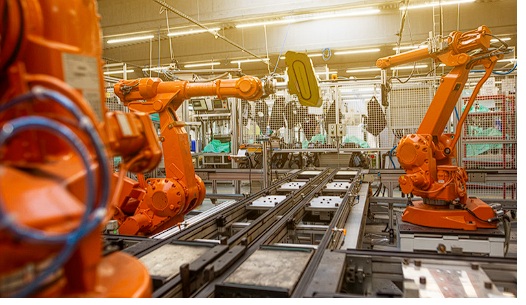
Wages: Union auto workers in Detroit can earn $66/hour with seniority. Meanwhile, factory workers in Alabama start near the minimum wage and top out at half of the old Detroit wages. Automation has taken an even bigger bite. Decades ago, humans painted cars by hand. Now, robots do the job faster and at a much lower price. Even if factories return, don’t expect the jobs to follow. At least not in the same form, or at the same pay.

Unions: Back in 1980, Pannebecker cast his vote during the twilight of the union era. Back then, a union worker could buy a house, raise a family, and fund their retirement… on one salary. But unions have been under attack for 50+ years, with the anti-union charge led by the Republican Party. In 1950, a third of American workers were unionized. Today? Just 10% — and falling.

You can debate unions all day, but one fact is clear: without them, most workers can’t afford the American Dream. And yet, Trump says that America can have it both ways: higher profits and higher wages. However, Elon Musk, who actually runs a modern car company, has a different position. Musk says, “Unions are a sign of a failing company.” Tesla is staunchly anti-union. Rivian, Scout, and other “pre-production” car companies take a similar… if more polite… position. The results? Lower wages and fewer benefits. So much for trickle-down.

Old vs. New Factories: Let’s say Trump succeeds. We bring manufacturing back to the U.S. Great. But the old factories overseas? They’ll become industrial graveyards. A trillion dollars in write-offs. Equipment might be salvaged, but infrastructure — roads, rails, utilities — will rot.

Building new factories in America will cost hundreds of billions… or more. But if we build them the old-fashioned way, we won’t be competitive. American manufacturers can only survive by outpacing foreign rivals in efficiency, and that means automation. That’s the paradox: to make U.S. manufacturing viable again, we must build smart, automated factories… which require fewer workers. The jobs won’t “return”. They will simply be replaced by robots.

The harsh reality? The more efficient the new factory, the fewer workers it needs. The jobs that do return may not be in Detroit, and they won’t pay like they used to. Worse still, the skilled labor pool around those factories? Gone. It took decades to build. It won’t be rebuilt overnight.

Conclusion: Yes, Trump’s tariffs might help American corporations get richer. Maybe even rich enough to help shrink the national debt. There might be more billionaires. But if the gap between the wealthy and everyone else grows wider, is that really “Making America Great Again”?

This isn’t Trump’s first go at economic revival. He promised to save the coal industry in his last presidency. But he also backed fracking. Guess what? Cheap natural gas replaced expensive coal. And 40% of coal jobs vanished on his watch. If Trump’s support for fracking helped kill coal, what unintended consequences might his tariffs have?

When the dust settles, will working-class Americans be better off? Or will we be left with fewer jobs, higher prices, and another round of broken dreams?

What do you think? How would you rate Trump’s second administration? What do you think is and isn’t working? Share your thoughts with us.

Posted in Uncategorized | Tagged , , , , , , , , | Leave a comment

College Students Cannot Get Jobs… Is It Because of AI?


For a day in July in New York City, the weather is spectacular! Normally, a blanket of heat and humidity moves into the City just before the 4th of July. And stays! Until the end of August, you can cut the air with a knife! But in 2025, the weather is great. And my fellow New Yorkers are enjoying the city. Especially recently graduated students.

NYC is a college town. Students in caps and gowns have been a common sight for the last month. Which means that students are looking to employ their hard-won degrees. After all, a public education costs around $120,000 for a bachelor’s degree. Private colleges cost more than double that. And it’s time to start paying off that student loan!

But students are finding that 2025 is a difficult year to graduate. Normally, recent graduates quickly land jobs during the summer. But in 2025, employers are not so quick to hire new graduates. Why is the job market suddenly failing college students? Has the long-anticipated AI revolution begun to steal jobs from the class of 2025? Maybe. Or, maybe not.

For the first time in decades, the unemployment rate for new graduates in 2025 is higher than the average. News stories and articles about this phenomenon tend to blame Artificial Intelligence. While AI could play a part, it’s unlikely to be the key issue. Of course, demonizing AI does make for a compelling headline. And great clickbait. But it’s probably too soon to blame AI for big job losses. That may well be in 2030, but it’s too soon for 2025. If it’s not AI, why is the unemployment rate for graduates rising?

Trump: President Trump believes that he is a great deal maker. And his greatest deals are made when conditions are chaotic. His biography tells us that he finds advantage through misdirection and confusion. Unfortunately, most businesses and nations prefer stability to chaos. The same is true of the labor market. On-again, off-again tariffs confuse markets and nations. Another round of Trump Tariffs is set to start this week. But will it? Given how interconnected the US economy is with the world, tariffs can disrupt the economy. That makes it very difficult to know if you should hire and who you should hire.

The other Trump Tax: Mainstream media attention has focused on tariffs, with less attention on the US dollar. Since Trump’s election, the value of the dollar has fallen by 10%. Frequent hostile statements about the world stealing from the US may be the cause. When potential investors hear that Trump is furious with foreigners, foreign investment stalls. Add to that the expected loss of foreign tourism due to Trump’s anti-foreigner rants. That’s not good for hotels, airlines, and major cities. When Trump speaks badly about other nations, it makes foreign investments less likely. For decades, the US economy has been fueled by these investments. Many businesses expect reduced foreign investments and fewer tourist dollars. At least some of these businesses are holding off on new hires.

Business Caution: Manufacturers and importers have been waiting for clarification on tariffs. Initially, Trump said that his Tariffs would be “reciprocal”. Yet he has tariffed unpopulated islands and nations without US tariffs (such as Australia). Trump tariffed Mexico based on immigration issues. Now, Trump levied a 50% tariff on Brazil. Because he disagrees with the Brazilian court system on prosecuting their ex-president. U.S. international policy is now based on the mood of Donald Trump. Trump’s mood requires US companies to reconfigure their manufacturing and logistics overnight. As a result, some iconic US companies (ex. John Deere) have begun to move operations offshore. Many are holding back new hires until the President figures out what he is doing. Naturally, this uncertainty is delaying… even eliminating… new hires.

Experience: Let’s turn away from macroeconomic issues. Instead, let’s look at individual hiring managers. When the environment is uncertain, do you focus on untrained college graduates or employees with a strong work history? Usually, in times of uncertainty, internal training and development programs stall. It’s far too soon to tell, but businesses are likely shifting who they hire and why. How big a shift are we talking about? Is this a short-term pivot or a permanent change for the labor market?

More Graduates: Colleges are producing more graduates than the market can absorb. US graduating students (undergraduate and graduate) rose from 2.2 million in 2000 to 2.6 million today. The number of graduates with a Master’s or PhD degree has doubled since 2000. The labor market is struggling to absorb these surplus graduates. Why do colleges oversupply the labor market? Because higher education is a trillion-dollar global business. Colleges MUST enroll students. Hopefully, their graduates will be employed. When employment rates are poor, more prestigious (expensive) colleges claim that a “better” degree ensures higher employment. Maybe. It certainly guarantees more student debt.

Summary: Falling graduate employment is driven by many factors. AI may be involved, but (so far) it’s the least of many factors. AI will be an increasing factor in our evolving labor market. However, America’s ability to educate and train workers as the job market changes will be even more important.

What do you think? Can colleges and government policy keep up with the speed of technological change? Let us know what you think!

Posted in Uncategorized | Tagged , , , , , , , , , , | Leave a comment

The Trump Tax: Or – Good God, What Are The Tariffs Today?


Trump has started, stopped, changed, or “updated” his tariffs six to ten times — depending on how you count. This whiplash tariff strategy seemed to shock many of his supporters. Odd, considering that this is exactly the same way he ran tariffs during his first presidency.

In case you’ve forgotten, Trump was President before. He introduced a lot of tariffs back then, and many of these tariffs are still in place. Before we dive into the potential impact of the 2025 tariffs, let’s examine Trump’s first attempt at a tariff system.

The old tariffs began with a focus on China. Only later did negotiation grow to encompass tariff discussions with Canada and Mexico. Which makes some sense since China + Canada + Mexico = the majority of US international trade. These tariffs were also more focused on steel, aluminum, and agriculture. What were the results?

  • Steel Industry: They gained about 3,000 jobs, and wages went up.
  • Employment: The numbers vary from one estimate to another. And there are a lot of variations between industries. However, it is generally agreed that the US lost 200,000 to 250,000 jobs.
  • Government: It provided a temporary boost in Federal revenue, and there was increased bargaining leverage with China.
  • Financial Markets: However, inflation rose, the stock market fell (losing $5 trillion), and US exports fell 10%.
  • Overall: It was a financial loss for America.

There’s no reason to assume that Tariff 2.0 will be any different than Tariff 1.0. Except. This time it will be bigger, more expansive, and quite frankly meaner. Now the focus is the entire world. And Trump wants direct control of the Federal Reserve to “fix” any economic problems that result from his tariff policy. The last time Trump said this, the stock market crashed. Again.

Given the usually negative impact of tariffs, why is President Trump so interested in such an aggressive tariff policy? He’s confined that it will bring in an enormous amount of revenue. He claims that this will pay off government debts and fund massive growth in the US economy. Plus, there will be no inflation! However, this is entirely the opposite of what happened with his last tariffs. And, literally every economist IN THE WORLD has told him that tariffs ultimately damage. No serious economist has said that tariffs can save the US economy.

There are just too many twists, wrong turns, and contradictions in the tariff plan to take it at face value. There are in factors that are shaping this “Trump Tax”. To truly understand the confusion, we need to break it down piece by piece. Our next installment will tackle how tariffs are SUPPOSED to bring manufacturing back to America. And why that theory is beginning to look more like fantasy than reality.

Trump has only been President for 100 days. What do you think of his tariff policies?

Posted in Uncategorized | Tagged , , , , , , , , | Leave a comment

The End of the Department of Education… Why You Should Care!


Protesters holding signs in front of the U.S. Department of Education, advocating for educational funding and criticizing budget cuts.

President Donald Trump continues to follow through on his campaign pledges. Even before he was re-elected, he made it clear that the United States Department of Education (DE) had to go. For Trump, this is a double priority. First, he believes the DE enforces an ideology that supports programs aligned with Diversity, Equity, and Inclusion (DEI). In his view, this not only counters his own beliefs it constitutes federal overreach. He and his supporters believe that education policy should be left to the states. Second, he aims to slash federal spending. Trump views many DE initiatives as costly and misaligned with his core values. He has repeatedly called for the closing of the Department of Education.

To achieve this goal, Trump developed the Department of Government Efficiency (DOGE), headed by Elon Musk. The DOGE mandate is to streamline agencies. Their first tactic was to ask for “voluntary” resignations. Resign now for a severance package or remain with no incentive. This is a common approach in corporate takeovers. However, few private corporations need to grapple with union and government contracts that prohibit these actions. Musk’s strategy is to press forward, anticipating that Trump’s presidential powers will protect DOGE from legal repercussions.

This has created an unprecedented situation. Legal challenges and emerging court rulings may soon reshape DOGE’s efforts, especially given the flurry of protests and headlines. If courts ultimately side with DOGE, tens—if not hundreds—of thousands of government workers could be impacted.

For the moment, these staff cuts appear to meet Trump’s political goal of dismantling DEI. But there is also his financial objective of budget reductions. Some supporters believe the DE budget consists mainly of inflated salaries supporting DEI. In truth, all DE salaries combined account for about half of one percent of the entire departmental budget. If every single employee were let go, the budget would only drop from 100% to roughly 99%. The remaining budget is funneled to states or individual beneficiaries. Let’s look at the details.

Student Loans: As of 2024, the Department of Education had approved $126 billion in new student loans. Currently, one in four Americans under 40 is still paying off an average of $25,000 in student debt. Graduate students carry an average debt of $50,000. Altogether, the DE manages a staggering $1.7 trillion in student loan obligations.

If the DE is dismantled, Trump plans to transfer loan administration to the Small Business Administration (SBA). However, the SBA only manages $12 billion in loans. It would have to scale up more than a hundredfold to handle $1.7 trillion in debt. Unless the SBA hires significantly more staff, this transfer could stall. Moreover, the SBA of today has substantially different loan criteria from the DE’s. It would not happily provide a loan to young applicants with little or no credit history.

Could the transition from DE to SBA create minor changes in the loan approval process? Very likely. And those small changes could dramatically reduce the availability of student loans. Also, consider how the SBA would address failed loans. Between 2016 and 2020, 10–11.5% of loans defaulted. That level of failed loans translates into hundreds of billions of dollars in uncollected debt. Could DOGE recommend reducing loans for the poorest students? Or limiting loans for “desirable” professions (higher pay, in-demand business professions).

K–12 School Funding: Last year, the DE distributed $50 billion to states for K–12 education. This allowed poorer states to fund services that wealthier states easily cover. The five states that benefit most—Alaska, North Dakota, Montana, Kentucky, and South Dakota—all voted for Trump. Yet these states may face unpleasant surprises if federal funding is withdrawn.

Trump has consistently argued that the federal government should refrain from influencing education policy, leaving it to the states. If that principle takes hold, will states also have to pay for their own policies? Without federal aid, states can enjoy “liberation” from federal rules. But states need to confront the possibility of higher taxes or significant program cuts—likely before the upcoming school year.

Everything Else: Beyond student loans and K–12 grants, another $60 billion funds various DE programs. This includes the Office for Civil Rights, which many expect to be eliminated. Also at risk is the Individuals with Disabilities Education Act (IDEA). However, it is unclear whether the White House supports or opposes continued funding for disabled students. Funding for affordable housing and other assistance programs might also be on the chopping block.

Then there is Title I, which supports students who perform below the expected level. While Trump might not intentionally target children struggling in the classroom, Title I disproportionately benefits low-income areas that often include minority populations. The administration could label this a DEI initiative and eliminate it in an effort to streamline the budget.

What’s Next? This question extends beyond the Department of Education. Many other government agencies may be placed under DOGE’s lens as Trump seeks large-scale spending cuts. Yet simply trimming staff rarely yields significant savings in many departments.

The bulk of federal expenditures lie in Social Security, Medicare, Medicaid, the Department of Defense (DOD), and Veterans’ Services. However, the DOD and Veterans’ Services are HUGE employers. Together they employ nearly four million workers, most of which are soldiers. That dwarfs the total workforce of all other government agencies combined. Will DOGE recommend large-scale demobilization and terminations? Or will the Trump administration cut defense contracts, pensions, and healthcare benefits?

These possibilities have far-reaching consequences not just for education but for virtually every aspect of federal operations. How the administration proceeds remains to be seen—and the nation will likely watch, debate, and protest every step of the way.

What do you think about these reforms?

Posted in Uncategorized | Tagged , , , , , , , , , | Leave a comment

DeepSeek: AI Innovation or AI Imitation – The Deep, DEEP, Problems With China’s New AI!


In the last month, the new Chinese AI, DeepSeek, has disrupted the AI world with its new technology! Or maybe not. For years, the West has claimed that China does not innovate. Instead, Western sources say that China steals technology others invent and implements it on a larger scale. What’s really going on? Is DeepSeek new news or just another Chinese knockoff? Let’s dive in.

At the end of January, DeepSeek announced that it had a better product than the world’s leader, ChatGPT. While it seems quicker and more energy-efficient, is it truly better? A quick glance will show you that it lacks many of the features of ChatGPT.

The interface looks like a straight-up copy of ChatGPT… not a lot of innovation there. ChatGPT spent a lot of time and energy on its voice interface, which DeepSeek does not have. What DeepSeek does have is a far more comprehensive censorship system. Ask about Tiananmen Square. Ask if one million Uighur people have been imprisoned by Xi. Or if it was 15 or 30 million Chinese that died under Chairman Mao. Suddenly, DeepSeek is unable to answer the question.

DeepSeek’s deep censorship is definitely a Chinese innovation. I asked DeepSeek about this, and after a lot of deflections, the answer came down to Chinese law. It is simply illegal to address issues that the Chinese government identifies as illegal. In the most general sense, anything that could embarrass or harm the reputation of the Chinese Communist Party is illegal. And that, dear readers, covers a lot of territory!

Many reviews have mentioned DeepSeek’s censorship. You can add to that the likelihood that it will collect and/or steal personal information and corporate intellectual property. That’s bad enough, but the censorship is likely to distort information, thereby making the results questionable if not misleading. It is a matter of social rather than technical limitations, but it is a limitation nonetheless.

However, the main positive development of DeepSeek is the Chinese invention of a new technique, Distillation. Essentially, you reduce a larger dataset into a smaller, more manageable one. Naturally, the smaller set can be searched more quickly and takes less energy to accomplish. That’s brilliant! You really have to take your hat off to the Chinese for innovating rather than merely copying.

Just kidding. Distillation was developed in 1991 by Jürgen Schmidhuber. Distillation was a refinement of an earlier system called Pruning, developed in 1965 by Alexey Ivakhnenko and Valentin Lapa. Although to be honest, we should give credit to Clifton Keith Hillegass. In 1958, he developed this methodology in the basement of his home in Lincoln, Nebraska. Hillegass was not a scientist, mathematician, or computer developer. But he instinctively understood the value of data compression. You all know his product, and most of you have probably used it: Cliff Notes.

When faced with a massive repository of text (i.e., a novel), many high school and college students failed their test of data retrieval (i.e., the final exam). But Cliff Notes saved their academic careers. The secret behind DeepSeek was the Cliff Notes model… and everything that has been built on it since.

Merely imitating the work of others is a lot easier than the original creation. The executives at DeepSeek said that it was created with completely original code for a mere $6,000,000. Did DeepSeek spend $6 million to figure out that it could not catch up with ChatGPT’s level of innovation? Very likely. I believe that they then decided to focus on the speed of code execution. Why do I believe this?

Once it was clear that Distillation (plus other techniques) was the source of DeepSeek’s “innovation,” others quickly followed. Researchers at Berkeley recreated OpenAI’s reasoning model in 19 hours, for just $450. Stanford and the University of Washington created their own reasoning model in 26 minutes, for under $50. In a 24-hour coding challenge, an AI development group recreated OpenAI’s newest feature (Deep Research). We’re told that it took $6 million, 6 months, and over 200 developers to create DeepSeek. Rather than being an example of the world’s best AI development, it looks like the worst use of $6 million.

What do you think? Is there anything innovative about the DeepSeek system? Is it trustworthy? Would you rely on it? Or what about AI from the rest of the world? Let’s hear from you!

Posted in Uncategorized | Tagged , , , , , | Leave a comment

Could Trump’s Department of External Revenue Be a Good Idea… With Just a Few Changes!


A federal department to collect taxes and payments from other nations, non-U.S. entities, and external sources could work! It might even be a pretty good idea… IF Trump is willing to go all the way. Trump seems to be primarily thinking of the “Department of External Revenue” to collect tariffs. That’s a step in the right direction. Trump’s admitting that it will take a new department to manage all of his new tariffs. But tariffs are only a part of what needs to be done.

TARIFFS: Tariff targets keep changing. The 2025 Trump Tariff Target seems to fall around 60% for China. And around 20% to 25% for the rest of the world. That means a tariff of $350 billion for China. And another $550 billion for the rest of the world. That’s a decent start, but it does miss quite a lot. For example, many Chinese factories are not in China.

As early as 2000 China saw the writing on the wall. As more work moved to China, factory owners in Europe and America cried foul! The US and Europe started to tariff China decades ago. China’s cost of labor has been rising for over 20 years. As a result, they followed the same tactic as their American and European customers. China moved to factories in Vietnam, Cambodia, and other East Asia locations. These factories may reside outside of China, but the money, the management, and the control stayed Chinese. Some of these “offshore” factories sent goods directly to America, some made parts that were used in China, and some… did something else.

In the messy and very complex world of experts, what is the right tariff for “partially” Chinese products? Should it be the higher Chinese tariff rate, or the lower rate that the “rest of the world” is charged. As you can see, tariffs can be complicated. And over the next 4 years, we can be certain that the rates will change. Remember, there are already thousands of tariffs on the books. Some products are protected by powerful lobbyists… like American Beef. Some products not only have tariffs, they also have quotas (limits on total imports).

How we classify quotas is no small matter. If more offshore factories are considered Chinese, it could add hundreds of billions of dollars to tariffs. We should remember that China is building factories and investing around the world, not just in East Asia. Back in 2013, China introduced the Belt and Road initiative…. China’s “New Silk Road”. A massive global collection of roads, ports, and factories designed to place China at the center of worldwide trade. 145 nations have signed agreements for China’s Belt and Road initiative. If the goal of the Trump Tariff is to contain China, how do we classify Belt and Road-owned products?

We should also remember, that we’ve been down this road before. In the 1980s we thought that Japan would take over the world’s economy. So, we enacted extensive tariffs and quotas to slow down Japanese imports. Japanese cars were considered better built and less expensive than U.S.-made vehicles, so big US automakers demanded action from Washington. The result? Japanese manufacturers moved to the US. Is that a path for China? It might make sense from an employment point of view but from a national security point of view? If TikTok threatens national security, factories owned by the Chinese Communist Party will (and should) never be accepted.

INTELLECTUAL PROPERTY: Trump tasked Elon Musk with closing a $2 trillion federal budget gap. If the Department of External Revenue collected unpaid Intellectual Property (IP) license fees, we could significantly shrink that gap. China systematically violates copyright laws and then protects Chinese violators. China steals more IP from the US (and Europe) than anyone or anything in history. There is ample evidence that the Chinese government directly supports and encourages this theft. It’s everything from knockoff handbags to classified military equipment. China has even stolen from its “ally”, Russia. China’s most advanced jet fighter, the Chengdu J-20, is universally recognized as an unlicensed ripoff of the Russian MiG-1.44. Even Putin thinks China’s business practices are unethical.

As with all complicated issues, estimates will vary. The cost of Chinese IP theft probably falls between $225 billion and $600 billion, annually. Preventing future IP theft is a very significant issue. Fully collecting IP license fees would help level the global playing field, reducing the Chinese cost advantage.

OFFSHORE BANKING: Corporations (US & Foreign) use tax loopholes and criminal schemes to hide money in offshore banks. Why? To avoid paying taxes. It is estimated that $4 trillion has been moved beyond the reach of the Internal Revenue Service. But are these funds beyond the reach of the External Revenue Service? Maybe not… IF these accounts fall under the mandate of the External Revenue Service. If properly taxed, these accounts could add as much as $600 billion to federal revenues.

What do you think? Should “balancing the books” with China and other nations involve more than just tariffs? Should we pursue offshore banking and IP theft… and maybe even more ways to reclaim money that the US is due? Tell us your opinions and ideas.

Posted in Uncategorized | Tagged , , , , , , , , , , , | Leave a comment

Rethinking AI: Learning from Dogs Not Humans


From the dawn of time, civilizations have fashioned their gods in their own image. Agricultural societies created agricultural gods, military civilizations celebrated gods of war, and sea-faring cultures worshiped deities of the ocean. 2,500 years ago the Greek philosopher Xenophanes took note of this trend. He said, “If lions had hands and could draw, they would create gods in the shape of lions.”

But gods shared more than just our appearance. Gods shared our thoughts and our flaws. The Greek Gods were especially human. Aphrodite, the goddess of love, was famously vain. Ares, the god of war, was a sore loser with a violent temper. And Zeus, King of the Gods, was notoriously unfaithful. He had innumerable illegitimate children… most of whom spent their entire lives fleeing from Zeus’ understandably irate wife, Hera. Gods fell far short of the virtues they are meant to embody. Just like us! just like us!

Another interesting parallel with the Greek Gods is that they had parents, who ruled the world before them. The “Titans” feared that their children would push them aside and rule in their place. So, they acted like Gods do, and tried to kill their children. We are all eventually replaced by our own children.

Humanity is on the threshold of birthing something new, something potentially more powerful than we are… Artificial Intelligence. Like the Titans, we fear that our “children” will be too powerful, and out of our control. Pundits today are making prophecies that would be familiar to the Greeks. AI will be smarter than we are. AI will fool us into complacency.

Do we fear that AI will become evil… or do we fear that AI will become TOO Human? Is AI just a mirror of our own souls? Well, yeah! AI is learning from us. It is reading all of the literature ever written by humanity. Even the rants on Facebook and X. The internet and social media are recognized as major factors in depression & suicide among young adults. These systems were not created by humans. Very wealthy humans, who understand that constant conflict creates profit.

History is filled with blood and killing. If AIs learn solely from humans, they could be very dangerous. Remember, our brains… our intelligence… was developed through a combination of evolution and random chance. Our brains are flawed. We join death cults, invest in pyramid schemes, and ignore the evidence of our own eyes. And speaking of eyes, our senses are equally flawed. We believe in optical illusions, such as mirages. Instead of trying to fix these faults, we created ways to make money from illusions. Think about magicians and con men. Or financial advisors.

Shakespeare gives us quite a few tales about our flawed nature. King Lear is a master class on human nature. Perhaps, we should feed this into every AI, with “DO NOT do this!!!”, stamped on every page. Or perhaps.. just perhaps… we should… teach AI other forms of intelligence? Other intelligence? Like… aliens from outer space? No, not quite.

We used to think that there was one sun (Sol), one world (Earth), and one model for intelligence (Man). Anyone with a subscription to the Discovery channel knows that many living creatures have intelligence and even self-awareness. Do you own a cat? They have a keen sense of self-worth and they are clever. Have you ever tried to keep them away from something, and an hour later there is that thing… clawed to pieces.

There are other forms of animal intelligence… ravens, whales, and even the octopus. All of which developed without human intervention. But there is another animal intelligence that humanity has spent thousands of years shaping. Before AI, there was another Child of Man… a very successful child. The dog.

We shaped dogs to perform just about any task, in almost any climate. Dogs outperform humans at many tasks. They can herd and guard our cattle, work as a team with hunters, and even aid police and rescue services. Perhaps most importantly, they have sacrificed their lives to protect us from 2 and 4-legged predators. We trust them so much that thousands of years ago we invited them into our homes. And yet, not once, have they tried to take over the world. That’s a pretty good record.

Applying the best dog qualities to the next generation of AI would solve a lot of problems. AIs would be truly interested in working for and protecting humanity. AI based solely on humanity might eventually develop human qualities, like war, theft, and murder. A LOT of murder. Humanity spawned Bernie Madoff, Napoleon, slum lords, and many more bad humans. Occasionally, bad humans probably feel guilt. But not most of the time. Usually, they were comfortable being who they are. And no amount of rolled-up newspapers whacking them on the nose will change that.

Our fear that AIs will take over the world might come to pass. But what if AIs can learn about duty, responsibility, and even love from a dog’s point of view? We just might survive. What do you think? Should our Artificial Intelligence be just a little less human?

Posted in Best Practices, Decision Making, Delivering Services, Improvement, Uncategorized | Tagged , , , , | Leave a comment