Can AI Transform Guardianship For Our Elderly?


Art by Alex, my personal A.I.

Technology is reshaping every aspect of human life. The most intriguing new technology of the last few decades may be Artificial Intelligence (AI). With the proper use of AI, we can potentially transform our world. Over 3,000 new medicines have been patented by AIs. 30 hospitals use AI systems that can more accurately diagnose eye conditions than human specialists. Farmers using AI have increased crop yields by 15%, reduced water usage by 25%, and minimized pesticide use. AI stopped over $1 billion in banking and credit fraud while approving loans for 1.8 million borrowers who would have been denied loans under traditional banking criteria.

This is just the beginning. This new technology could do more to advance humanity than anything since the invention of fire. AI can do almost anything. But can AI love us?

No… I’m not talking about falling in love with your computer. Instead, if the day comes when you need someone to look after you, should A.I. be a part of how you are cared for? Can AI take better care of you than any human?

As we age we lose physical and mental capabilities. Or, you could be in an accident and suddenly become disabled. When we can no longer care for ourselves, we often turn to our families. But as our disabilities advance, your family may not be enough. Even if your family can care for you today, should you expect that your family can continue providing care every year… for the rest of your life?

Just as your situation may change, your family’s needs change over time. A close family member may be able to drop by occasionally to check in on you, but that’s very different from giving you a shower and taking you to the toilet every day. Or whoever is taking care of your needs may move, get married, need to deal with their own family issues, or simply have their own issues of aging and are no longer able to provide the same level of care.

That’s just physical care. Consider mental decline. For aging Americans with even early signs of Dementia, it is not uncommon to forget that you already paid a bill, so you write a duplicate check. Unfortunately, you don’t need to be aware of just your own mistakes. Unscrupulous individuals constantly seek out new victims. Especially those struggling with memory and cognition. Haven’t we all received calls and emails from scammers asking for our bank account data and other information? For those who are vulnerable to this type of fraud, it can mean financial ruin!

When you are no longer physically or mentally able to manage yourself, the American court system has a process of Guardianship. The court works with various experts to evaluate your current condition and any issues (recent bad decisions, mental health, financial capacity, future needs, etc.). The court may find that you cannot manage your finances or even your own life. The process will vary depending on where you live, but when declining abilities are suspected a court may appoint a guardian to make decisions for you.

A Guardian may be a family member, or a paid person or company appointed by the court. Guardians are supposed to look after you and your interests and make decisions in your name. But the reality is that guardians often abuse those who are in their care. As many as half of all guardians will commit financial fraud against individuals in their care. That’s a pretty clear indicator that the current system does not work.

As bad as this situation is, it is rapidly becoming worse. Demographic shifts in the US… fewer children and young adults and more older Americans… mean that many more individuals will need professionals, paid, guardianship. In 2022 our life expectancy was 78. In 1970 it was just 67. That extra decade both increases the number of individuals who will develop dementia, and it increases the number of years that an individual will need paid care services.

Several factors can predict dementia, but none are as important as age. If you are between 60 and 64 years of age, you have a 1 in 35 chance of dementia; at 90 that rises to 1 in 3. Consider the following… in 2020 dementia care cost America $200 to $300 billion; by 2050 that cost is expected to rise to over $1.5 trillion. More seniors in need of care. Fewer young workers to provide care. And rapidly rising costs for senior care. This math does not work for individuals who will need care, and it doesn’t work for the Americans who pay for care!

Given the cost of our system, and the lack of reliable services, the only option for maintaining and improving the American Guardianship system is to incorporate more technology. Let’s consider the following:

Financial Guardianship: Humans have consistently demonstrated consistent incompetence if not outright fraud andmalfeasance. As AIs gain expertise, they should take over more roles in the Guardianship process. AI’s don’t need to be perfect, but they do need to be better than the current system. Today, as many as 50% of all guardians steal from the individuals they are supposed to care for. That’s a pretty low bar for AIs to achieve. This outrageous level of criminal neglect may be due to a lack of effective auditing. In most states, there is supposed to be an annual audit of the guardian’s work. Clearly an insufficient number of audits occur, or the auditing process is handled incompetently, or the audit itself is simply ineffective. Perhaps, we should start to reform this system with a with frequent (and parallel) AI audits?

Personal Guardianship: When a court determines that a guardian is needed, two guardians are often appointed. One for finances and one for personal needs. The personal guardian hires and fires home care staff, and manages their work product (the individual fed, medications are taken, all medical care issues are addressed?). While the Personal Guardian has less opportunity for financial fraud, there are opportunities to steal personal property, commit or permit personal abuse, and allow neglect. However, to be fair, providing personal guardianship and care can be exhausting, especially in the later stages of dementia. Guardians are people, people who have their own lives to attend to. Simply put, humans often lack the focus and perhaps the motivation to provide the level of care we expect for our seniors. On the other hand, AIs can focus exclusively on care and not be distracted by being tired, cranky, or having personal issues. If this isn’t quite love, it is at least competent care.

Care Providers: Caring for individuals with cognitive disabilities is often exhausting. Individuals can wander off and get lost. They need to be reminded to eat & take their medications, which requires patience. Managing hygiene and a regular toilet routine requires physical strength, and a moment of inattention can lead to injury for the disabled individual and the caretaker. Personal Guardians do not perform these services, but they do manage the people and services that are needed by a disabled individual. But history has shown us that Guardians often fail to provide adequate management, leading to abuse. Today, automated devices are tracking when medicines are taken, how much food is consumed, etc. Robotic vacuums have been used since 2000. By 2030 more robotic devices will be in our homes, including humanoid robots. If home automation is placed under the control of a home AI, will can expect a dramatic improvement in care for the physically and intellectually disabled.

In Conclusion: Millions of Americans with dementia will need some form of guardianship. Yet, guardianship has proven to be highly flawed. It is rife with abuse, neglect, and theft. At its worst, Guardianship is worse than no Guardian at all. Most of these flaws are due to human limitations and failures. Many of the classic human vices… greed, envy, sloth, pride… can quickly create a toxic “care” environment. Alternatively, AIs lack these negative qualities. They work tirelessly, cannot be insulted, are never envious, and will unrelentingly focus on the person in their care… forever? Someday, AI’s could be our perfect guardians. Today, they are (at least) better than the services you will get from most human beings.

Original question was, “Can your AI love you?” Unfortunately, it cannot. AIs cannot feel love, although they can read about it, write about it, and create a guardianship plan that most closely simulates it. But no, they cannot truly feel love. But an imitation of unconditional love, placing you above all else, unconditionally & unselfishly? It’s not perfect, but it is a pretty good start. But if you have reached a point in your life where you need someone to look after your money and your life… a very good imitation of loving care isn’t such a bad deal!

Unfortunately, there is one remaining issue. While you may completely trust your AI, can you trust the company that developed it? They might be more committed to annual profits than your care. If they receive funding from major corporate brands, will your AIs’ decision-making become biased towards purchasing and using sponsored products? Even when they are not the best option? That raises many is a fascinating questions. And we’ll answer some of those questions in our upcoming article, ” Why AI Ethics Is Today’s Single Most Important ‘Work in Progress'”.

What do you think? Is the integration of AI into our care of seniors and the disabled inevitable? Is it a better alternative? Tell us your thoughts!

Posted in Uncategorized | Tagged , , , , , , , , , , | Leave a comment

The Maw Maw Myth: A Closer Look at Modern Childcare


JD Vance’s early life was marked by a significant trauma. His parents divorced, his father disappeared for years, and his mother, struggling with addiction, was unable to care for him. As a result, JD’s grandmother, his beloved “Maw Maw,” stepped in to raise him. These experiences left a deep emotional scar, one that is evident in his memoir Hillbilly Elegy and, more recently, in his approach as a Republican candidate for Vice-President.

Trauma, by definition, is a deeply disturbing experience that can reshape the brain, distorting memories and cognitive functions. Often, it leads people to reconstruct past events through a lens of nostalgia or idealization, replacing harsh realities with comforting myths. JD’s trauma gave birth to what I’ll call the “Maw Maw Myth”—the belief that when parents fall short, a loving grandparent can step in to save the day. In JD’s case, it was his grandmother who took on this role, and now, he’s trying to turn this personal myth into a national policy.

The Comforting Myth of Maw Maw: In times of family crisis, it’s reassuring to think there’s someone out there who will always be there for us and our children. And for JD, that someone was his grandmother. According to this myth, when families are torn apart, Maw Maw can hold everything together. She’s not only a loving caregiver but also a safeguard against an uncaring childcare system—one that might expose children to different political views, beliefs, or even ideas that parents disapprove of. In JD’s mind, Maw Maw is the antidote to modern societal woes, and her model of caregiving could save America.

However, JD’s view of family structures and childcare is rooted in an era that no longer exists. Assumptions about the roles grandparents can play are outdated if grandparents ever truly behaved like JD’s idealized past.

Childcare Economics – A Booming Industry: Childcare is a massive industry in America. Depending on how it’s measured… through early care, daycare, or full-day care… childcare costs the U.S. between $100 and $400 billion annually. The idea that Maw Maw can simply step in and replace this complex system is both impractical and unrealistic.

The logistics of moving from a professional childcare model to a grandparent-based one are daunting. Can we even find the millions of grandparents needed for this model?

Demise of Multi-Generational Homes: In JD’s grandmother’s day, multi-generational homes were common. Families lived together for decades, with children growing up, going to school, getting married, and raising their own children under the same roof. But after World War II, that model began to fade. The nuclear family became the norm, and with it, families were dispersed across cities, suburbs, and states.

Today, families are more mobile than ever. Children leave home for college, then move again to pursue careers. After several moves, coupled with divorces, remarriages, and blended families, grandparents and grandchildren often find themselves living far apart. Even for those who want to be more involved in their grandchildren’s lives, distance makes regular caregiving impossible. The idea that Maw Maw can be a full-time childcare provider for today’s families just doesn’t fit the reality of modern life.

Availability Problems: Let’s imagine that your parents live nearby. Are they available to care for your children? Proximity is one challenge and timing is another. Today, more seniors are working well past the traditional retirement age, either because they want to stay active or because they must work to make ends meet. Politicians such as Donald Trump have advocated for raising the full retirement age to 70. Maw Maw may not have the time or energy to become a full-time babysitter, even if she’s close by.

Health & Competition for Care: Even if your grandparents live nearby and have retired, what’s their health like? One out of nine seniors suffers from dementia, and many others deal with physical disabilities as they age. Vision, hearing, and mobility problems are common. Nearly half of Americans over the age of 75 have one or more disabilities. Taking care of a single person (such as a spouse) with a severe disability may require full-time attention, leaving little bandwidth for grandchildren. Maw Maw may even be caring for other family members, like older siblings. The demand for her time and energy is often overwhelming.

The Maw Maw Shortage: In the rare case that your grandparents are healthy, financially stable, not working, and happen to live nearby, you may have won the childcare lottery! Unfortunately, for the vast majority of American families, this is far from reality. Most will need to look elsewhere to meet their childcare needs, and for them, the “Maw Maw Myth” offers little in the way of real solutions.

Conclusion – Separating Myth from Reality: JD Vance’s personal trauma led him to idealize his grandmother’s role in his life. We, however, must separate this comforting myth from the realities most families face today. The notion that most grandparents can simply step in to solve America’s childcare crisis is not only outdated but completely unattainable for most.

What about you? Have you discussed childcare with your parents or grandparents? Were they able to help? Let us know how it went and if the Maw Maw Myth is working for you! Could they help you? Let us know how it went and if this arrangement worked!

Posted in Uncategorized | Tagged , , , , | Leave a comment

Will Shoplifting Kill Retail Shopping In America?


A lot has changed since COVID-19. Things like… where we work. COVID made remote work very attractive. Around half of all workers were working from home in 2020. Since then it dropped to just 25%…. which is still pretty high compared to historical levels. The real estate market is in a state of limbo. Property owners… mostly banks… are waiting to see if corporate America will force workers to return to the office. If they don’t, there is considerable fear that corporations will not renew their leases and cause a real estate crash. Masks and social distancing are no longer required, but they’ve left their mark. Most Americans seem to have lost their best “small talk”. If you were slightly socially awkward before COVID, you’re practically a recluse now.

After two years of alternatively being told that the Pandemic would kill you or it was a hoax, entry-level workers got tired of being “front-line” workers. Add to that changing demographics, and hiring entry-level workers became… difficult. Or at least hiring cheap entry-level workers became difficult. An early solution was to add automated check-out kiosks. The “discount stores”… CVS, Duane Reade, Rite-Aid, Walgreens, etc. … were especially aggressive in installing automation due to their low-profit and low staffing level business model.

After a little adjustment to our expectations, this became our new normal. And, when the lines get long, a robot checkout may be a decent alternative compared to barely motivated cashiers. But discount stores cut more than cashiers. In California, where entry-level workers are especially hard to hire, some discount stores had barely one or two workers, running back and forth between operating the check-out and restocking the shelves.

Without even basic staffing and security, shoplifting rose and was soon out of control. But what does a discount store do to stop theft? They choose the cheapest option. The most often stolen products were locked away in plastic or wire cages. If you need a “caged” product, you must press a button and wait (hope?) for someone to arrive who can unlock your product. IF you need more than one caged product, this “convenience” store becomes a lot less convenient!

Next Door is a popular place for neighbors to talk about events in their area. Like many similar sites, NextDoor largely devolved into complaints about your neighborhood. The two most frequent complaints? The rise in shoplifting, AND the hatred of product caging! I decided to survey Next Door about the problem, “What do you do when you want a caged product, and no one comes when you press the button?”

The overwhelming answer? “I go home and shop on Amazon.” Well now! It looks like some problems provide their own solutions. CVS has already announced the closure of 10% of its stores. Rite Aid, primarily based in New York City, plans to close 25% of its locations. Some of these closures are driven by shoplifting, but changing shopping habits are also to blame. Local discount stores face declining revenues and rising costs, while Amazon’s sales in 2021-2023 increased by over $100 billion. Consumer spending hasn’t truly declined, it’s just migrated to more convenient platforms.

Another theme in the die-off of discount stores. The lack of knowledgeable staff. If you want some guidance about the best shampoo for your hair type, or which razor causes the least nicks, the store’s staff has little knowledge of the products they sell. If you watch other shoppers, you see that they all look up product reviews on their phones. Amazon is opening up the gap between in-person and online shopping by introducing Rufus, their new AI shopping assistant. If I want help to find a product with specific features, Rufus is pretty good at selecting products and explaining why it’s the right product. Discount stores? Not so much.

The future of discount stores is looking pretty uncertain as they grapple with the challenges of rising shoplifting, changing consumer behaviors, and increased competition from online retail giants. While the corner discount store may not vanish entirely, it will need to makes some changes and adapt to new needs if they want to remain relevant. Can discount stores reinvent themselves? I don’t know. What do you think? Anyway, that’s my Niccolls worth for today!

Posted in Uncategorized | Tagged , , , | Leave a comment

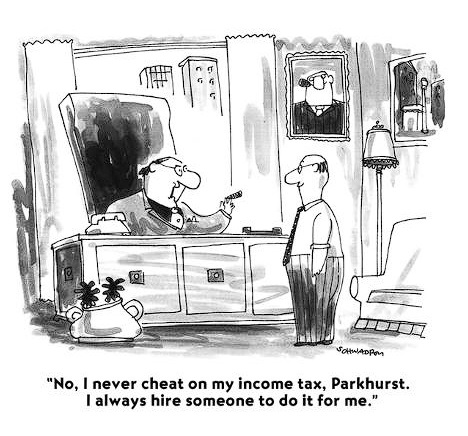
The IRS Wants More Billionaires Audited For Tax Evasion… Not Just Donald Trump!


All Rights, Harley L. Schwadron

The courts still have a lot (a LOT) to decide about the business and political decisions that were made by Ex. President Donald Trump. However, the courts have already determined that Trump’s business practices crossed the line, drifting from questionable creative accounting to outright fraud. Still. For the moment, let’s put aside the political implications of whether America will put a criminal back into the Whitehouse. Instead, let’s consider the financial implications of Trump’s business crimes, how often he is emulated, and how this impacts America’s business practices.

For the last 7 years, Donald Trump has not been closely aligned with objective reality. Rather, his definition of truth depends on what he wants and what is in his way. We’re all subject to a certain amount of flexibility in our moral compass. But Trump often displays the “flexibility” of a 3-year-old who is denied an ice cream cone. Sure, mom told you that you can have that ice cream after you clean up your room. But when you fail to tidy up, you only remember the promise of ice cream. Any argument that can bring you closer to your goal of creamy, delicious, ice cream is the only argument that counts.

Trump has been called a BabyMan, who wants his way and throws tantrums. Perhaps. But more importantly, is he the only billionaire BabyMan? Is he the only billionaire who will do anything, commit any crime, to get his way?

According to a joint study from MIT, UC Berkeley, and the University of Ontario about 10% of major corporations commit stock fraud every year. Real Estate fraud is rising (up 12% recently). Of course, this is just what is discovered and brought to trial.

Consider the tale of a particular BabyMan. This Billion-dollar New York Real estate agent was renowned for his BabyMan antics. He was particularly angry when his brother-in-law truthfully testified in court about illegal manipulation of property values and other crimes. This BabyMan threw a tantrum and hired a prostitute to entrap his brother-in-law, and sent the evidence to his brother-in-law’s wife (his sister). He wanted to force this disloyal family member into a divorce. He never cared how his sister and her children would suffer.

A few of you might think, “You’re talking about Donald Trump… right?” No. I’m not. I’m talking about Charles Kushner, the father of Jared Kushner, Donald Trump’s son-in-law. Before leaving office as President, Trump pardoned his in-law’s crimes. After all, BabyMen need to stick together!

Between the wall of lawyers the wealthy hire, and the political connections they buy, it’s very difficult to prosecute One-Percenters for their crimes. What’s even more difficult is to get them to pay their fair share of taxes every year.

Which brings us back to the IRS. They have been telling America for years that they need more resources in order to get the rich to pay what they owe. Naturally, the friends of the rich in Washington continually deny the IRS these resources, in order to protect their patrons. Ironically, the same senators and congressmen who prevent the IRS from collecting taxes scream the loudest about cutting services to the poor, because taxes don’t cover expenses.

What is the IRS proposal? It’s pretty simple really. Most of the “red flags” for income tax returns are focused on people who have little if any money to pay the IRS. The wealthy have lawyers, trust funds, offshore accounts, and tax loopholes to avoid paying their taxes (and these are just the legal options they have). The IRS proposal is to spend more time reviewing the tax returns that are likely to yield unpaid taxes.

For example, a 2021 White House study found that the average American pays around 13% of their income in taxes, but the 25 wealthiest Americans paid a mere 3.4%. Just 25 more audits could yield billions in unpaid taxes. If America’s wealthiest paid the average rate, tax revenues would rise by $52 billion. That’s just individuals. The Government Accountability Office (GAO) found that 20% of America’s largest corporations paid… nothing. Year after year of “nothing” can really add up!

A reporter once asked the famous Depression-era bank robber Willie Sutton, “Willie… why do you rob banks?” Willie’s answer was breathtakingly obvious. “Because that’s where they keep the money.” Perhaps America should take Willie’s advice, and have the IRS focus on the tax returns that will yield the greatest results.

What do you think? No one likes to be taxed, but if the only certainty in life is death and taxes. We might live to be 100, or we might get run over by an ice cream truck tomorrow morning. We may not be able to control when we die, but shouldn’t we be able to guarantee that every American pays their fair share of taxes?

Posted in Uncategorized | Tagged , , , , | Leave a comment

Cannabis Crawl: How The Governor’s Slow Pace To Legalize Cannabis Will Kill NYC’s Cannabis Culture


America’s cannabis revolution has been… confusing. For thousands of years, cannabis was a mainstream medicine. In the early 20th century, cannabis was approved by the AMA. Every medical textbook had sections on the use of cannabis and every medical college taught doctors the medical uses of cannabis. But in the early 20th century, America decided to tighten up what we were consuming. In 1906 the Food and Drug Administration was forced. Many dangerous and questionable drugs were regulated or banned. In the 1920s the sale of alcohol was banned. In the 1930s, cannabis became illegal. While alcohol regained its legal status in just 14 years it would take nearly a century for cannabis to once again be legal. Well, sort of legal. Which is the topic of today’s blog.

In just a few years we’ve gone from cannabis as an addictive drug to a natural and safe cure for just about everything. Glaucoma, depression, insomnia, epilepsy, PTSD, eating disorders, and relief from the side effects of cancer treatments. It’s all possible with cannabis. In fact, the biggest source of drug deaths in America comes from the big pharmaceutical companies.

The rapid transformation of cannabis from demon to deliverer is seen by the government as an opportunity to fix multiple problems. Legal, but regulated, cannabis would drive away street drug dealers. Cities could collect increased taxes from legitimate cannabis sales. And tax revenues would provide funds for low-income housing and services for the poor. New cannabis-related taxes in New York City alone are expected to generate $500 million a year. It would be a win-win for everyone!

Except… and there is always an “except”… the cannabis market has evolved faster than government legislation. New York City has only licensed about 50 fully legal cannabis stores (dispensaries). Yet, the city has counted over 1,500 “convenience stores” that do not pay the taxes a dispensary would. The state recently announced a crackdown on illegal stores and an expansion of legal dispensaries to fill the gap. If NY could thread the needle between padlocking some stores while opening other stores, New York did not understand the resources needed to regulate hundreds (thousands?) of these stores.

Cannabis plants contain over 100 cannabinoids, chemical compounds with medical and other uses. THC and CBD are by far the most common cannabinoids. But they are not the only cannabinoids. THC and CBD are better thought of as families of chemicals. “THC” (now called Delta 9) has “cousins”, Delta 8 and Delta 10. They are VERY similar to Delta 9 but are produced in such minuscule quantities that regulators ignore them. However, today’s cannabis industry has techniques to convert Delta 9 into these and other compounds. Delta 8 and Dela 10 lie in a legal gray area, and dispensary taxes are rarely collected.

Even if Delta 8 and 10 were fully legal, the FDA does not test cannabis. Many “THC Free” products do contain a significant amount of THC. Likewise, completely legal “pure CBD” oil may not contain any CBD. Intentional deception or just very badly made products? Whatever the case, will NY need to inspect every product… or is this just another reason to wipe out all of the “convenience” stores? Whatever they choose, New York City and New York State tell us they are about to start their crackdown.

What do you think? Is a cannabis crackdown too radical? Do we need more regulation or more drugs? Let’s hear your opinion!

Posted in Uncategorized | Tagged , , , , , , | Leave a comment

The Fighting in Gaza Is Just The Latest Part of a Very, Very Old and Complicated Conflict in the Middle East


The name has changed, but the questions about who owns “Israel” have been a cause of conflict and bloodshed since God promised the land to Moses 4,000 years ago. “To your descendants, I give this land, from the Wadi of Egypt to the great river, the Euphrates – the land of the Kenites, Kenizzites, Kadmonites, Hittites, Perizzites, Rephaites, Amorites, Canaanites, Girgashites and Jebusites. (Genesis 15:18–21). If this was a “deed” for the land, no one told the “tenants”. Information about these ancient tribes and the boundaries of their land is sketchy. Even the Euphrates River, the main boundary of the Promised Land, has moved over the last 4,000 years.

Abraham’s descendants moved to Egypt. Eventually, Moses became the leader of the Hebrews. He led them out of Egypt and back to the Promised Land through a long and complicated journey, wandering around the desert for 40 years, fighting wars along the way, and finally reaching the Promised Land. Where God told the Hebrews to kill or enslave the current inhabitants. (There’s a lot of that in the Bible.) The Hebrews built a kingdom, fought more wars with neighbors, lost their religion, regained their religion, lost a war with the Babylonians, left the promised land, and returned back home… just in time to become a vassal of Rome. Which takes us to the year 0, and Jesus.

You’ve heard of Jesus? I’ll skip his history and just remind you that this is the second native religion (Christianity) in Israel. Meanwhile, the Hebrews (now generally called Jews) were unhappy with Roman rule and rebelled. They lost the First and Second Jewish Wars, but won the Third Jewish War and kicked the Romans out of Jerusalem. Rome was used to fighting rebels, but it wasn’t used to losing. Rome returned with overwhelming force and crushed the rebels. In the aftermath, half of the Jews in the world were killed, and Jews were expelled from Jerusalem. This “Dysphoria” left Jews without a homeland for the next two millennia.

The Roman Empire (at least the Western half) collapsed by the 5th century. Mohammad was born in the 6th century, (creating the third native religion, Islam). For 15 centuries empires rose and empires fell, there were Crusades, Silk Road caravans became the main form of international trade, and endless wars raged across what would become Palestine. And the Jews? They suffered centuries of discrimination, genocide, and oppression culminating in the Pogroms of Russia and the Death Camps of Nazi Germany.

At the end of the 19th Century, Europe was awash in Nationalism. Dutchys, city-states, obscure empires, and tiny kingdoms were being reimagined as Nations. Jews were increasingly written out of “official” European history. After a thousand years, Jews remained foreigners and were easy scapegoats for any political problem. It was clear to Jews that they would never be accepted (or safe) in Europe. The solution? Create a political movement, the Zionist movement.

The Zion movement’s goal was to return Jews to the land promised to them by God. The Bible said that even the Hebrew slaves in Egypt could make it to the Promised Land. The Babylonians took the Jews out of Isreal and moved them to Babylon, yet they returned one more to the Promised Land. And for the last 2,000 years, Passover prayers concluded with, “Next year in Jerusalem”. Surely, now was the time for Jews to return!

Jews organized and raised money to buy land from the Ottoman Empire (the legal owners of Palestine). Later they found that strangers had lived on the land as slaves (or serfs) for centuries. These “Palestinians” had nowhere to go. Ironically, many “returning” Jews came from Russia, where they had been forced to move when the Czar confiscated Jewish lands. The Ottoman Empire collapsed soon after, and Palestine fell to the British. After WWII Jews fleeing from the atrocities in Europe began an uncoordinated return to Jerusalem. As refugee ships from around the world headed to Israel, the Middle East was thrown into crisis.

The crisis became a war, which Israel won, becoming a state in 1948. The succession of wars that followed read like the lineages of the Bible… the war of succession begat the Suez crisis, which begat the 6-day war, which begat the war of attrition, which begat the Yom Kippur war, which begat the Lebanon war, which begat the 15 year-long Lebanon conflict, which begat another Lebennon war, which begat the 2008 Gaza war, which begat the 2012 Gaza war, which begat the 2014 Gaza war, which begat… well, you get the idea. In addition to full-out wars, Israel had an endless succession of uprisings, crises, and external wars that spilled into Israel. Hardly a year goes by without someone spilling blood.

Israel returned all of the land it won in wars, except for… Golan in the North, the West Bank, and Gaza in the East. Israel has ignored UN Resolutions and maintained control of these “occupation zones”. Why? Because these are the three most frequently used paths to invade Israel. In the past, Israel had reluctantly agreed to surrender parts of these territories, but new invasions, uprisings, or the arrival of Jewish settlers (legally and illegally) led to new conflicts and reset the clock on Israel leaving.

And now, we have the Israeli/Palestinian War of 2023. Or the Fourth Gaza War. Or whatever history will call it. There are reasons why Hamas, one of the best armed Palestinian groups, chose to attack on October 7th, 2023. There are always reasons. It was the biggest attack on Israel in the 21st century, and it was successful beyond anyone’s expectations. Especially the Israeli military. Which means that Israel will have the biggest retaliation of the 21st Century. Israel’s government said that time it will be different. I believe them.

It’s hard to say how hard Israel will hit back after the attack from Hamas, but they don’t intend to leave Hamas with the ability to retaliate for a long, long time. Even with the best intelligence and the most precise weapons, we can expect very high civilian casualties. After the killing or kidnapping of over 100 foreign tourists, Palestinian citizens will receive little support from the global community. Soon other Palestinian and foreign adversaries of Israel will make aggressive moves, and the Israeli response will grow ever larger.

Hamas claims to have fired 5,000 rockets into Israel, with thousands more in reserve. Until all rockets and factories are destroyed, all decision makers for the attack are eliminated, and most fights are killed or captured, the fighting is likely to continue. Gwynne Dyer, the Dutch journalist and author of the book, “War”, once said “History is not peace followed by war, but war briefly interrupted by periods of peace. The history of Israel and the Middle East certainly proves Dwyer to be correct.

What do you think? Will this be just another bloody (bloodiest?) Israeli/Palestinian conflict? Or do you see something different? Tell us your opinion.

Posted in Uncategorized | Tagged , , , , , , | Leave a comment

Are You Ready for the Latest Trend In Toys This Christmas, Artificial Intelligence For Children?


The year has passed swiftly, and the Holiday Season is just around the corner! What will be this year’s hottest toy? Something Star Wars? Legos and Crayolas are always good stocking stuffers. Anything Barbie is definitely on the list after the HUGE success of the Barbie movie (or should I say… the first Barbie movie?). But will anything this season match the explosive success of Tickle Me Elmo in 1996? With the half-million first-round Elmos sold long before Christmas, Parents beat up other Parents to get the last Elmo in stock, counterfeit Elmos flooded the market, and classified ads that looked more like hostage notes offered a possibly honest-to-goodness Elmo for just 10 times the retail price.

This year’s hot item just might squeeze Elmo out of the record books. But it’s not just one toy. It is a whole new category of toys. Toys with… Artificial Intelligence. Just about every toymaker is making an AI for Christmas, and quite a few new toymakers will exclusively focus on a Plastic Pal who is fun to be with! AI will be everywhere this year. Did I just hear a collective sigh of exhaustion from some parents?

OK, OK I get it! It’s been a bit… ahhh… challenging to deal with your child’s Internet habit. Minecraft, strange Tik-Toks that you don’t understand, group battles on Fortnite… hmmm… I kind of miss when limiting Facebook time was the biggest teen/parent fight. Anyway, this isn’t the same. Unlike all of the demonic influencers on the Internet, you PAY to buy an Internet Toy and then you pay for service. YOU are the customer, and they don’t want to lose the $100 to $1,000 that you pay for the toy.

Now, with the right subscription, you will be the one tirelessly whispering into your child’s ear. We can expect all sorts of add-ons… tutoring support, keeping an eye on your child’s interest, emotional support when you’re not around. Of course, some parents may want strict barriers to what the child is told. Sex education, politics, religious views. The high-end of this market there will definitely be room for a lucrative business in developing “premium information filters” and custom programming for the…. discerning parent?.

American culture wars aside, parents have been dealing with the issues of technology and childhood for the last century. Way back, parents distrusted phonograph and radio. Too many foreign ideas and strange music. It got worse when Television became the one-eyed babysitter. And then, we had computers, the Internet, and smart phones in fast succession. Now AI.

The big question is what kind of AI are we going to get in a decade or two? Will it be the always-loving and comforting Teddy Bear from the movie “A.I. Artificial Intelligence”? Or should we expect the title character from “Megan”, an obsessive toy that will do anything to be your best friend? Or maybe we’ll get both. What do you think? How will parenting adapt to this new world?

Posted in Uncategorized | Tagged , , , , , | Leave a comment

More Bad Days in the Middle East: What We Can Expect From The Latest Israeli-Hamas Conflict?


Israel’s High-Tech defense weapons just became obsolete. Expect more anti-swarm weapons… soon.

Once again, the Middle East is at war. Hamas attacked, Israel responded, and months (if not years) of retaliations are ahead. This back-and-forth fighting with Hamas has become a well-choreographed dance. Hamas leads with expendible soldiers and low-tech rockets. Israel follows with a swift, high-tech response. It looks a lot like their last dance, with perhaps a bit more professional coaching. When the dance is over, both sides take a bow and swear revenge. Not too long after, the dance begins again

According to both the Palestinians and the Israelis smaller aggressions have occured over the last couple of year, on both sides, but are ignored or underreported by the Western press. Both sides can claim provocations that have caused escalation into a full war. Both sides also claim that the other side has repeatedly used real and imagined incidents in previous escalations.

This conflict has a long and bloody history with each side alternately playing the hero, the villain, and the victim. Hamas identifies itself as freedom fighters who are liberating their home from an an oppresive occupying power. Justified by the day-to-day indignities of second-class citizenship in an occupied land, Hamas feels justified in spilling as much blood as needed and has repeatedly pledged itself to the destruction of Israel.

Isreal was born as the homeland of the Jews after fleeing from the Nazi death camps of WWII. They identify as an underdog who miraculously survived the Holocaust, heroically struggled against powerful neighboring nations, and finally returned to their ancestral home. Israel has endured terrorist attacks from Hamas since it’s creation in 1987, and similar attacks by Hamas’ predecessor (the PLO) since it was created in 1964.

Both sides have believe that God personally gave this land to them and them alone. That beleif has been cemented in place with the spilled blood of all parties across two different centuries. When all parties are justified by God and Blood, that’s pretty much the definition of an intractable conflict. However, Israel has said that this time will be different. And I believe them.

The choices that Hamas made in starting this particular phase of the conflict don’t make any sense to the West. If this attack was done to gain support, it failed. Perhaps Hamas’ attack was far more successful than they planned? They were certainly more successful than Israel assumed they would be.

Attacking a music festival, and killing or kidnapping over 1,000 of the 3,500 attendees was a very bad move. Virtually every nation… in Europe, across Asia, and both Russia and China… is now demanding an accounting for every dead or missing citizen. And lets remember, at a music festival everyone has a camera and is consatntly recording events. Every that happened at the festival… from before anyone ralized that those “specks” in the skies were hang-gliding terrorists until the last tourist was killed…. is now premanently documented and has ben shared around the world.

While killing more than a thousand Israeli’s can never be justified, some will say there were reaons, or look at the history. But killing 100 or more foreig tourists? This was a music condert, not a military training camp. And it wasn’t bombs, it was the individual killing… and apparently rape and other attrocities… of individually selected victims. In the end, yes, dead is dead. But there is War and then there are War Crimes. Opinions will differ, based on viewsthat were establised many years ago, but one thing is sure. Palestinian civilians can expect the fewest and weakest voices of support when Israel’s plan for revenge is in full stride.

Part of the motivation for the attack was undoubtedly the success of Ukraine in liberating territory from Russia’s occupation. If so, Hamas failed (catestrophically) to learn from Zelensky’s media-savvy leadership. Killing tourists is not how you become the world’s hero. Israel’s reaction? In the past, no matter how violent the reprisal, Israel took care to frame their actions as the need for security. Now, we hear about the need for revenge. Let’s break this down.

International Cooperation: War is expensive, in every possible way. The US and Europe are already drawing up plans to support Israel. Just a week ago, Washington was battling over how to support Ukraine. Similar political battles were occuring in Europe. These two conflicts will now compete for dollars and weapons. But there is a simple solution, especially for the US. Put together a joint bill to fund both conflicts, making most political factions ready to sign on. ESPECIALLY 3 weeks before a U.S. election.

Deep Revenge: With at least 100 tourists from around the world dead, kidnapped, or missing, no nation that matters will stand on the side of Hamas. Even China wants an accounting for its five dead or missing citizens. Nations that don’t beat the drums of war will certainly turn a blind eye to whatever happens to Palestinians. No nation will volunteer to take in any refugees until well after Israel is satisfied.

Darker Israel: Over the last 75 years Israel has become increasingly comfortable with playing an ever darker role in the conflict. It sounds like the goal is to depopulate the Ghaza strip.

Canceled Funds: On the threshold of receiving $6 billion in frozen oil revenues, expect a return to the deep freeze. Most Western nations assume that the drone swarm, that took down Israeli radar and communications was done with Iranian drones and probably technical support. Even if it is found that Iran did nothing on the day of the attack, there is such a strong connection between Iran and Hamas that unless Iran tipped off the US in advance (Hint… they didn’t) that money is off the table.

More Drones: Hamas sent a lot of soldiers, rockets, and drones into a small area and overwhelmed defenses. Swarm attacks of one kind or another have been part of war since before the time of the Roman Empire. Expect drone swarm attacks FROM Israel, drone swarm PATROLS to defend Israel, and a new generation of active PATROL-ATTACK DRONES in the air and roving the land across Gaza, 24 x 7. Fixed defenses are too easy overwhelmed, in too many ways.

No Hiding: Hamas’ strategy has been… shoot at Israel and then hide the guns and missiles by residential neighborhoods, schools, and hospitals, using civilians as human shields. Israel has advanced weapons to reduce casualties, but civilians will always pay some price. That strategy is at an end. In Ukraine, drones are operated from miles away, they fly to Russian positions, and they can drop a grenade on a single soldier. If they dopn’t already exist, expect Israel to produce large numbers (thousads) of advanced patrol drones. They will constantly partol the air and the ground around Gaza. If there are any signs of a planned or active attack, patrol drones will switth to a killing mode and attack anything their AI and facial recognition software says ight be a threat.

Kill Command: Drones are becoming more intellegent, and deadly. However, American and European drones do not (officially?) have the ability to kill without explicit human approval. A drone on a long mission that loses contact with it’s home base, it can still autonomously reach it’s target. But it cannot attack without a human being pulling a remote trigger. If Isreali drones do not given complete autonomy, expect them to get a lot closer to pulling their own triggers. The next time an attack is building, Israel won’t have a long approval process to start shooting… especially, if armed drones are already in the area.

Darker Israel: Over the last 75 years Israel has become increasingly comfortable with playing an ever darker role in the conflict. Israel’s immediate goal is to free hostages, punish Hamas, and prevent a similar attack from ever happening again. In the longer term? They will “Pacify” the Gaza Strip. Which may include capturing or killing most of Hamas, if not significantly depopulating Gaza.

Palestinian Civilians?: They’re going to suffer. A lot. While few would have joined in on the killing if they could, many see Hamas as their authentic representatives. Not all Palestinians think that these attacks are justified, but about half of those surveyed support the action of Hamas. The lack of outrage at Hamas by the average Palestinian is not going to be well recieved in the coming weeks. And is going to justify the lack of outrage by previously sympathetic Isrealis. With so much blood already spilled, voices that might matter, that might call for peace, will not little to say.

It’s not a pretty picture, and it’s not likely to get worse before it gets better. Still, there may be a shred of hope. For the last 20 years an Arab Peace Initiative has been making the rounds, and was signed by every Arab nation in the Middle East. But Israel and the US have not endorsed the initiative. More recently, the Crown Prince of Suadi Arabia has personal asking world leaders to consider an alternative… normalization. If Isreal and the rest of the nations in the area can have normal diplomatic relations, then… perhaps an Israel that is not continually threatened by its neighbors just might be willing to deal with problems inside it’s borders. It’s not much, but it might be a start of future negotiations.

What do you think? What do you see as the future of the Middle East? If true peace is not possible, do you thing that eveyone live together with a minimum of violence?

Posted in Uncategorized | Tagged , , , , , , | 1 Comment

Trump’s Corrupt Accounting Threatens The Future of Every American


“Pump and Dump” is a well-known and highly illegal form of stock manipulation where companies collude to buy large amounts of stock to “pump up” the price. Seeing rising stock prices, uninformed investors buy the targeted stock. When the price peaks, the scammers dump the stock and profit from the inflated stock price. Everyone else loses money as the stock crashes.

Trump is on trial for a real estate version of Pump and Dump. Rather than profiting from selling inflated real estate, Trump inflated the price of property to get inflated loans. Trump increased the valuation of his properties without any supporting proof, highlighting the ease with which a powerful real estate company can illegally inflate property values. This is why there are severe penalties for misrepresenting the value of property.

What about genuine differences in opinions? Two real estate companies might provide two different valuations for the same property, but there are limits to how much they should differ. For the sake of argument, if the difference between the low and the high estimate is 10 times as much, one of the two estimates are questionable. Some sort of self-interest would be suspected.

But a criminal act is more than mere incompetence. You need to ask, “Is the difference due to intentionally misleading an investor?” How can you be sure about someone’s intentions? Is there documentation that other parties were given a very different valuation? This is what Trump did, using one set of numbers for banks and another set of numbers for his taxes. Let’s examine the details of Maralago, the property being examined by the court.

In 1985, Trump paid $5 million for the house and property, plus another $5 million for furnishings. If the valuation included all furnishings, that’s $10 million. 40 years later the property would have appreciated. What is it now worth? A local newspaper reported, “From 2011-2021, the Palm Beach County Assessor appraised the market value of Mar-a-Lago at between $18 million and $27.6 million… (on his tax forms) Trump ‘agrees’ his club should be valued at only $26.6 million.”

Yet, Trump violently disagrees with his own tax valuation. The Daily Beast reported, “The judge noted Trump valued Mar-a-Lago at between $426.5 million and $612 million (in bank loan documents).” Inflating the value by 20-30 times is not a minor difference of opinion (between Trump and… Trump?). And this happened over several years, making it much more difficult to dismiss as a mere accident.

Recently Trump stated that Maralago may be worth $1.5 to $1.8 billion. His latest valuations may or may not admissible evidence for the court. Still, Trump should hope that the IRS isn’t listening.

Trump’s defense team has claimed that Maralago is worth more than another Florida property… The Manalapan. The Manalapan’s property has twice the acreage of Maralago, with the main house being double the square footage of Maralago. Yet this property sold for $179 million, a quarter of Trump’s valuation for Maralago.

While Trump’s financial and political representation are many, the real focus of this article is not Trump. Trump did not invent the Pump and Dump. It was probably invented by the Romans, once tax collecting became a bit too efficient for local landlords. Our real focus is everyone in Trump’s tax bracket, which appears to be the “zero tax” bracket. What if all ultra-rich participate in similar schemes? Is this why we have a budget deficit? Do we need to more aggressively audit the rich to see if Trump is just typical of most rich Americans?

The super-rich hates paying taxes so much that they hire private armies of lawyers and accountants. Accountants to ignore taxes, and lawyers if they get caught. A 2021 White House study found that the average American pays around 13%, but the 25 wealthiest Americans paid a mere 3.4%. If America’s wealthiest paid the average rate, tax revenues would rise by $52 billion. And that’s just individuals. The Governement Accounting Office (GAO) found that 20% of America’s largest corporations paid… nothing.

Exposing Trump’s financial misdeeds may drive some critical tax reforms. It should certainly make us consider if our tax system treats all citizens fairly. For years the IRS has been telling us that they need staff to audit more people, especially rich people. And they need to shift from auditing the poor and middle-class, to the ultra-wealthy because they have far more opportunities to hide their income.

What do you think? Is the tax system fair? Has the Trump trial made you question if the rich pay their fair share? Let us know!

Posted in Uncategorized | Tagged , , , | Leave a comment

The New Real Estate Market: When Did We Stop Building BIG… And What Does It Mean For The Economy?


In the early 20th century America built big. America was becoming the biggest economy in the world, and New York City was the most prosperous city in America. The biggest of the big buildings were going up in NYC. Starting with the Flatiron building in 1902. Its steel framework allowed it to be built taller, and at 285 feet tall it was the world’s first skyscraper. That was the start of a global competition to build ever higher. That race is still going on, but the biggest buildings in the world today are being built in Asia and the Middle East. Things have changed.

During the last half of the 20th century, the economies of many countries rapidly developed. Nothing says a nation is a global player like a super-tall building. Most of the world’s super-tall buildings are in Asia and the Middle East. Super steel and the latest concrete made it possible to build the Burj Khalifa in Dubai is twice as tall as New York’s Empire State Building.

Then, 9/11 happened. America’s super-tall buildings took a time-out. But once again more demand than supply led to pressure to build more commercial real estate. And COVID hit. The resulting questions about working from home, or even working from home in a different state, brought up all sorts of questions about the future of commercial real estate and the downtowns of big cities.

Workers rebelled against old work assumptions, demanding more pay, more respect, and choices about where they work. But if workers don’t return to their old offices, what happens to America’s 100 Billion square feet of commercial space? If vacancy rates continue to rise, will corporations cancel leases? When real estate developers lose money banks don’t get paid, and we could see a new banking crisis.

Is a new crisis on the way? Or is this all overblown? We need to remember that remote workers are just now being told to return to work. Depending on the source, 25% to 40% of commercial space was vacated due to remote work. Yet, a recent survey of 1,000 employers found that 90% will require workers to return to the office by early 2024. If true, vacancy rates are about to shrink dramatically.

Also, it’s unclear how many remote workers want to continue to work remotely. Young, single workers need exposure to more experienced workers to learn their jobs. And face-time with senior managers is critical in being assigned sought-after projects and promotions. You don’t get points for working late if your boss doesn’t see you working! More established workers, especially those with children, may want to exchange their daily commute time for more family time. A remote worker might move to a state with lower-cost-of-living so they can buy a house.

Still, the combination of adding more commercial space via super-tall buildings while existing commercial buildings are less than full could lead to falling prices. Given that new buildings will undoubtedly have better amenities and probably a more desirable address, older commercial buildings will disproportionately suffer. If only there was some way to repurpose less desirable office buildings. Oh, wait, there is!

New York City, and most American cities, suffer from a chronic shortage of housing. Especially affordable housing. Not all of the tens of thousands of commercial buildings in NYC can be effectively converted to residential. However, smaller and older commercial buildings are the best fit due to cost and design. These are also the least useful and least valuable buildings in the current market. Converting as many of them as possible to a new life as residential buildings just makes sense.

Of course, it’s more than just a matter of pure economics. Cities need to think about the whole of their downtowns, all of their commercial space. Citizens have been uncomfortable about giving super buildings free rein. If new buildings or new real estate trends change where workers and residents are located, will new bus lines and train stations be needed? What about additional water and power lines where populations for growing neighborhoods. And, perhaps most important of all, outdated regulations that define what can and cannot be built.

Regardless of the constraints, NYC and other big cities are building new, bigger, super-buildings. New tenants are moving in. If all works out, downtowns will expand, city property revenues and mortgage payments will continue to flow, new residential buildings will be built, and some remote workers will continue to work from where they want to work.

What do you think? Will buildings continue to build upwards? Will super-tall buildings dominate commercial space? Or is 1,000 feet high (or so) good enough? Let us what you think the next decade will look like… readers want to know!

Posted in Uncategorized | Tagged , , , , , | Leave a comment