“Pump and Dump” is a well-known and highly illegal form of stock manipulation where companies collude to buy large amounts of stock to “pump up” the price. Seeing rising stock prices, uninformed investors buy the targeted stock. When the price peaks, the scammers dump the stock and profit from the inflated stock price. Everyone else loses money as the stock crashes.
Trump is on trial for a real estate version of Pump and Dump. Rather than profiting from selling inflated real estate, Trump inflated the price of property to get inflated loans. Trump increased the valuation of his properties without any supporting proof, highlighting the ease with which a powerful real estate company can illegally inflate property values. This is why there are severe penalties for misrepresenting the value of property.
What about genuine differences in opinions? Two real estate companies might provide two different valuations for the same property, but there are limits to how much they should differ. For the sake of argument, if the difference between the low and the high estimate is 10 times as much, one of the two estimates are questionable. Some sort of self-interest would be suspected.
But a criminal act is more than mere incompetence. You need to ask, “Is the difference due to intentionally misleading an investor?” How can you be sure about someone’s intentions? Is there documentation that other parties were given a very different valuation? This is what Trump did, using one set of numbers for banks and another set of numbers for his taxes. Let’s examine the details of Maralago, the property being examined by the court.
In 1985, Trump paid $5 million for the house and property, plus another $5 million for furnishings. If the valuation included all furnishings, that’s $10 million. 40 years later the property would have appreciated. What is it now worth? A local newspaper reported, “From 2011-2021, the Palm Beach County Assessor appraised the market value of Mar-a-Lago at between $18 million and $27.6 million… (on his tax forms) Trump ‘agrees’ his club should be valued at only $26.6 million.”
Yet, Trump violently disagrees with his own tax valuation. The Daily Beast reported, “The judge noted Trump valued Mar-a-Lago at between $426.5 million and $612 million (in bank loan documents).” Inflating the value by 20-30 times is not a minor difference of opinion (between Trump and… Trump?). And this happened over several years, making it much more difficult to dismiss as a mere accident.
Recently Trump stated that Maralago may be worth $1.5 to $1.8 billion. His latest valuations may or may not admissible evidence for the court. Still, Trump should hope that the IRS isn’t listening.
Trump’s defense team has claimed that Maralago is worth more than another Florida property… The Manalapan. The Manalapan’s property has twice the acreage of Maralago, with the main house being double the square footage of Maralago. Yet this property sold for $179 million, a quarter of Trump’s valuation for Maralago.
While Trump’s financial and political representation are many, the real focus of this article is not Trump. Trump did not invent the Pump and Dump. It was probably invented by the Romans, once tax collecting became a bit too efficient for local landlords. Our real focus is everyone in Trump’s tax bracket, which appears to be the “zero tax” bracket. What if all ultra-rich participate in similar schemes? Is this why we have a budget deficit? Do we need to more aggressively audit the rich to see if Trump is just typical of most rich Americans?
The super-rich hates paying taxes so much that they hire private armies of lawyers and accountants. Accountants to ignore taxes, and lawyers if they get caught. A 2021 White House study found that the average American pays around 13%, but the 25 wealthiest Americans paid a mere 3.4%. If America’s wealthiest paid the average rate, tax revenues would rise by $52 billion. And that’s just individuals. The Governement Accounting Office (GAO) found that 20% of America’s largest corporations paid… nothing.
Exposing Trump’s financial misdeeds may drive some critical tax reforms. It should certainly make us consider if our tax system treats all citizens fairly. For years the IRS has been telling us that they need staff to audit more people, especially rich people. And they need to shift from auditing the poor and middle-class, to the ultra-wealthy because they have far more opportunities to hide their income.
What do you think? Is the tax system fair? Has the Trump trial made you question if the rich pay their fair share? Let us know!
In the early 20th century America built big. America was becoming the biggest economy in the world, and New York City was the most prosperous city in America. The biggest of the big buildings were going up in NYC. Starting with the Flatiron building in 1902. Its steel framework allowed it to be built taller, and at 285 feet tall it was the world’s first skyscraper. That was the start of a global competition to build ever higher. That race is still going on, but the biggest buildings in the world today are being built in Asia and the Middle East. Things have changed.
During the last half of the 20th century, the economies of many countries rapidly developed. Nothing says a nation is a global player like a super-tall building. Most of the world’s super-tall buildings are in Asia and the Middle East. Super steel and the latest concrete made it possible to build the Burj Khalifa in Dubai is twice as tall as New York’s Empire State Building.
Then, 9/11 happened. America’s super-tall buildings took a time-out. But once again more demand than supply led to pressure to build more commercial real estate. And COVID hit. The resulting questions about working from home, or even working from home in a different state, brought up all sorts of questions about the future of commercial real estate and the downtowns of big cities.
Workers rebelled against old work assumptions, demanding more pay, more respect, and choices about where they work. But if workers don’t return to their old offices, what happens to America’s 100 Billion square feet of commercial space? If vacancy rates continue to rise, will corporations cancel leases? When real estate developers lose money banks don’t get paid, and we could see a new banking crisis.
Is a new crisis on the way? Or is this all overblown? We need to remember that remote workers are just now being told to return to work. Depending on the source, 25% to 40% of commercial space was vacated due to remote work. Yet, a recent survey of 1,000 employers found that 90% will require workers to return to the office by early 2024. If true, vacancy rates are about to shrink dramatically.
Also, it’s unclear how many remote workers want to continue to work remotely. Young, single workers need exposure to more experienced workers to learn their jobs. And face-time with senior managers is critical in being assigned sought-after projects and promotions. You don’t get points for working late if your boss doesn’t see you working! More established workers, especially those with children, may want to exchange their daily commute time for more family time. A remote worker might move to a state with lower-cost-of-living so they can buy a house.
Still, the combination of adding more commercial space via super-tall buildings while existing commercial buildings are less than full could lead to falling prices. Given that new buildings will undoubtedly have better amenities and probably a more desirable address, older commercial buildings will disproportionately suffer. If only there was some way to repurpose less desirable office buildings. Oh, wait, there is!
New York City, and most American cities, suffer from a chronic shortage of housing. Especially affordable housing. Not all of the tens of thousands of commercial buildings in NYC can be effectively converted to residential. However, smaller and older commercial buildings are the best fit due to cost and design. These are also the least useful and least valuable buildings in the current market. Converting as many of them as possible to a new life as residential buildings just makes sense.
Of course, it’s more than just a matter of pure economics. Cities need to think about the whole of their downtowns, all of their commercial space. Citizens have been uncomfortable about giving super buildings free rein. If new buildings or new real estate trends change where workers and residents are located, will new bus lines and train stations be needed? What about additional water and power lines where populations for growing neighborhoods. And, perhaps most important of all, outdated regulations that define what can and cannot be built.
Regardless of the constraints, NYC and other big cities are building new, bigger, super-buildings. New tenants are moving in. If all works out, downtowns will expand, city property revenues and mortgage payments will continue to flow, new residential buildings will be built, and some remote workers will continue to work from where they want to work.
What do you think? Will buildings continue to build upwards? Will super-tall buildings dominate commercial space? Or is 1,000 feet high (or so) good enough? Let us what you think the next decade will look like… readers want to know!
No, that’s not Morgan Freeman… but it is why Hollywood is terrified!
The strike is over, but the struggle is just beginning. Unlike the Auto Workers Union, it is MUCH more difficult to draw a line from a labor contract to what an individual members of the Writer’s Guild of America is paid. Just the use of “Union” vs. “Guild” tells you that these two groups have a different relationship to their work. One is a group of manual laborers, and one represents artists. Artists who want to continue to control their rights over a product, even after the product is sold.
Artists tend to have more rights than “workers”. Just like other artists, WGA members want higher pay if their work (say, a movie) generates more revenue. Sequels or a translation into another format (a book or a cartoon), might lead to more payments, or certainly more negotiations. Whether you will get what you ask for depends on seniority, the track record of your previous work, and what other writers get paid for. The new contract helps writers get a little more than they had before.
More than negotiating for new rights, the strike was about not losing existing rights… to AIs. Sure, we’ve all heard about the coming wave of Artificial Intelligence. These software systems can learn (this is what machine learning means). Then the AI can imitate what they have learned. An AI can write, draw in any style, or create the words and music for a new song. One AI can draw an oil painting of a bluebird in the style of Piccaso. Or it can read a script aloud, in the voice of your choice. Not impressed?
Sir David Attenborough is one of the best-known narrators of nature documentaries. Search YouTube and you will find endless works narrated by the highly recognizable voice of Attenborough. However, some videos are narrated by an AI. Consider the Morgan Freeman image above. It is not Morgan Freeman. Instead, it is a “deep fake”, a mere imitation of the original,. An AI created this visual and vocal doppelganger. In just a few years we could have movies that are written, acted, voiced, and edited by AIs. Early attempts will probably be less than Oscar-worthy. Still, few movies, broadcast series, or streaming content have ever been high art. What matters for the screenwriters’ strike is that Hollywood can turn out most of their content with less human labor, and (soon?) with virtually no union workers.
For the moment let’s forget movies or series that have hundreds of millions of dollars to play with. Instead, consider the average project that Netflix makes. Like a series from Korea or an Anime from Japan. Notice how many Netflix choices are from Asia? That’s because there is a huge catalog of content in these countries that is virtually unknown in the US.
Netflix can select materials based on local popularity. (Hey, aren’t we all just the same at heart?) Then they buy the rights for close to nothing. However, you still need English-speaking voice actors, since Americans hate reading sub-titles. AI translation is already pretty good. Dubbing, however, means you must also match the movement of the actor’s mouth and expressions. As you saw with the Morgan Freeman example. AIs are almost there!
So, Hollywood writers and actors are justifiably nervous. What will come as a huge surprise to Hollywood is that the “suits” should be even more worried than the “talent”. Today, the process of choosing foreign content to dub or redevelop into English-based content is handled by highly paid individuals. However, an AI can. or will soon be able to, more accurately identify the right content and quantify its potential for domestic market penetration and the resulting profit. Hollywood “suits” are about to be an endangered species. Strange… I don’t hear any wailing or weeping from my readers.
However, independent movie creators (or wannabe creators) are often the writer, director, actor, and post-production department. Ever since the earliest days of videotape, these creators have been able to take on more roles and produce more independent content for less. Taking advantage of the latest technology, the first Halloween movie cost just $300,000 in 1978, and spawned six decades of movies and sequels. In 1994, the Kevin Smith film “Clerks” cost less than $30,000, but generated over $4 million, while the 2004 film “Open Water” cost only $120,000 and made $55 million.
AIs WILL be able to will be able to do more of the work traditionally performed by Hollywood workers. If this drives down the cost of independent films, and possibly improves the quality of indie movies. Independents will love it, but union members will hate it. However, if these creators only need to scrape together a few thousand dollars, instead of hundreds of thousands of dollars, a lot more movies could be created… even if it doesn’t create new jobs. For those of us who are mere consumers of content, is the AI revolution a good thing or a bad thing?
Good or bad, the rise of new technology is inevitable. In the early 80s the first 4-track tapes system arrived. Artists could build a music studios for a fraction of the cost of old-tech studios. Of course, poor but creative artists soon learned how to “sample” beloved musical snippets from previous geneations of artists, and incorporate it into new works. The original artists, however, thought that this was less a “tribute” to their art than outright theft of copyrighted materials. Tributes are nice… royalties are niceer.
AI’s integration into Hollywood culture could hurt writers, actors, and other talent. But it could also help independents and others who work outside of the mainstream of Hollywood. And, more content, whoever makes that content, might benefit all consumers.
What do you think? Do you think that the growing role of AI in Hollywood is a good thing? Everyone would like t oknow what you think… assuming that YOU are not an AI.
The barely visible remnants of the LUNA 25 space probe… and of Russia’s hope for a space industry.
When Putin invaded Ukraine in 2014, he got what he wanted Little has gone the way that Putin wanted since his invasion of Ukraine, at little personal cost. Inside Russia, Putin gained even more power. By the time world leaders figured out how they would respond, Russian troops were already on their way back home. There would be sanctions and financial repercussions, but that was all in the future. Putin was, at least for a time, a happy man.
The sequel invasion in 2022 was not the successful sequel that Putin (and Russia) expected. Since the new invasion of Ukraine, it’s been nothing but bad news for Russia. Front Page bad news. A lot of what we’re seeing is not due to events in August, rather August events are a result of things that happened over the last couple of years… or longer. These predictable events point the way to a HUGE problem for Putin in September. Let’s dive right in!
The War in Ukraine has been Putin’s Groundhog Day. The same bad news over and over again. Unacceptable loss of tanks and other vehicles… all publically blown up (with videos on the internet). There are even collaboration sites to crowdsource verification of destroyed Russian tanks and to identify faked Russian claims of victory.
The Russian Air Force is afraid to patrol the air space over Ukraine due to a legitimate fear of being blown out of the air by American and European missile defenses. Pilots are happy to stay safely inside Russian airspace, and military leaders have made protecting pilots their highest priority. Mind you, this is not because Russian generals care for their pilots. Rather, generals who lose aircraft are quickly removed… from the battlefield or from life itself. Order to military leaders seems to be that it’s OK for troops to die… tens of thousands of Russian soldiers are dead or have deserted… they just need to do it quietly. And far away from any cameras.
Russia’s sizable military budget seems to have produced very little in the decade since the last invasion of Ukraine. Russia has put obsolete, broken, and incomplete equipment into the field. There are rumors and evidence that Putin has offset a decade of sanctions with escalating internal corruption, Essentially, it if wasn’t nailed down, Putin’s elite circle already stole it. If it was nailed down, Russian elites have been grabbing crowbars to pry it loose and sell it.
How bad it is in Russia? They are running out of weapons and ammo. Russia is relying on drones from Iran and Turkey to replace their missiles. These are nations that once depended on Russia for the weapons they used for their own defense. This is a very, very humiliating time for Putin. And it puts out a terrible message about the world’s #2 weapons dealer. OK. I take back what I said. If Russia had any crowbars left, they were stolen a long time ago.
And then there’s Yevgeny Prigozhin, who died in a tragic airline accident. Coincidentally, he was traveling with other heads of the Wagner Group. Remember the Wagner group? The one that rebelled against Putin? With the elimination of the Wagner Group, the rest of the Russian Military gained power. But without the Wagner Group, Putin loses Russia’s most effective terror weapons and his most experienced troops. If the remaining Russian military leaders do not suddenly become more effective, they too may get a first-class ticket on Putin Airlines.
This terrible August also marks the beginning of the end for Russia’s space industry. Once a close competitor of the US, Russia kept pace with and occasionally beat the US space program. After the second crash of the American space shuttle, even the mighty NASA flew astronauts on Russian rockets to the International Space Station. But in August, Russia’s first return to the moon in nearly 50 years, the LUNA-25 moon probe, went out of control and crashed.
Falling from the savior of NASA to an also-ran in space is indescribably humiliating for Russia and Putin. And yet, as inconceivable as it may sound, it gets even worse. Two days after Russia crashed its space probe, India’s bargain-basement Chandrayaan-3 lander, successfully landed on the moon. And then it deployed its lunar rover. Putin’s continuing humiliation was felt by every Russian.
Without access to Western technology, especially microchips, Russia’s space industry may never recover. Add to that an inevitable rise in the risk factor for using a Russian rocket; uninsurable rockets are not very desirable when you want to put a $100 million satellite into orbit. Of course, India will capitalize on the success of their moon landing with aggressive poaching of Russia’s client list.
What a terrible August. Can Russia hope for a better September? No, it can’t. In fact, the next major humiliation for Russia will take place in London, starting on September 12th. DSEI, Defence & Security Equipment International, is one of the world’s largest exhibitions of military weapons. It is where the world’s most advanced killing technology is exhibited and (hopefully) purchased.
With Russia’s recent performance on land, sea, air, and space… Russia can expect declining weapon sales in 2023. Russia is courting North Korea to get desperately needed ammunition. Are their customers watching this unfolding story? How can any potential customer believe that Russia will deliver on any new orders when Russia can’t even meet its own needs?
Winter will be here soon. While Ukraine may not be able to kick out Russia before cold weather sets in, there may be more ways to humiliate Putin than just military victories over Russia. If August is a good example, then Putin can expect even more bad news before the year is out! What do you think? Can Putin turn around the war in Ukraine? Or is Russia fated to fade away as an international power?
I am shocked and horrified at the Chinese weaponization of balloons, and their use against innocent Americans. But it was inevitable. With the growing influence of Chinese financial institutions, our political and business leaders should have predicted that American families would be dangerously vulnerable to inflated balloon payments on their home mortgages. While it is difficult to say why China chose this moment to inflict damage on the U.S., pundits will be quick to… what? Not balloon payments? An ACTUAL balloon? You’ve got to be s#!t!ng me.
Ah. Yeah. Right. Balloon warfare in the 21st Century. Somewhere in Washington, a group of highly paid experts is considering the dangers of balloon warfare and the perils of the “Balloon Gap” with China. I GUARANTEE that whatever solutions they find MUST include the development of a multi-billion dollar air-superiority balloon, with stealth. Yeah… it’s coming.
OK, let’s back on track. News stories have pointed out that balloons were used extensively in America’s Civil war, and were probably first used in the 1790s during the French Revolution. Two centuries ago. True, during WW II the Japanese did try floating balloon firebombs over the US. But they sent over 9,000 of these “Fu-Go” bombs. If it’s for spying or as a weapon, you need to use a LOT of balloons. Why? Because you can’t steer balloons; they get blown around by the wind. A bomb or a spy device usually needs to go somewhere specific. A lone balloon floating thousands of miles is very unlikely to find a specific target.
On the other hand, if you plan to use THOUSANDS of balloons, you’re guaranteed that at least a few will reach the right continent. Not exactly state-of-the-art spycraft. China has satellites, drones, and a ton of spies around the world. Why use a balloon? If China wants plain old aerial photography, Air China flies to New York, Washington, San Francisco, Los Angeles, and Houston. I’ve never flown on an Air China flight, but just about every modern plane I’ve flown on for the last 10 years has cameras on the plane pointed forward and downward. Passengers can use their seat-back monitors to check out these cameras at any point in the flight. I’m sure that there’s some special office of Chinese Intelligence that combs over these images for anything important.
While I believe with all my heart that there is virtually nothing that China won’t do to spy on the U.S. And it was a REALLY BIG balloon. Still, America launches 800 weather balloons EVERY DAY. And other nations launch another 1,000 weather balloons daily. With hundreds of thousands of balloons floating in the skies, it is just barely possible that one Chinese weather balloon made it to the US. In fact, I suspect that many foreign weather balloons have landed (or fallen) in obscure places around the US. But if you’re spying, why make a super gigantic balloon that’s easier to spot?
Alternatively, the US and China are conspiring to hide a UFO invasion. Well, invasion by incredibly advanced aliens that build incredibly flimsy spacecraft. Perhaps this is evidence that even the most advanced civilizations use “lowest-bid” government contracts?
Of course, if some midwest farmer tells us, “Those floaty things? Why a dozen have been driving by every day for the last 10 years”, then it’s time the US builds its Global Balloon Defense System. It will give the U.S. Space Force something to do.
What do you think? Balloons are the most dangerous spy machines? The Chinese Communist Party is developing a sense of humor? It’s been a slow news day?
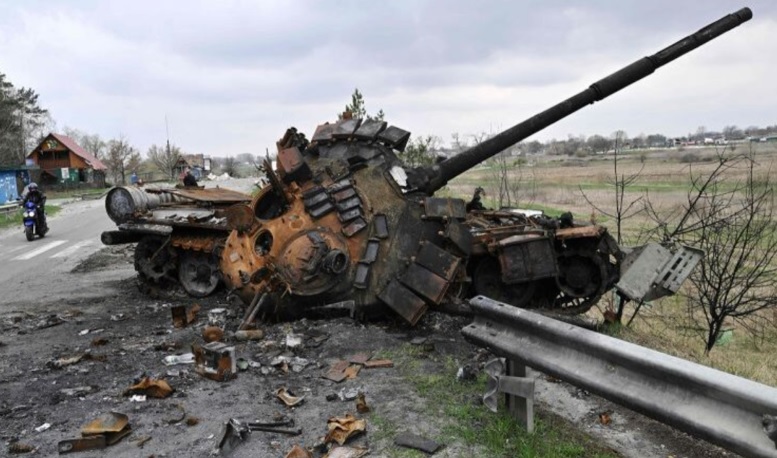
Russian Tanks have NOT lived up to their reputation!
The war in Ukraine continues to drag on, and China seems ready for a copycat war with Taiwan. Every week we see weapon systems in the news. Today’s front-page stories resemble those of the Cold War era. Whether they are real, exaggerated, or imagined… military threats are always newsworthy! Especially when full-scale war with Russia or China is just a small insult or political incident away. If you loved the Cold War, then it’s Deja Vue all over again as big weapon systems are our top news story!
By now everyone is familiar with Russia’s failed tanks. Russia had similar failures in the Air and on the Sea, but tank wreckage is just a lot easier to see. Planes and helicopters tend to disintegrate before they hit the ground. Sunken ships end up inconveniently on the bottom of the sea. The blown-up and burnt-out carcass of a tank is a much better photo-op. One picture and the story just writes itself. A smiling Ukrainian farmer with a wrecked Russian tank in their front yard requires little explanation.
Until the Ukraine war, the West (and Russia) had very-high opinions of Russian tanks. Yet, at the same time, the West said that Russia’s massive corruption was undermining its military. Even well-designed military equipment was poorly manufactured. And anything that went into storage was usually stolen. The tanks that Russia has put into service were broken before they even reached the battle. Once on the battle line, 1,000 – 2,000 Russian tanks were destroyed. The 10,000 “reserve” tanks that remain are probably in worse shape. Rumors that Russia’s warehouses filled with spare parts hold little more than empty boxes.
Russia’s defense plans are heavily based on tanks. Without those tanks, Russia is in a VERY vulnerable position. In 2010 Russia planned to completely replace their old tanks with 2,500 Armata 14 tanks. These very modern tanks would make Russia capable of fighting the US and Europe. Only, the money allocated for the tanks… ahhh… disappeared. Only an estimated 20 prototypes were built. With no new tanks, and with a failed tank strategy against a much weaker opponent, Russia’s Army no longer has the ability to fight any off NATO.
Russian military equipment was often considered second-rate, especially the equipment they sold to the International Arms markets of the world. But their products were cheap. Half the price, or less, than US or European alternatives. Third-world dictators could always buy Russian tanks secure in the knowledge that they could at least reliably fight against unarmed civilians. But the war in Ukraine has proven that even a simple drone that costs a few thousand dollars can kill a $500,000 “economy” Russian tank. If you’re trying to suppress Democracy on a budget, Russian tanks just aren’t the bargain they used to be.
All of this is quite disappointing for Russia, since they are the #2 arms dealer in the world, and their products are (quite literally) being destroyed on the evening news just about every night. That’s really bad for sales. I’m guessing that a lot of former customers are thinking of a trade-in.
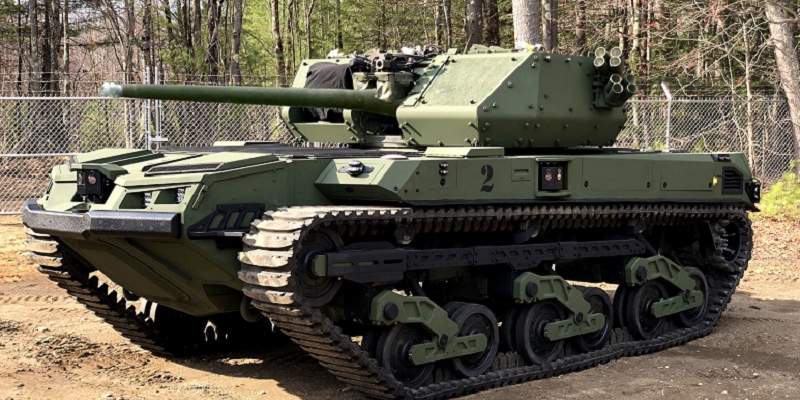
While it is not the end of the tank, it may be the end of the cheap tank. Next year, the biggest arms show in the world, the Defence and Security Equipment International Show, will take place in London. We can expect to see new tank models with bigger guns and thicker armor. But we may also see a new type of tank. A tank without a tank crew.
A traditional tank is basically a heavily armored box with a big gun on top. In Europe, tanks are limited to around 50 tons. Any heavier, and bridges will collapse. Europe has a LOT of rivers and lakes and mountain passes that can only be navigated by bridges. Interestingly, Israel has one of the most highly rated tanks in the world, the Merkava IV. But they have zero sales in Europe. Why? This 65-ton monster would collapse most European bridges. But in Isreal, with very few rivers or lakes, the Merkava reigns supreme.
If you remove the crew (2 to 6 soldiers) the size, weight, and cost of tanks drop. A crewless tank could be 10 to 20 tons lighter, even with the same gun and armor thickness. A lighter tank would be faster, more maneuverable, and could operate in more environments. A lighter tank would also be easier to move around by air in a war zone. And, without a crew, the politics of tank warfare would change. Using tanks without the risk of killing your citizens would revolutionize tank warfare. Perhaps, in a very, very bad way.
Without a crew, how do you operate the tank? Well, if we believe that self-driving cars are possible, why not self-driving tanks? We’ve been using self-flying sky drones for decades. A crewless tank could be run remotely, from secure facilities. If drones lose the connection to their operators, then they can drive themselves… at least until they can get the signal back.
Once crewless tanks are perfected, much smaller tanks would be possible. A 10-20 ton tank might have a smaller cannon, or it might drop the cannon and carry a small fleet of flying drones. Crewless tanks under 10 tons, perhaps as light as 1 ton, could mount a heavy machine gun, carry supplies, or even act as an armored ambulance for wounded soldiers. The more ground drones are deployed, the fewer actual soldiers will be needed in war zones. That would reduce casualties (a good thing), but without the messy politics of dead citizens, a more automated tank corps could mean more border skirmishes between unmanned weapons and more wars.
The rise of drones and high-tech weapons from the US and Europe, along with the abysmal performance of Russian weapons, will have a big impact on future weapons sales. Much of Russia’s $40 billion in annual weapon sales will transfer to the coffers of other major weapons manufacturers, like the US, Germany, and the UK. If autonomous driving systems become the differentiator between tank manufacturers, we will see new weapons manufacturers entering the market. Tesla is already dominant in self-driving consumer cars, and in commercial launch vehicles. Is a Tesla Tank by 2025 that much of a stretch?
Will the next super tank be based on a bigger cannon and stronger armor? Or will the intelligence of the tank decide who wins and loses in a tank war? Give us your opinions, our readers want to know what you think!
This armored prototype is electrically powered and remote-controlled. Is it still a TANK?
The battle protection (armor) and destruction (arms) is as old as time. At first, hiding behind a tree, a big rock, or (much later) a wall was good enough. But hiding sacrificed mobility. When armies came out from behind walls, they needed armor. Layers of padding and leather, and bits of metal helped. Later, helmets and shields were added. But weapons also improved. After thousands of years, the fully armored “Knight in Shining Armor” became the apex of protection.
But good armor is heavy armor, and once again we’ve lost mobility. Horses could become the battle platform a Knight needed. With a Knight firmly seated on his saddle and stirrups, he could effectively fight (and stay) on horseback. That worked for a while, but guns had arrived and were rapidly evolving. Traditional armor became ineffective. We kept our metal helmets, but the rest shrank away and disappeared.
At the start of WWI, armor was out of fashion. Yet the lethality of the battlefield (accurate snipers, machine guns, modern artillery, grenades, and landmines) grew so quickly that the territory between opposing armies was soon called “No Mans’ Land”. When either side made a charge against the other side, thousands of soldiers could be killed within hours. The war was bogged down in “Trench Warfare”. The soldiers on both sides build long trenches that they lived in for months at a time. Just popping your head up over the trench to see if anything was happening could get you killed.
In WWI nearly 6 million horses were deployed. But the battlefield was just as deadly to horses as it was to humans. They died of wounds, starvation, and disease, or they froze on the Eastern Front. Motorized vehicles were a new technology, but they had promise. They were faster, stronger, and more durable than horses. Civilian cars were soon armored, and all nations tried adding cannons and machine guns. But the added weight would blow out the flimsy tires of the day, and these heady vehicles were often bogged down on muddy roads. After replacing wheels with tractor treads, the modern tank was born. On September of 1916, the “Tank” entered the battlefield and the race between arms and armor was on once again.
Development may have started in WWI, but the modern tank as we know it truly developed during WWII. Within a few years, almost every developed nation was working on its own tanks or was ready to buy them from other nations. Of course, if you were a small nation, tanks were expensive. Rather than investing in tanks, smaller nations could invest in “tank killers”.
WW II introduced “hand-held” devices like the “bazooka”, as well as land mines. A single soldier could carry a weapon that could stop a tank. But you needed to plant a land mine where a tank would pass over it, and a bazooka had a limited range and was less than accurate. By the 1970s, improved shoulder-launched missiles had greater range and more powerful warheads. And they could track a tank by its heat signature. Today, anti-tank drones with sophisticated artificial intelligence can “loiter” in the sky for 30 or 40 minutes and hunt down tanks and other targets.
Modern tanks have defenses against these weapons, yet Russian tanks failed against even outdated tank killers. How can the second most powerful military in the world, fail so badly? Let’s take a look and see…
Playing Defense: Young Russian recruits were told for months that there would be no invasion. Then, 100,000 Russian soldiers were told to fight a foreign soil, in towns where their grandmother lives. Imagine passing destroyed Russian tanks and dead crews. Why are you here? What are you fighting for? If you run out of gas or something broke, would you fight to the death to defend your tank? Rumors of recruits deserting their tank may be true. Alternatively, Ukrainians were told for months that the Russians were coming. The dead in the streets are people you know. Ukrainians are far more motivated to lay down their lives. Local defenders are almost always more effective than invading military leaders expect.
Financial Crisis: The Russian military has been chronically short of funding. For decades, the Russian navy has scrapped old ships, without replacements. Russia was supposed to replace tanks with their new Armata T-14 between 2015 to 2020. The upgrade did not happen. Only a few prototypes were built. GPS systems have been on US (and most other nations) tanks since the 1990s. Russian tanks were ASSUMED to use GPS, but no GPS systems were found on wrecked Russian tanks.
Design vs. Delivered: Russia has very capable weapon designers and engineers. However, Russian factories are notorious for supply shortages and substandard manufacturing. Historically, Russia’s military strategy favors quantity over quality. For example, the Russian T-34 was one most influential tanks of all time, but not because it was a great tank. Instead, it was because Russian factories could build them in great numbers. It was the tidal wave of T-34s that won WW II for Russia.
Corruption: When the Soviet Union became the Russian Republic, Putin’s and his generation of Soviet leaders raided the economy and took over every valuable business and asset. It was a gold rush for the new Russian mob. However, having career criminals run the economy led to a decline in all economic sectors. With only friends of Putin receiving government contracts, stories of broken and non-existent products seem credible.
Propaganda?: Stories of Russian incompetence are so staggering it’s hard to believe, even with evidence. In images of wrecked Russian tanks, shoebox-sized boxes are attached near the turret or lying on the ground. These are “reactive armor”. When missiles and shells approach, reactive armor explodes, knocking incoming projectiles off course. When examined, the boxes are empty. No explosives, fuses, or sensors. Bullet-proof proof vests retrieved from Russian soldiers should have steel or ceramic plates; instead, sheets of cardboard have been found. Perhaps this is a rare case, or the reports are exaggerated. But no functional military can operate when equipment is systematically stolen.
Replacement: In theory, Russia started the war with warehouses filled with spare parts. Many of these warehouses appear to be empty. Tanks and trucks are often stored for years at a time, and require regular maintenance. Without maintenance, parts will rust or rot away. Abandoned tanks in Ukraine may have simply broken down and were later discovered and destroyed by Ukrainians. Can Russia fix these supply problems? Probably not. Sanctions have made Russian mobsters government leaders cash hungry. If the government can find the money for supplies and maintenance, that money will “get lost” long before any new supplies reach Russian forces.
Conclusions: Is the tank dead? Probably not. However, the abysmal performance in Russia will kill the Russian Military Industry. Russian tanks, armor, missiles, and warships generated $25 billion in revenue in 2020. New sales will fall sharply in 2023. On the other hand, weapons from Ukraine, the UK, Germany, and the US will probably rise. And the Russian Invasion has caused a LOT of nations (not just Finland and Sweden) to think about big military buildups.
While Putin never intended to make NATO the “cool kids club”, nor start a new arms race, it is what Putin accomplished. Russia’s strategy focused on tanks and cold war strategy. Ukrainians showed the power of technology, mobility, and flexible low-cost weapons. Finland and Sweden may eventually become nato nations. A new NATO needs to think about a new strategy and a new generation of armored vehicles.
The tank has become a beast of a machine because it needs to protect the soft and vulnerable humans that it carries into battle. Just as drones are becoming the next generation of air support, it makes sense to have self-driving electric tanks. If you remove the people, you can drop a lot of the size, weight, and cost of a tank. An electric engine has 5 or 10 parts, while a diesel or gasoline engine has around 1,000 parts. Tanks often run out of gas, but a tank can tap into the local power grid, or wait for a slower recharge from solar power.
If we break away from old tank designs, we could have big battle tanks and little support tanks. The big tank might have a big (or at least big-ish) gun. But it would also carry drones like the switchblade, which has killed Russian tanks, helicopters, and soldiers. Interestingly, one switchblade drone cost about as much as one shell for most US/European tanks. The next generation of battle tanks could trade a lot of armor for stealth. Modern fighter jets have been doing this for the last decade They are slower and less heavily armed than in the 90s, but these planes are virtually invisible to detection. Not getting shot at is even better than armor. Electric motors would produce a small fraction of the heat used by today’s tanks, and it is this heat signature that is used to track and kill tanks.
What about those little tanks. Imagine a small (1,000 lbs. or so?) electric tank with a small cannon or a large machine gun, carrying a LOT of ammo. It might also carry supplies for troops. It could even carry a wounded soldier back to camp. Over time, these little tanks will become more capable, independently patrolling some of the most inhospitable deserts and mountaintops. Eventually, the little tank could reduce the number of live soldiers needed in a military engagement. A typical squad of 7 to 14 human soldiers might be replaced by a Sargent and 2 or 3 soldiers, with specialized drones tanking on the remaining responsibilities.
If you examine how technology has progressed, machines tend to displace human labor in the most dangerous jobs. You can’t get more dangerous than a war! The newest air drones look a lot like the next generation of fighter planes. It is inevitable that tanks will go through a similar transition. After all, if commercial trucks and consumer cars will eventually be self-driving, it’s not too far a stretch to imagine self-driving tanks. Who knows, maybe Elon Musk has some ideas about how to build a 21st Century tank!
What do you think? Will the development of tanks be driven by cold-war thinking, or will the drive to expand NATO lead to new strategies and new tank designs? Let us know!
Warships: the most powerful, the most expensive, and the most vulnerable machines ever created.
War is a business. This business is driven by changing trends and new technology, but it is also a seasonal business. Sometimes war factories run full blast; sometimes they are on vacation. When a war is near, the military starts to wake up. But it often stumbles around a bit before it can find its footing. While everyone was sleeping, tastes may have changed. Old menu items may not be as appealing, or something new may be in or out of fashion.
During WWII big warships were very popular. True, Battleships lost their appeal and Aircraft Carriers replaced them as the most valuable (and deadly) thing afloat. But after that war, the new Cold War had new favorites. Nuclear weapons, nuclear submarines, ballistic missiles, supersonic jets, computers, and satellites. Even later, when the U.S.S.R. collapsed it even made sense for the new Russia (and their old client nations) to destroy their immense stockpiles of nuclear weapons. Spy wars and even Cyberwarefare was in!
There were big clashes between the US and Russia, but it was largely proxy wars for the US and fights with much smaller and less developed nations for Russia. Recently Russia has been rattling its saber and rolling out a new generation of hypersonic missiles and updated nukes, but these work best to threaten Western Europe and America. If Russia wants to invade a border nation, we’re going back to troops, tanks, and maybe a few warships.
This brings us to Ukraine. Here, we see something close to Russia’s best effort, against a far smaller but technologically competent nation. In 2014 Russia ran over Ukraine before they knew what hit them. And before the West could agree on a defense plan. The Russians never really left. The fighting never really stopped. But aggression dropped to a point where both sides could largely leave the fighting to local forces, with some technical and weapons support.
Now, Russia has moved in a significant part of its army, tanks, ships, and air support. Given the massive infusion of Russian equipment and personnel, the West has been surprised at how little progress the Russians have made. Surprise turned to shock when Ukrainian forces destroyed Russia’s Black Sea Flag Ship, the Moskva. This is (theoretically) a big, capable, tough world-class warship. On paper, it is impossible for Ukraine to sink the Moskva. They don’t have a weapon that can do the job. Yet, the Moskva is dead, and it was killed by a Ukrainian manufactured missile. In the media, Russian cannot even bring itself to say that Ukrainians were responsible, preferring to leave the impression that it was a combination of chance and incompetence. What happened?
Lesson One – Asymetic war is the new normal:Militaries build battleships to fight battleships and tanks to fight tanks. But if the enemy doesn’t have battleships or tanks, they get desperate and use whatever they have. Technology has given us a lot of ways to inexpensively destroy expensive enemy equipment (missiles, drones, bazookas). A $6,000 hand help missile can destroy a $5 million helicopter (and the crew). A richer, more powerful opponent can make war too expensive for a more powerful nation. The sinking of the Moskva may be the highest asymmetric cost ever, with a billion-dollar ship sunk by a few thousand dollars worth of missiles.
Of course, losing a big warship was nothing new. In 1982s, the US and Argentina fought an undeclared war over some barely occupied islands off the coast of Argentina. The UK decided to end this nonsense with an overwhelming response, sending a fleet of modern ships to the area. The US announced that the antiquated Argentinian Navy was neutralized. And then on May 2, the UK lost its first ship since WWII, the HMS Sheffield. It was struck by a French Exocet missile.
The Sheffield’s superior electronic defenses supposedly made it invulnerable to missile attacks, and the Argentinians didn’t have any missiles that could reach it. Does any of this sound familiar? Well, the Argentine forces knew that the Exocet could not hit the Sheffield even if it was launched from a jet. But a desperate military might use an untested in-air refueling system to get a bit more range. Back on the Sheffield, the crew had been repeatedly told that no missiles can reach them. When all of the alarms designed to warn them of incoming missiles started to go off, that crew might be only mildly curious if something was wrong with the system or if it was a drill. No action was taken, the ship was hit, it caught fire, and then it sank.
Lesson Two – Pride and boredom can sink ships: If you didn’t believe that your giant warship will protect you, you would probably try to escape the ship every chance you got. But if you do believe it is safe, after a few weeks of RED ALERT drills, your attention drifts, and your efficiency falls. You don’t follow safety procedures, you leave fireproof doors open, etc. Without a shooting war against a near-peer opponent, procedures tend to be sloppy, equipment is not maintained, and catastrophic “accidents” happen frequently when a real war arrives. And world-class militaries make inexcusable mistakes.
Warships are the world’s most complex machines. Each has thousands of smaller systems, millions of parts, and thousands (or tens of thousands) of technicians and sailors who operate and maintain these machines. The failure of just one system (or technician) can lead to disaster. This is why warships have (or are supposed to have) redundant and overlapping systems.
For example, the Moskva had multiple radar systems that would identify threats while they were more than 100 miles away. And, Russian Satellites, other ships, etc. should have an eye on incoming threats. Once a threat has been identified, we move from detection to defense… long-range anti-missiles (100+ miles). short-range anti-missiles (20 miles), and high-speed guns (under 5 miles). But satellite images show that NONE of these weapons were fired, or even pointed at the two incoming missiles.
After defense systems, we have damage control. Since WWI, warships are divided into watertight compartments that prevent or slow the spread of damage (incoming seawater, spreading fires). Clearly, this failed. As did the pumps that address flooding, and the fire suppression system. The Moskva Should have easily survived multiple missile hits. Yet, the Moskva still sank.
Lesson Three – Systems fail when technicians don’t understand or perform their duties: The Moskva sank too quickly. Normally, when a ship is flooding on one side, you seal off and flood compartments on the other side to keep the ship upright. It might save the ship, but it can also slow the rate of sinking. That didn’t happen. Rather than all of the system failing, it appears that the crew got off of the ship the minute it was damaged. That hints at a massive lack of morale and training. Presumably, the crew of a powerful warship parked many miles from Ukraine is at least as good or better than the morale of the troops fighting in Ukraine. Untrained troops with low morale fight poorly and quickly abandon their nation’s military assets.
Supplies and resources can be as important as soldiers in winning a war. As WWII progressed, Germany and Japan were running out of resources. New ships weren’t built as well as older ships and spare parts were hard to come by. Technical training was cut short to get more recruits into planes, ships, and front lines. Practice (fire drills, shooting practice, etc.) virtually disappeared because any meaningful practice meant using resources.
For decades, equipment shortages, low pay for the military, canceled military programs, general corruption, and little training have been common complaints in Russia. This produces equipment that falls apart when used, empty warehouses that are supposed to be full of spare parts, and perhaps warships with fire-fighting equipment that doesn’t work. Big corporations sell the government state-of-the-art firefighting equipment that doesn’t work, while entrepreneurial crew members sell off fire extinguishers and any other equipment they can find.
Lesson 4 – Underfunded militaries often underperform:Without proper funding, equipment, and morale a military’s ability to fight or even defend itself rapidly degrades. When demoralized soldiers no longer care about the outcome of a war, attention shifts to complaining about their low pay and schemes to stealing whatever they can to supplement that pay. Troops perform their duties poorly while hollowing out the effectiveness of their own forces. Russia is not alone in this vicious cycle of military degradation, but they have a long tradition of military corruption and mismanagement.
The 20th Century was the century of the Big Warship. The bigger and more powerful the ship, the more that a nation touts its power and invincibility. National pride was invested in Flagships. That pride was very helpful in justifying the enormous cost of building and operating these behemoths, especially in peacetime when it’s more difficult to justify these costs. In War, especially the early days of a war, these ships were targets for every enemy fleet admiral, submarine captain, and fighter pilot. The California, Flagship of the US Pacific Fleet, was sunk at Pearl Harbor. The Hood, Flagship of the Northern Fleet, was disintegrated by a direct hit. The Yamato, the most gigantic Battleship ever built, hid away from battle until the final days of the war, fearful of the political consequences if it entered a battle, and could not claim a massive victory.
After each ship’s destruction, there were major political consequences. While the Sheffield was not a Flagship, nor was it the most powerful ship in the UK navy, it was a new and greatly hyped type of destroyer. Even more importantly, it was a weapon that the UK was actively selling to other nations. The UK was in the middle of selling a large number of these destroyers when the Sheffield was sunk. The officers and crew of the Sheffield made many mistakes and some exhibited court marshall level incompetence. However, due to those pending sales, no one was put on trial, and the facts of the case were sealed for 30 years.
Lesson Five – War is always political: Battles can be won and wars lost if you lose control over the information your citizens recieve. Since WWI, when developed nations started to have developed mass media, public opinion matters. In the face of a major military loss, nations lie and do their best to minimize the loss. Russia admits that the Moscka sank. They focus on fire and the weather. Even using incompetence as an excuse may be better than admitting to a substandard ship, untrained crew, or a more effective than expected enemy.
Mark Twain once said that it is untrue that history repeats, but… he added… sometimes it rhymes! Russia is making its own unique combination of bad decisions and uninformed strategies. Big tanks and Big ships are Big targets for modern asymmetric warfare. Ukrainian doesn’t have a lot of high-value military targets, and Russia keeps moving its high-value targets into the range of advanced Ukrainian weapons. That doesn’t mean that Ukraine will have an easy job, but it does mean that young Russian soldiers are going to pay the price for every foot of Ukrainian soil they take.
What do you think? Will Russia stop and think about its strategy, or does Russian pride (and fear of informing Putin) stand in the way of logic? Let us know your opinion!
The last couple of years has been a bumpy ride, for everyone. Masks, vaccinations, closed restaurants, toilet paper shortages, remote work, ships stuck in the Suez canal, droughts in the west, and the earth actually being on fire in the West. It’s a lot to take in for anyone to take. But for kids, it’s worse. It is… traumatic. Adults want to get back to normal, but younger kids never got a chance to learn what normal means. But, we hope, in September of 2022 we’re all going to get a taste of normal when the COVID restrictions are rolled back for the new school year.
Parent’s across America are hoping that we start the new school year just a little closer to “Normal”. Our New Normal… whatever that is. Maybe students can visit their friends again, and have a birthday party or two. Remember field trips? Fingers crossed that museums, libraries, parks, pools, sports events, and other kid venues will be back in full swing. And home can go back to being more like your home, and less like a makeshift school.
How about a New Normal where schools rules don’t change every couple of months, and parents can go back to their old lives? Not all parents were able to transition to remote work. Some have been working around their children’s schedules and have only been able to do “flex-work”, taking part-time gigs like Door Dash or other delivery services.
Some families, with higher incomes or higher-level positions, have been able to reimagine their jobs and work remotely. But what happens to these jobs as the Pandemic recedes? Will they be permanently remote, or will they return to being on-site? Or will the work just go away? Whatever happens, it is sure to cause more disruption for these many of these families.
Before COVID, kids could be unexpectedly absent from school. Little kids often have last-minute emergencies, from a stomach ache to a sleepless night or a problem with their teeth. Or a thousand other little things that need immediate care. Older kids, however, discover truancy. In high school juniors and seniors can yearn for freedom, slip out of school. Besides, even a group of 17-year-olds can blend into a busy city; even if a group of unescorted 7 year-olds can get out of school, they will stand out and, will quickly be questioned.
Student absenteeism isn’t just a matter of children skipping a day or two of school. Chronic absenteeism (missing more than 10% of school days) is both a personal and a school-wide issue. Chronically absent children are also disproportionally poor, often minority, and usually underperform in school. Trauma at home (violence, addiction, abuse), chronic sickness, and other significant issues prevent these students from attending school.
Ironically, students with violence and abuse at home might have once viewed their school as a secure refuge, an escape from their home life. But COVID kept these students locked away at home for two years. Whatever problems these students had before COVID, home trauma may have become far worse. With new rules for “school at home”, and ever-changing COVID protocols, student attendance has been difficult to accurately measure, with reported numbers dramatically rising and falling from one count to the next. According to Bloomberg, school enrollment in New York City has plunged to the lowest level in years.
The budget of a school is based on a number of factors, but the most important is the number of days students attend classes. Every absent day or missing student costs a school some funding. In New York City, a lost student reduces funding by $28,000 a year. Even a single day of absence costs a school $156. Absentee penalties can cost your child’s school hundreds of thousands of dollars every year.
That’s a lot of money. More than most schools can afford to lose. Some schools, before the COVID outbreak, already had high absenteeism. It seems inevitable that when schools open in September the pressures of COVID and the stress of re-entering school will boost absenteeism. Add to that the stress that teachers have had. According to a 2022 study by the NEA (National Education Association), 55% of teachers plan to resign, 90% say they are burned out.
The new normal, or at least 2022 normal, may be exhausted parents, traumatized students, and burned-out teachers on the verge of quitting. It’s going to be a perfect storm of problems, and it will probably result in student behavioral issues and more burnout from teachers. It seems inevitable that attendance will be a growing problem throughout the school year.
The last two years have been like a long, long car ride. Later this year we may end up in Normal Tennessee (just outside of Memphis) or we could land in “More of the Same”, USA. Have you already seen signs of stress in your children? Does your school have a plan on how to reintegrate students back into full-time school? Tell us what you’re seeing. And tell us what you think the new school year will look like… we would all like to know what you’re thinking!
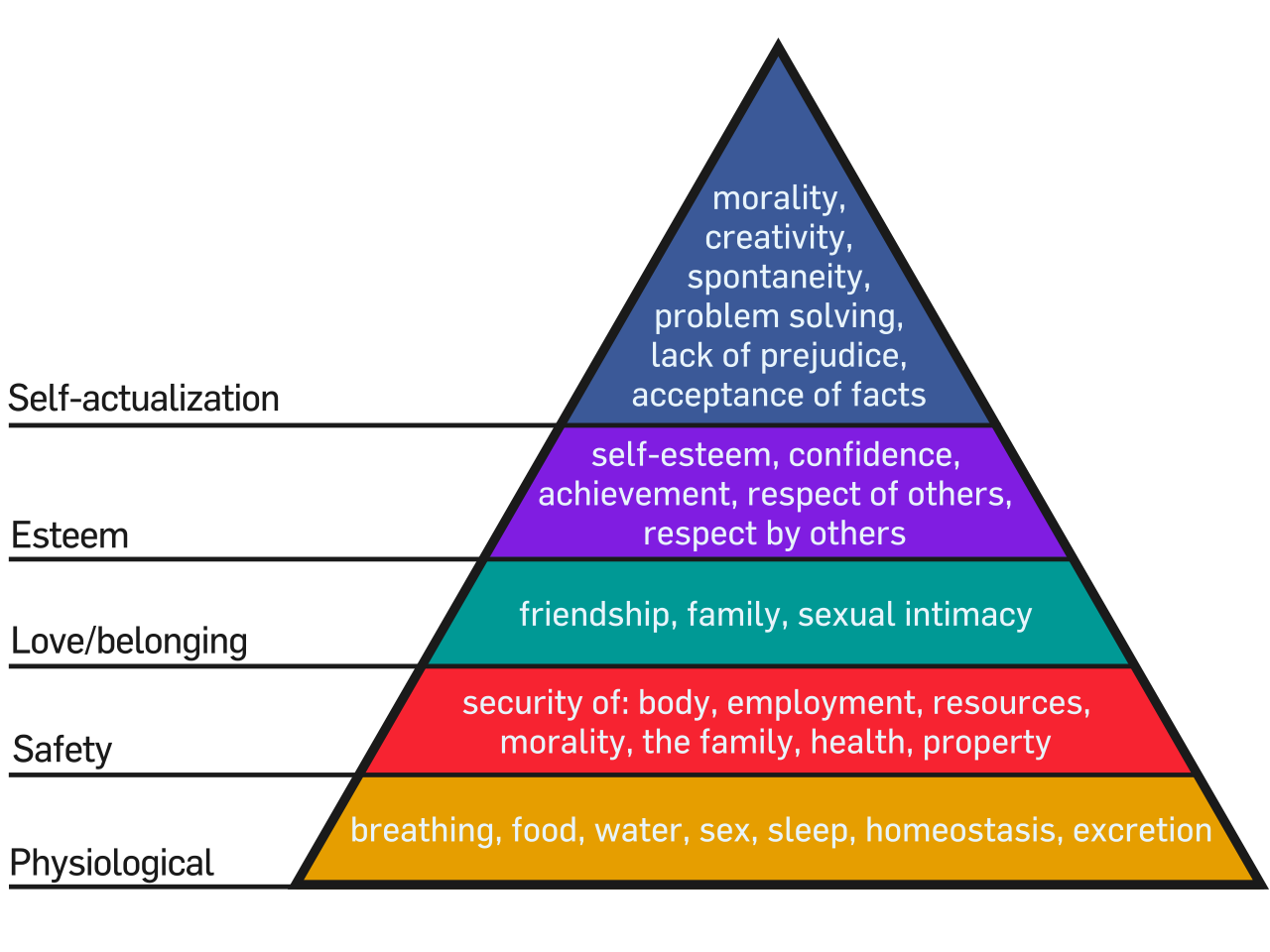
In the 1940s, the famed psychologist Abraham Maslow formed his theory of “Hierarchy”, that the major decisions in our lives (school, work, friends, family) were driven by our internal needs. These needs form a pyramid, with the most basic and immediate needs at the base, and our highest aspirations at the peak. We all need that base to survive. Not everyone, however, will climb the entire pyramid to attain the highest level… “self-actualization”.
The theory is that we all want to climb this pyramid. However, economic circumstances (a lost job or bad investment), trauma (family in the death, divorce, etc.), and other life-event can get in the way. Perhaps the rewards at the peak of the pyramid just don’t interest you. Still, there is always an upwards attraction by the rewards offered on the next level.
You may want a new car, a bigger house, or higher status. Most of us will want to ascend, climb, and achieve more. New achievements create bonds with work, school, the community, and your family. These bonds incentivize you to climb, and they support you. This prevents a small slip in your climb from throwing you back to the beginning, at the base of the pyramid.
However, Maslow’s Hierarchy is a product of 1950s American society. It is filled with the assumptions of the “American Dream”. One of those assumptions was that America was the freest nation in the world. Which may have been true, for white males. The aspirations of minorities, women, individuals with disabilities, even seniors were seen in this suburban Dream.
The Hierarchy and the Dream focused on consumer goods, big cars, and big houses. Big corporations and the U.S. government were trusted “partners”. Over the decades, corporate scandals, environmental awareness, and political corruption tainted the Dream. as the American dream faded through the years, the foundation on which Maslow’s pyramid was built, became increasingly less secure.
Do we still have the same beliefs and the same goals? Perhaps the Great Resignation is a result of Maslow’s crumbling foundation and needs more than just better pay and time-off to repair. Let’s dig a little and see what we find…
THE PAY GAP: Corporations, government agencies, and think tanks all attempt to predict employment trends. The Pew Foundation is a think tank that has been very vocal about a coming “labor crisis”, pointing to the stagnant wages of most American workers. Paychecks have become larger, but the real buying power stopped growing in the mid-1960s.
Since 1950 American workers have become 3 times more productive. In the early years after WWII, when productivity rose, so too did worker wages. After all, don’t workers make the goods and provide the services that create profit? But by the 1970s, increases in productivity no longer led to higher wages. If higher efficiency and profit were no longer going to workers, where was the money going?
EXECUTIVES: In the 1950s a CEO was paid 20 times more than the average worker. That is a lot, but not compared to CEOs today. In 2020 CEOs paid themselves 351 times more than the average worker. Did CEOs and executives become that more productive than their 1960s and 1970s counterparts? Probably not.
While executives are taking much more of the profits made in America, independent research shows that higher CEO pay does not result in higher productivity. If consultants made the same finding for lower-level employees… that their productivity did not rise with higher wages… their wages and benefits would immediately be cut. Yet, CEO compensation continues to rise.
WORKERS: During WWII, labor unions helped America win the war. After WWII, corporate America was increasingly uneasy in its “partnership” with labor unions. Corporations argued that outdated union work rules held back efficiency. Corporations wanted to introduce more automation and move work to lower-paying U.S. (and later offshore) locations. Corporations argued that without union interference, they could raise profits, raise worker pay, and offer superior benefits. Unions argued that benefits resulted from their battle against corporate greed, and not from corporate generosity. Take away the unions, they argued, and pay will fall and benefits will be cut.
As stated earlier, Executive pay and corporate profitability became unlinked from worker compensation. This marks a critical shift in the social contract between workers and corporations. Previously, worker productivity was carefully measured and was a critical factor for annual raises and promotions. Now, productivity (efficiency, profits) was almost solely credited to the CEO and a few key executives. Workers became a simple “cost”, like a piece of equipment. The generous bonuses Executives were given for cost reductions increased their conflict with workers. Without unions for protection, individual works had reduced negotiating power, and compensation stagnated.
Unions were already in decline by 1980, when Ronald Regan was elected President, and the Republicans shifted to the political right. Corporations and conservative politicians targeting the elimination of labor unions, and largely succeeded. In the 1950s 40% of jobs were unionized; by 2020 just 9% of workers. Corporations did become more profitable. Executive pay skyrocketed. But promises of higher pay and benefits for workers got lost in the shuffle.
SECURITY: Few workers today believe that hard work will earn them a secure job. COVID was the straw that broke the workforce’s back, but worker security has been falling for many years. Automation, at first, was only effective on the factory floor. But as jobs moved from factories to offices, automation followed.
Technical and political issues have kept most self-driving trucks off public roads, but on private timber roads, mines, and seaports automated trucks are commonplace. Self-driving tractors, harvesters, and heavy equipment are common sites on farms. And of course, the military has been using drones and remotely operated vehicles since the 1990s. Robots are, or soon will be, everywhere.
Peter Drucker was the father of the modern efficiency movement. He once said that if corporate offices were as efficient as farms or factories, we could eliminate 90% of employees. Does it still make sense to go to school for two decades, and get deeply in debt, for a career that may only last a few years? An “investment” in Maslow’s pyramid once offered a guaranteed return. COVID made “Zoom” and “working remotely” a part of our vocabulary. Will the coming round of remote work make our jobs more secure, or will it lead to the largest wage of automation and outsourcing in history?
FAMILY: The family is fundamental to Maslow’s Hierarchy. Americans once believed that a “serious adult” must be married, have children, and own a big house and car. Yet, there are fewer marriages, more divorces, and far fewer children. The traditional family is fading away. Is the workforce too underpaid to afford children? Or is it that two-career households don’t have enough time to manage a career and raise children? Whatever the reason, traditional families are fading away.
Families are also disappearing in Japan. The population has been declining for 15 years, leaving small towns deserted. Dating, intimacy, and marriage are increasingly rare for young workers as they focus on “more important” issues. That may boost their connection to Maslow’s Hierarchy while they are on the lower-lower levels, but without the demands of family, will Japanese workers be as motivated to climb to the top? Or will it even matter? Experts predict that Japan will lose half of its population by the end of this century. Clearly, as families (and the workforce) disappear, a lot of assumptions need to change.
Then, we have China, which rapidly evolved from agriculture to industry, and is now on the way to being a service economy. Overwhelmed young workers are rebelling, choosing “tang ping”, or “lying flat”. Do just enough to live and no more; reject marriage, dating, ambitions at work, and even a place to live. You can always sleep in a 24×7 cafe. That’s even more radical than America’s Great Resignation! Workers see themselves as mere cogs in a machine and have lost motivation. Is Bernie Sanders right… do we need Capitalism 2.0?
ENVIRONMENT: “The American Dream” is a house in the suburbs, a car in the garage, a smiling mother and father, and a couple of children. We didn’t think about pollution from the car, a house made of non-sustainable materials, or if Daddy paid the bills by working in a diverse workplace. We were constantly told that money doesn’t grow on trees, but we never asked if making money could kill all the trees.
Maslow’s pyramid is based on the desire for consumer goods. We now know that it takes more than money to pay for the American Dream. Young workers today talk about a net-zero carbon footprint, living in tiny houses, and of course… electric cars. They don’t trust corporations, and they don’t want to work for a corporation that does not contribute to the overall social good. To hire today’s workforce, corporations need a far more open, support greater diversity, and not destroy the environment…. and provide tangible evidence that this is indeed how they operate.
CONCLUSION?: Pundits are recommending higher pay to retain workers. Some even say that benefits should be offered. All good ideas, but it misses the big point. The old contract between workers and employers is pretty much dead. It has been for years. Unions and worker protections have eroded. Corporations promised a better workplace once unions were gone, but they failed to deliver. And distrust between workers and employers has never been lower.
If we want to get the workforce climbing again, we need three agreements. First, new and more relevant goals for the Pyramid. Even homeless individuals have mobile phones, while well-paid individuals are turning away big suburban homes and gas-guzzling cars. That’s definitely a new Hierarchy. Second, workers want transparency in how their company makes decisions and what happens to the profits it makes. Third, they want a meaningful voice; essentially they want a partnership with their employer. This is a new contract with American corporations. Pay and benefits? If these three changes are honestly pursued, then they should take care of themselves.
What do you think? Tell us how you feel about what it’s like to work today? Or, how you would like your workplace to operate!




 Niccolls AND Dimes